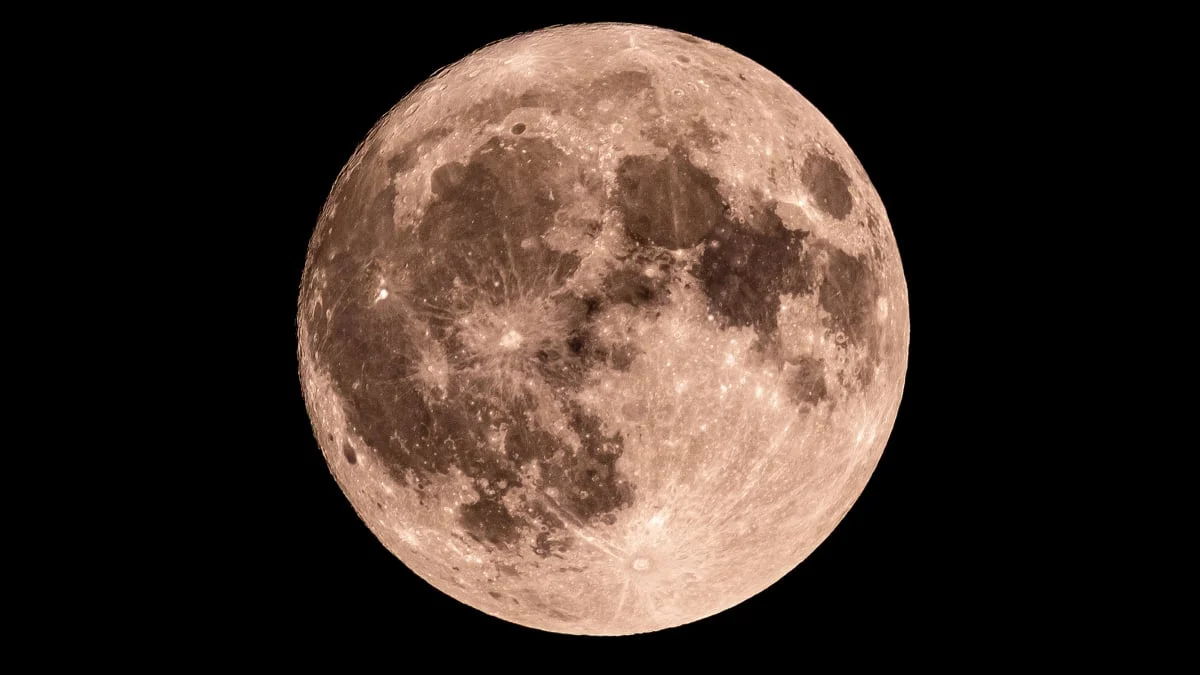
The lunar surface will reach 68% illumination on Friday, July 24, 2026, as the Moon continues its progression through the Waxing Gibbous phase. This specific stage of the lunar cycle marks a period of increasing brightness, positioned between the First Quarter and the upcoming Full Moon scheduled for late July.
Skywatchers across the Northern Hemisphere will observe the Moon rising in the afternoon and remaining visible well into the night. As the sunlight creeps across the lunar regolith, the "terminator"—the line dividing the dark and light sides of the Moon—reveals deep shadows that emphasize the rugged topography of the lunar landscape.
Technical Details of the Moon Phase Today Explained: What the Moon Will Look Like on July 24, 2026
The Waxing Gibbous phase occurring on July 24, 2026, signifies that the Moon has completed more than half of its journey from the New Moon toward full illumination. With 68% of the visible disk lit by the Sun, the Moon appears as a distinct "humpbacked" shape, a term derived from the Latin word gibbus, meaning "hump."
During this phase, the Moon is situated in a portion of its orbit where it trails the Sun across the sky. This positioning ensures that the Moon is often visible in the eastern sky during the late afternoon hours, becoming the dominant celestial object once the Sun sets below the horizon.
NASA’s Daily Moon Guide indicates that the illumination will continue to increase by several percentage points each night. This steady growth provides an evolving perspective for astronomers, as the shifting angle of sunlight brings different geological features into sharp relief along the advancing terminator line.
Key Lunar Features Visible During the July 24 Waxing Gibbous
The 68% illumination on July 24, 2026, provides an ideal window for observing specific lunar "seas" and craters. Unlike the Full Moon, where direct overhead sunlight washes out shadows and makes the surface appear flat, the Waxing Gibbous phase creates long shadows that highlight the depth and height of lunar mountains and impact sites.
Observers using only the naked eye will be able to distinguish the Mare Fecunditatis (the Sea of Fertility) and the Mare Tranquillitatis (the Sea of Tranquility). These dark, basaltic plains were formed by ancient volcanic eruptions and serve as primary landmarks for orientation. The Tycho Crater, located in the southern highlands, will also be visible as a bright spot with a prominent ray system extending across the surface.
For those utilizing binoculars, the Mare Nectaris and the Alphonsus Crater become clearly defined. The Alphonsus Crater is particularly notable for its central peak and its history as a site of suspected "transient lunar phenomena." Additionally, the Montes Alpes (the Alps Mountains) will be visible near the Mare Imbrium, showcasing the dramatic verticality of the lunar crust.
Advanced Observation: Telescopic Views and Historical Landing Sites
Telescope users on July 24, 2026, will have the opportunity to locate the historical landing sites of the Apollo program. The Mare Tranquillitatis houses the landing site of Apollo 11, where humans first set foot on the lunar surface in 1969. The lighting conditions during this 68% Waxing Gibbous phase are conducive to identifying the general vicinity of these historic locations.
Further to the south and east, the landing sites for Apollo 16 in the Descartes Highlands and Apollo 17 in the Taurus-Littrow valley also come into view. While the actual lunar modules and equipment remain far too small to be seen through Earth-based telescopes, the unique geological formations surrounding these sites—such as the North and South Massifs near the Apollo 17 site—are clearly visible under high magnification.
The visibility of these sites serves as a reminder of the ongoing Artemis program, which aims to return humans to the lunar south pole. By July 2026, international interest in lunar exploration is expected to be at a modern peak, with multiple robotic and crewed missions in various stages of development.
Understanding the 29.5-Day Lunar Cycle
The Moon phase today explained: What the Moon will look like on July 24, 2026, is part of a larger 29.5-day synodic month. This cycle represents the time it takes for the Moon to return to the same position relative to the Sun as seen from Earth. Because the Moon is tidally locked, it always shows the same face to our planet, but the amount of that face illuminated by the Sun changes as the Moon orbits.
The journey begins with the New Moon, where the Moon is positioned between the Earth and the Sun, rendering its near side dark. As the Moon moves in its orbit, a "Waxing Crescent" appears, followed by the "First Quarter" when exactly half of the right side (in the Northern Hemisphere) is illuminated.
The "Waxing Gibbous" phase, which characterizes the sky on July 24, 2026, is the final stage before the "Full Moon." Following the Full Moon on July 29, the cycle will reverse through the "Waning Gibbous," "Third Quarter," and "Waning Crescent" phases until the New Moon occurs once again, marking the start of a new lunar month.
The Science of Lunar Illumination and the Terminator Line
The appearance of the Moon on July 24 is dictated by the angle of solar radiation hitting the lunar regolith. The "terminator" is the most scientifically significant area for observers. Because the Sun is rising over this line on the Moon during the waxing phases, the shadows are at their longest, allowing scientists and hobbyists to calculate the heights of lunar mountains and the depths of craters using trigonometry.
On July 24, the terminator will be moving across the central and western portions of the Moon. This movement exposes the complex topography of the lunar highlands, which are much older and more cratered than the darker Maria. The contrast between the rugged highlands and the smooth volcanic plains is one of the most striking features of the 68% illumination stage.
Impact of the Moon Phase on Tides and Earthly Systems
The Moon’s phase on July 24, 2026, has direct physical consequences for Earth, specifically regarding tidal patterns. During the Waxing Gibbous phase, the gravitational pull of the Moon and the Sun are not aligned (as they are during a Full or New Moon), but they are moving toward that alignment.
This results in "neap tides" transitioning toward "spring tides." While the tidal range is not at its monthly maximum on July 24, the gravitational influence of the 68% illuminated Moon still dictates the ebb and flow of coastal waters globally. These cycles are critical for maritime navigation, coastal ecosystems, and the migratory patterns of various marine species.
Furthermore, the increased moonlight during the Waxing Gibbous phase affects nocturnal animal behavior. Many predators and prey species alter their activity levels based on the amount of ambient light provided by the Moon, a phenomenon that biologists continue to study to understand the ecological impact of the lunar cycle.
Future Milestones: The Path to the July 29 Full Moon
Following the observations on July 24, 2026, the Moon will continue to "wax," or grow in illumination, by approximately 6% to 8% each day. By July 26, the Moon will be nearly 85% illuminated, and by the evening of July 28, it will appear nearly circular to the casual observer.
The peak of the cycle occurs on July 29, 2026, with the arrival of the Full Moon. At this point, the Earth is positioned between the Sun and the Moon, allowing the Sun’s rays to fully illuminate the lunar disk. This transition from the 68% Waxing Gibbous on July 24 to the 100% Full Moon on July 29 represents the culmination of the waxing half of the lunar month.
Conclusion of the Lunar Observation Window
As the Moon phase today explained: What the Moon will look like on July 24, 2026, makes clear, this date offers a unique perspective for both scientific study and casual observation. The 68% illumination provides a balance of brightness and shadow that is often lost during the Full Moon, making it a preferred time for lunar photography and geological mapping.
With the Moon remaining high in the sky for much of the night, July 24 serves as a prime opportunity for the public to engage with celestial mechanics. Whether viewing through a high-powered telescope or simply looking up from a backyard, the Waxing Gibbous Moon of July 2026 remains a testament to the predictable yet ever-changing nature of our solar system.