Legislative business in India’s capital came to a grinding halt on Wednesday as opposition lawmakers staged a coordinated walkout and forced the suspension of parliamentary proceedings. The disruption serves as a formal show of support for the "Cockroach Janta Party" (CJP), a burgeoning youth-led movement that has transitioned from a satirical online presence to a formidable political challenger. Led by Congress party figurehead Rahul Gandhi, the opposition is demanding the immediate resignation of Education Minister Dharmendra Pradhan following a series of high-profile examination scandals and allegations of state-sponsored police brutality.
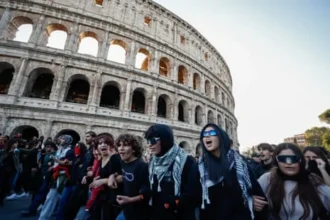
The scene outside the parliament building in New Delhi was one of stark visual defiance. Dozens of lawmakers, primarily from the Congress party and its allies, arrived dressed in black attire to symbolize their mourning of democratic values and the "murdered" future of Indian students. Holding placards and chanting slogans, the group occupied the steps of the building, creating a blockade that mirrored the tension currently gripping the streets of the capital.
Inside the chamber, the atmosphere was equally volatile. Speaker-led attempts to initiate routine discussions were drowned out by shouts from opposition benches. Lawmakers demanded that the government of Prime Minister Narendra Modi provide a comprehensive account of the police violence directed at young protesters earlier in the week. With the government refusing to yield to a special debate on the education crisis, presiding officers were forced to adjourn both houses, effectively ending the day’s legislative agenda.
The Escalation of the ‘Cockroach’ Protests and Parliamentary Deadlock
The parliamentary shutdown is the latest escalation in a week of intense political friction. The "cockroach" protests, which draw their name from the resilient insect as a metaphor for the survival of the common citizen under pressure, have tapped into a deep well of frustration among India’s massive youth population. What began as a series of memes criticizing the reliability of national entrance exams has evolved into a nationwide demand for systemic reform.

The opposition’s decision to align so closely with the CJP signals a strategic shift in Indian politics. By championing the cause of students, the Congress party is attempting to build a broad coalition against the ruling Bharatiya Janata Party (BJP). "The government doesn’t want to take any accountability, nor does it want to have a debate on it in parliament," Rahul Gandhi told reporters shortly before the sessions were suspended. He accused the Prime Minister of being "terrified" of the youth’s voice and of "destroying the future" of the nation’s next generation.
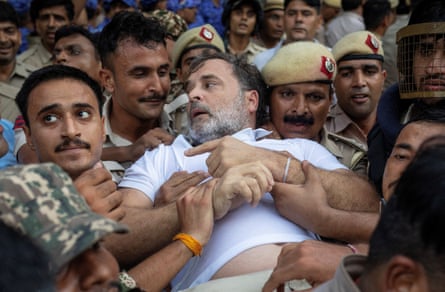
This legislative deadlock comes on the heels of Gandhi’s own brief detention on Tuesday. The Congress leader was forcibly removed by police after staging a sit-in near the Prime Minister’s residence. Images of Gandhi being carried away by his arms and legs by security forces have since gone viral, further inflaming the "cockroach" protests and providing the opposition with a potent visual narrative of government overreach.
Scandals and Systemic Failures: The Roots of Youth Unrest
At the heart of the "cockroach" movement are recurring scandals involving India’s most critical academic examinations. Over the past year, several high-stakes tests required for medical and civil service careers have been marred by allegations of paper leaks, technical glitches, and widespread cheating. For millions of students who spend years and significant financial resources preparing for these exams, the perceived integrity of the testing system is a matter of life-altering importance.
The Education Ministry, led by Dharmendra Pradhan, has faced intense scrutiny for its handling of these crises. Protesters argue that the government’s response has been defensive rather than corrective. The demand for Pradhan’s resignation has become the central pillar of the CJP’s platform, a demand that the opposition parties have now officially adopted as their own condition for returning to parliamentary business.
"We are not just talking about a few leaked papers; we are talking about a broken system that treats students like statistics," said Sandeep Dikshit, a senior Congress leader. Dikshit argued that the "brutality unleashed on students" during Monday’s protests was a turning point. "Our constitution was trampled upon. After that, no self-respecting politician can stand aside while the youth are beaten for asking for fair exams."
Police Clashes and the Detention of Opposition Leaders
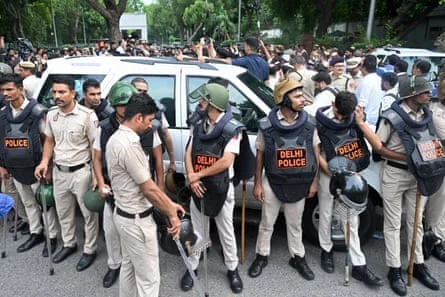
The movement reached a fever pitch on Monday when an estimated 50,000 protesters converged on central Delhi. Despite being denied official permission to march on the parliament, the crowd attempted to breach police barricades. The resulting clash was the most violent encounter between the state and protesters in recent years. Authorities deployed tear gas and baton charges to disperse the crowd, leading to dozens of injuries.
Hospital reports indicate that more than 60 civilians were treated for injuries following the Monday melee. Among the most serious cases is a young woman who remains in intensive care on a ventilator. While the Delhi police have defended their actions, claiming that 118 officers were injured by "instigating" elements within the crowd, the CJP organizers have condemned what they call the "high-handedness" of the security forces.
The political fallout continued into Tuesday when Priyanka Gandhi, a senior strategist for the Congress party, was also briefly detained alongside her brother. The detentions have served only to solidify the resolve of those camped out in the city. Despite the sweltering heat and oppressive humidity of the Delhi summer, over 1,000 core activists remain at the primary protest site, vowing to stay until their demands are met.
The Rise of the Cockroach Janta Party as a Political Force
The Cockroach Janta Party (CJP) is a unique phenomenon in the Indian political landscape. Its founder, Abhijeet Dipke, originally utilized satire to highlight the absurdities of the bureaucratic hurdles faced by students. The name "Cockroach" was chosen to represent the idea that the youth of India are often treated as pests by the elite but possess the tenacity to survive any "nuclear winter" of political oppression.
"They want to break our spirit," Dipke told a cheering crowd from the back of a truck on Tuesday. "Do not let them silence you. We are everywhere, and we are not going away." The movement’s ability to mobilize tens of thousands of people through social media platforms has caught the traditional political establishment off guard.
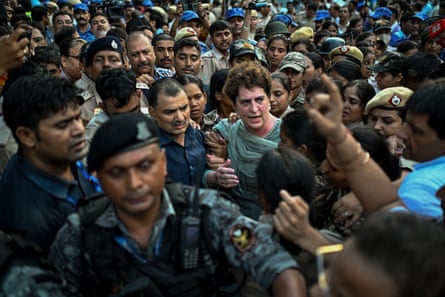
Support for the CJP is not limited to the capital. Parallel protests have broken out in major urban hubs like Mumbai and Bengaluru. In these cities, hundreds of supporters have gathered in solidarity with the Delhi activists, signaling that the "cockroach" protests have successfully nationalized the issue of education reform. The movement has also seen an influx of support from the Indian diaspora, with supporters from abroad reportedly ordering food deliveries—including biryani, pizza, and dal—to keep the protesters in Delhi fed and their morale high.
Government Response and the Future of Education Reform
Initially, the government’s response to the youth movement was dismissive. Education Minister Dharmendra Pradhan had previously labeled the CJP as a "B-team of terrorists," a comment that sparked outrage and further fueled the protests. However, as the opposition parties shut down the Indian parliament and the scale of the unrest became undeniable, the administration has begun to pivot toward a more conciliatory tone.
In a recent social media statement, Pradhan acknowledged the grievances of the student population, though he stopped short of offering his resignation. "We owe them answers, reforms, and accountability," Pradhan wrote. "That is exactly what our government remains committed to delivering." He also criticized the opposition, stating that students "deserve far better than being treated as props in a political campaign."
Prime Minister Narendra Modi has yet to comment directly on the "cockroach" protests or the suspension of parliament. His silence has been a point of contention for opposition leaders, who argue that the head of government must take personal responsibility for the unrest. The BJP maintains that it is open to reform but insists that the opposition is using the student movement to distract from the government’s legislative successes.
The Path Forward for the Indian Government
The current stalemate presents a significant challenge for the ruling administration. If the government refuses to sack the Education Minister, the parliamentary deadlock is likely to continue, delaying critical legislation and budgets. Conversely, if Pradhan is forced to resign, it could be perceived as a sign of weakness, potentially emboldening further protests from other sectors of society.
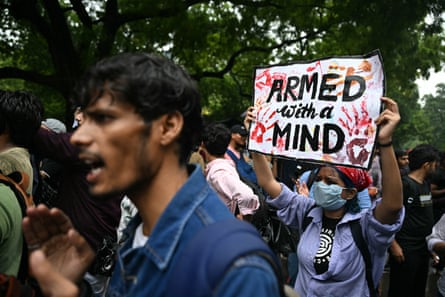
For the youth of the Cockroach Janta Party, the struggle is about more than just one minister or one set of exams. It is a demand for a fundamental shift in how the state interacts with its youngest citizens. As slogans and songs continue to ring out across the protest sites in Delhi, the resilience of the "cockroach" movement remains the defining story of the current political season.
The international community is also watching the situation closely. Human rights organizations have expressed concern over the reports of police violence, while educational experts warn that the continued instability of the national testing system could damage India’s reputation as a global hub for talent. As the sun set on a shuttered parliament on Wednesday, the only certainty was that the "cockroach" protests had successfully moved the battle for India’s future from the exam halls to the very heart of its democracy.