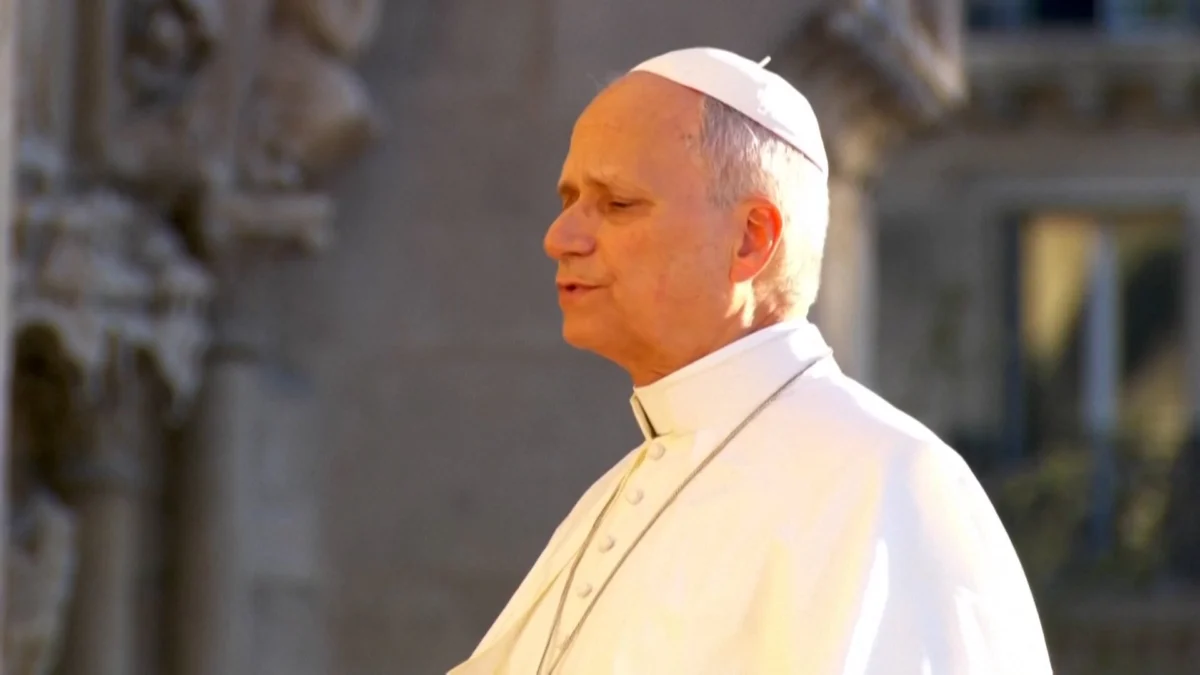
Pope Leo XIV arrived in France for his first official papal visit in 18 years, drawing massive crowds and delivering a powerful message of encouragement to thousands of young people during a Mass held at the Stade de France. The pontiff’s arrival marks a significant moment for the Catholic Church in France and underscores the enduring global influence of the papacy. His presence in the nation, a historical stronghold of Catholicism, is expected to invigorate faith communities and spark discussions on the Church’s role in contemporary society.
A Landmark Papal Engagement in France
The pontiff’s pilgrimage to France, a nation with a complex and evolving relationship with religion, has been eagerly anticipated. This marks the first papal visit of such significance since Pope John Paul II’s memorable tours. The choice of France as the destination for this high-profile engagement underscores its historical importance within the Catholic world and its current cultural landscape. The visit is intended to foster spiritual renewal and dialogue, addressing both the faithful and the broader public.
The French Republic, a staunch proponent of secularism (laïcité), presents a unique backdrop for a papal visit. While Catholicism remains the largest religion, its influence has seen a gradual decline in recent decades, particularly among younger generations. Pope Leo XIV’s presence is seen by many as an opportunity to reconnect with a generation increasingly detached from traditional religious institutions and to articulate the relevance of faith in the 21st century. The pontiff’s itinerary is designed to engage with diverse segments of French society, from the devout to the skeptical.
A Message of Hope for the Youth
At the heart of Pope Leo XIV’s pastoral mission during this visit is a profound message of hope and encouragement directed at the youth of France. Addressing an immense gathering of young Catholics at the iconic Stade de France, the pontiff spoke of the Church’s unwavering support and the enduring value of faith in navigating the challenges of modern life. His sermon emphasized themes of resilience, community, and the pursuit of a meaningful existence, resonating deeply with an audience grappling with societal pressures and existential questions.
The sheer scale of the congregation at the Stade de France was a testament to the enduring appeal of the papacy and the deep-seated spiritual hunger that exists, even in secularized societies. Thousands of young men and women, many traveling significant distances, converged to hear the Pope’s words. Their enthusiastic reception and palpable devotion highlighted a significant segment of the population seeking spiritual guidance and a sense of belonging. The atmosphere was described as electric, a vibrant display of faith and youthful energy.
The Pope’s address focused on empowering young people to be agents of positive change, urging them to embrace their faith not as a passive inheritance but as an active force for good in the world. He stressed the importance of compassion, solidarity, and the courage to stand for one’s convictions, particularly in the face of adversity. His words were carefully crafted to be both spiritually uplifting and practically relevant, offering concrete pathways for integrating faith into daily life and societal engagement.
Historical Context of Papal Visits to France
Papal visits to France carry immense historical weight, dating back centuries and reflecting the intricate relationship between the Holy See and one of Europe’s most influential nations. France has long been considered a “eldest daughter of the Church,” a title reflecting its historical role as a champion of Catholicism. This historical connection has shaped both French identity and the trajectory of the Catholic Church in Europe.
The legacy of Pope John Paul II’s pontificate, in particular, is marked by numerous impactful visits to France. His journeys in the late 20th century were instrumental in galvanizing Catholic communities and engaging in national dialogues on faith, culture, and social issues. These visits often coincided with significant societal shifts, and Pope John Paul II was adept at addressing the evolving needs and concerns of the French populace. His presence often sparked widespread public attention, transcending purely religious circles.
The nearly two-decade gap since the last official papal visit underscores the rarity and significance of Pope Leo XIV’s current engagement. The intervening years have witnessed considerable societal and religious transformations in France. The Church has navigated various challenges, including declining membership, internal debates, and societal skepticism. This visit, therefore, represents an opportunity to address contemporary issues and reassert the Church’s relevance in a rapidly changing world.
Broader Implications of the Papal Visit
Pope Leo XIV’s visit extends beyond a mere religious pilgrimage; it carries significant cultural, social, and even political implications for France and the broader European context. The pontiff’s pronouncements and interactions are closely watched, not only by Catholics but also by secular observers and political leaders who recognize the moral and spiritual authority the papacy wields. The visit provides a platform for the Pope to address pressing global issues and to advocate for values such as peace, justice, and environmental stewardship.
The Catholic Church, despite its declining institutional power in some Western nations, continues to be a significant social force. Pope Leo XIV’s visit serves to reinforce its presence and influence, potentially sparking renewed interest in religious vocations and community engagement. His message to the youth, in particular, is an attempt to counter trends of secularization and to offer an alternative framework for meaning and belonging. This focus on young people is a strategic effort to ensure the Church’s future vitality.
Furthermore, the visit offers an opportunity for dialogue between religious and secular authorities. While France maintains a strict separation of church and state, the Pope’s high-profile presence necessitates engagement from various societal sectors. Discussions surrounding social cohesion, ethical challenges, and the role of faith in public life are likely to be prominent themes during the visit. The Pope’s ability to connect with a diverse audience will be a key indicator of his influence.
Public Reception and Societal Impact
The public reception of Pope Leo XIV’s visit has been overwhelmingly positive, characterized by large turnouts and a generally respectful atmosphere. The sheer number of attendees at the Stade de France signifies a strong desire among many French citizens, particularly the youth, to connect with the spiritual leadership offered by the Pope. This enthusiasm suggests that while institutional affiliation may be waning, a deep-seated spiritual yearning persists.
Beyond the devout, the visit has also generated considerable media attention and public discourse. This heightened visibility provides an opportunity for broader conversations about faith, morality, and the Church’s role in contemporary society. The Pope’s ability to articulate his message in a way that resonates with both believers and non-believers will be crucial in shaping public perception and fostering understanding.
The visit is expected to have a lasting impact on Catholic communities across France, offering a moment of spiritual renewal and collective affirmation. For many, it represents an opportunity to reaffirm their faith and to feel a renewed sense of connection to the global Catholic family. The Pope’s presence serves as a powerful symbol of continuity and spiritual leadership, reinforcing the enduring relevance of religious institutions in a complex world.
Future Trajectories and Church Engagement
As Pope Leo XIV concludes his historic visit, the focus will shift to the long-term implications of his engagement with France. The momentum generated by such a high-profile event offers a critical window for the Catholic Church to build upon the enthusiasm and dialogue sparked during the pontiff’s stay. Strategies will likely be developed to sustain the interest of the youth and to integrate the Pope’s message into ongoing pastoral efforts across the country.
The Church faces the ongoing challenge of adapting to evolving societal norms and expectations. Pope Leo XIV’s visit, with its emphasis on youth and contemporary relevance, signals a commitment to this adaptive process. The success of future engagement will depend on the Church’s ability to translate the spiritual energy of this visit into concrete actions that address the needs and concerns of the French people.
Ultimately, Pope Leo XIV’s first official papal visit to France in nearly two decades stands as a testament to the enduring power of faith and the continued significance of the papacy. It has provided a vital platform for spiritual connection, dialogue, and reflection, offering a beacon of hope and encouragement for generations to come. The reverberations of this landmark event are likely to be felt within France and across the global Catholic landscape for years to come.