Adult Swim’s highly anticipated President Curtis animated series, a spinoff from the popular Rick and Morty universe, has premiered to a mixed critical reception, with early episodes struggling to capture the anarchic brilliance of its predecessor, according to recent assessments. While initially suffering from a perceived creative staleness and underdeveloped character introductions, the 10-episode first season demonstrates a noticeable upward trajectory, evolving into a reasonably amusing diversion that finds its footing after a shaky start.
The Legacy of Rick and Morty
Rick and Morty emerged as a cultural phenomenon in the mid-2010s, lauded for its inventive storytelling, dark humor, and complex philosophical undertones. The show, co-created by Dan Harmon and Justin Roiland, garnered a fervent and often intensely devoted fanbase, which at its peak in 2017, drew significant media attention, sometimes for its more extreme elements. A notable example involved widespread fan demand, and subsequent chaotic scenes, surrounding the limited re-release of McDonald’s Szechuan sauce, a reference from the series. This zealous following, while demonstrating the show’s profound impact, occasionally overshadowed its undeniable quality, which, at its best, positioned Rick and Morty as one of television’s most creatively unhinged and compelling adult animated series.
However, recent seasons of the flagship program have faced criticism for becoming qualitatively erratic. Episodes sometimes feel formulaic, leading some longtime viewers to note a decline in the consistent brilliance that once defined the show. This perceived shift has raised questions about the timing and creative necessity of expanding the Rick and Morty universe through spinoffs, particularly one centered on a recurring, albeit memorable, character like President Andre Curtis. The show’s recent Emmy nomination, some argue, felt more like an autopilot recognition than a testament to peak creative output.
The Genesis of President Curtis
President Andre Curtis, voiced by the distinguished Keith David, has been a familiar face in the Rick and Morty cosmos, making multiple appearances over the years. His character, known for his commanding voice and presidential gravitas, often served as a foil or reluctant ally to Rick Sanchez and Morty Smith. The decision to build an entire series around him was met with some skepticism, given that Curtis had not previously established a deeply coherent individual voice or a distinct narrative milieu separate from the core duo’s adventures.
The new Adult Swim production, President Curtis, is spearheaded by Dan Harmon, a co-creator of Rick and Morty, alongside James Siciliano. This creative pairing aimed to translate the episodic, high-concept absurdity of the original into a new format, focusing on a character whose primary duties involved leading the country, but whose true passions lay in unconventional vigilante missions. The series was slated for an 11:30 p.m. slot on Sundays, beginning July 26, featuring a voice cast including Keith David, Jim Rash, and Stephanie Beatriz.
Initial Stumbles and Gradual Improvement
The inaugural episode of President Curtis reportedly struggles to establish its core premise and introduce its new supporting cast effectively. Critics noted the pilot’s lack of humor, even with a brief cameo from Rick and Morty themselves, suggesting an initial creative misstep. The episode, which involves the CIA’s attempts to secure authentic moon landing footage to protect a secret tied to the Kennedy administration, was tasked with outlining the show’s structure and character dynamics. However, it largely failed to delineate the distinct personalities and roles of Curtis’s new associates.
Despite this uninspired debut, the series reportedly improves significantly as the season progresses. Subsequent President Curtis episodes are described as becoming "funnier, wilder, and better focused," suggesting that the creative team found its rhythm after the initial stumble. This development indicates a learning curve inherent in launching a new animated property, particularly one with the weight of a successful predecessor. By the end of its 10-episode run, the series manages to settle into a "decent groove," offering a reasonable amount of amusement.
Character Development and Thematic Direction
Central to President Curtis are its three main characters: President Andre Curtis, his half-leprechaun Secret Service agent O’Doyle (voiced by Jim Rash), and his cybernetically enhanced Chief of Staff, Banks (voiced by Stephanie Beatriz). In the pilot, O’Doyle’s attributes and Banks’s enhanced capabilities and role within the administration were notably ill-defined. Banks, in particular, is positioned as a "chief of staff" for a seemingly non-existent staff, a detail that raised "parochial curiosities" about the show’s internal logic, which was not sufficiently offset by comedic impact.
The review highlights that even several episodes into the season, O’Doyle and Banks struggle to become truly distinctive. While an episode focusing on O’Doyle’s leprechaun mother and a Fort Knox gold heist, and a flashback exploring Banks’s enhancements, hint at potential depth, these moments are not consistently realized. The voice talents of Rash and Beatriz, while energetic, are noted as being "nondescript" in these early stages, constrained by underdeveloped character writing.
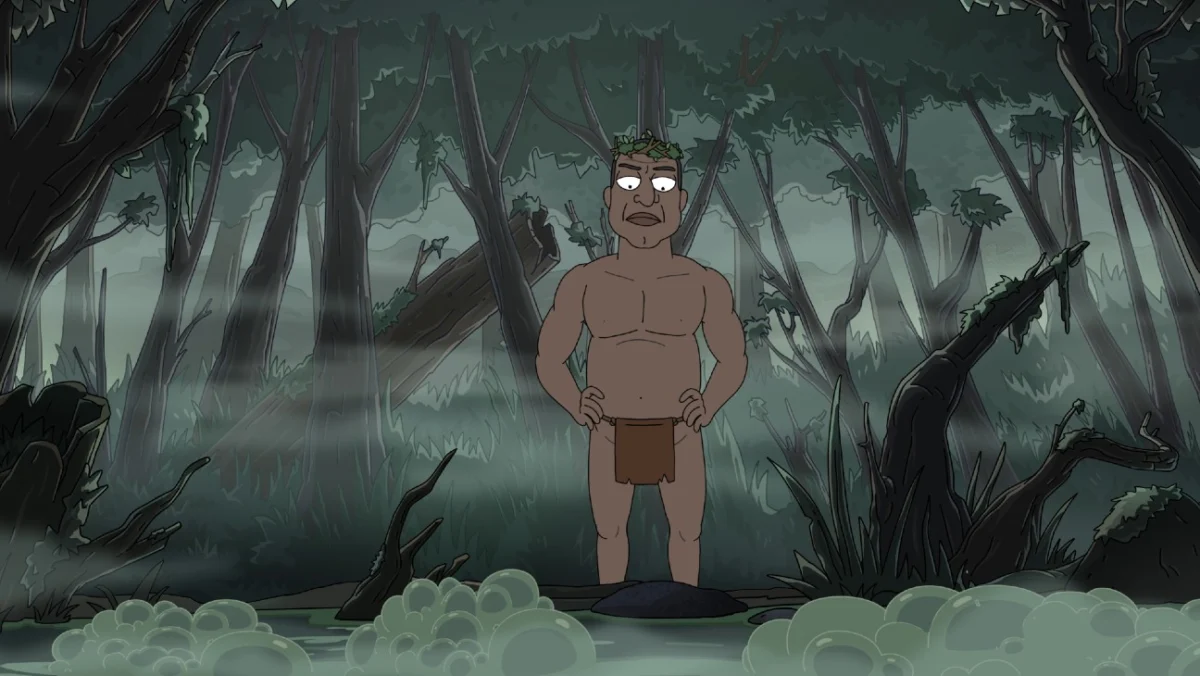
President Curtis himself, despite Keith David’s impeccable voice work, also grapples with fully realizing his potential. The series portrays him as driven by a subtle current of loneliness, underscored by an episode featuring his ex-wife, the newly elected Governor of Illinois. This melancholy, coupled with David’s delivery, substitutes for a deeper personality or any discernible political ideology, a curious choice for a presidential character. The show deliberately steers clear of contemporary 21st-century political figures, opting instead for adventures involving historical anomalies like Paul Bunyan, Abraham Lincoln’s ghost, and Amelia Earhart. This thematic choice prioritizes historical whimsy and fantastical threats over direct political satire, an approach that has been described as "toothless" in its engagement with the complexities of Washington or national affairs.
Analysis of Creative Choices and Narrative Structure
The creative decision to focus on historical and civic-themed missions, rather than direct political commentary, distinguishes President Curtis from potential expectations. While Rick and Morty occasionally touched on societal issues, its primary strength lay in conceptual inspiration—taking a kernel of an idea and pushing it to its furthest, most absurd limits. President Curtis, in contrast, tends to rely more on meta-examinations of television tropes, such as jokes about spinoffs, A and B stories, and clichés from holiday programming, rather than building satire around governance or contemporary politics. This stylistic choice, while perhaps a deliberate attempt to avoid controversy or topical staleness, positions the show as a lighter, more escapist fare.
The series’ strength lies in its "sturdy episodic concepts," including a top-secret supermax prison in the Bermuda Triangle and a journey to the Earth’s core. These narratives, coupled with well-seeded ongoing story arcs and effective recurring jokes—notably the unique song and outtakes accompanying each week’s closing credits—provide a reliable foundation for its improving quality. The show occasionally weaves in "a wee bit about American history," offering a veneer of educational engagement amidst its fantastical plots. The opening credits, reminiscent of an ’80s sitcom with action snapshots, further reinforce its adventurous, retro appeal, aligning with its "National Treasure in the multiverse" description.
Impact on the Adult Animation Landscape
For Adult Swim and its parent company, Warner Bros. Discovery, the launch of President Curtis represents an ongoing strategy to leverage successful intellectual property. In a competitive streaming landscape, expanding popular franchises like Rick and Morty is a common approach to attract and retain audiences. The initial mixed reception of President Curtis underscores the inherent challenges of replicating a parent series’ unique magic, particularly when it relies heavily on the dynamic chemistry of its original protagonists.
While President Curtis may not ignite the same "fervent cult" following or generate the "cultural talking points" that Rick and Morty achieved in its heyday—thereby potentially preventing any future Szechuan sauce-esque incidents—it successfully carves out a niche as a "quirky diversion." Its trajectory of improvement suggests a potential for growth, allowing character-based elements that have yet to fully gel to develop over subsequent seasons. The series’ performance will likely inform future adult animation development within the network, influencing decisions on character-centric spinoffs and the balance between brand familiarity and creative independence.
Future Prospects for President Curtis
The initial run of President Curtis concludes without achieving the sharpness required to cultivate a devoted following akin to Rick and Morty‘s early seasons. However, its significant improvement post-pilot suggests a foundational strength that could evolve. When compared to other recent comedy spinoffs that arrive long after their original series’ peak and focus on characters who did not necessarily demand standalone narratives, President Curtis is noted for at least surpassing other attempts, such as "Stuart Fails to Save the Universe."
The path forward for President Curtis will depend on its ability to further refine its character dynamics and embrace its distinct blend of historical whimsy and meta-humor. With more episodes, the show has the potential to deepen its supporting cast and allow President Curtis to develop a more defined personality beyond his current undercurrent of melancholy. This could enable it to evolve into a standalone success, carving its own identity beyond the shadow of its progenitor.