Qatar’s Prime Minister and Minister of Foreign Affairs, Sheikh Mohammed bin Abdulrahman bin Jassim Al Thani, is scheduled to visit Tehran for discussions aimed at de-escalating regional tensions, according to the Qatari Ministry of Foreign Affairs. This diplomatic engagement comes as the United States, through President Donald Trump, has indicated a lack of urgency regarding direct negotiations with Iran. The visit underscores Qatar’s persistent role as a mediator in a volatile Middle East, attempting to bridge divides between key regional players and the U.S. administration.
The Qatari delegation’s arrival in the Iranian capital signifies a critical moment for regional diplomacy. Sheikh Mohammed’s meetings with Iranian officials are expected to cover a spectrum of pressing issues, including the ongoing conflicts in Yemen and Syria, as well as the broader implications of Iran’s nuclear program and its impact on international security. Qatar has long advocated for dialogue as the primary means to resolve complex geopolitical challenges, leveraging its neutral stance and extensive diplomatic network.
U.S. Administration’s Position on Iran Negotiations
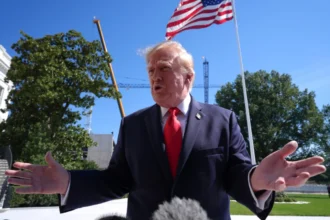
President Donald Trump’s recent statements on the prospect of Iran talks have injected a layer of complexity into the diplomatic landscape. Trump has repeatedly asserted that the U.S. is "not in a hurry" to engage in direct negotiations with Iran, suggesting that any future dialogue would be contingent on significant shifts in Iran’s behavior. This cautious approach, characterized by a desire for tangible concessions from Tehran, contrasts with the more proactive mediation efforts being undertaken by countries like Qatar.
The U.S. policy towards Iran has been marked by a strategy of "maximum pressure," involving stringent economic sanctions and diplomatic isolation. While the administration has occasionally signaled openness to dialogue, this has often been coupled with demands for Iran to cease its ballistic missile development, end its support for regional proxies, and fundamentally alter its foreign policy. This stance has created a difficult environment for multilateral diplomatic initiatives seeking to achieve de-escalation and prevent further conflict.
Qatar’s Historical Role in Regional Diplomacy
Qatar has carved out a significant niche for itself as a key mediator in the Middle East, a role amplified by its ability to maintain diplomatic ties with a wide array of actors, including those with adversarial relationships. The small Gulf nation has consistently sought to foster dialogue and de-escalate conflicts, a strategy that has seen it play crucial roles in mediating disputes in Afghanistan, the Horn of Africa, and most notably, between the U.S. and Iran.
The recent visit by Qatar’s Prime Minister is a testament to this ongoing commitment. Doha’s diplomatic efforts have often involved facilitating indirect talks, prisoner exchanges, and the establishment of communication channels that might otherwise be closed. This approach has been particularly vital in managing tensions surrounding Iran’s nuclear program and its regional activities, where direct communication lines have been scarce.
Escalating Regional Tensions and the Need for Dialogue
The backdrop to Sheikh Mohammed’s visit is a region fraught with heightened tensions. The aftermath of various geopolitical events, including attacks on oil infrastructure, maritime incidents in the Persian Gulf, and proxy conflicts across the Middle East, has created an atmosphere of considerable unease. Iran’s regional influence and its complex relationship with its neighbors, as well as global powers, remain a central concern for international stability.
These escalating tensions have a direct impact on global energy markets, international trade routes, and the humanitarian situation in conflict-affected areas. The potential for miscalculation or escalation remains a significant risk, making diplomatic interventions like Qatar’s visit all the more crucial. The de-escalation efforts aim to prevent further instability and create a conducive environment for broader political solutions.
Key Issues on the Agenda for Tehran Discussions
The Qatari Prime Minister’s agenda in Tehran is expected to be comprehensive, addressing a range of critical issues. Central to the discussions will likely be the ongoing nuclear deal, officially known as the Joint Comprehensive Plan of Action (JCPOA), and the broader implications of its faltering state. Iran’s insistence on economic relief in exchange for nuclear concessions, and the U.S. demand for a more stringent and comprehensive agreement, remain significant sticking points.
Furthermore, the discussions are anticipated to delve into Iran’s ballistic missile program, which has been a major point of contention with the U.S. and its allies. The role of Iran-backed militias and proxies in countries like Yemen, Syria, Iraq, and Lebanon will also be a significant topic, as these activities are viewed by many as destabilizing forces in the region. Qatar’s mediation aims to explore avenues for reducing these activities and fostering a more secure regional environment.
Implications of Qatar’s Diplomatic Engagement
Qatar’s proactive diplomacy in engaging with Iran, even amidst a challenging U.S. stance, carries significant implications. It demonstrates a commitment to multilateralism and the belief that dialogue is the most effective path to resolving complex international disputes. This approach is vital in preventing the region from spiraling further into conflict.
The success of these diplomatic efforts could pave the way for renewed negotiations or at least a cooling of immediate tensions. It also highlights the growing influence of regional powers like Qatar in shaping diplomatic outcomes, independent of the direct involvement of larger global actors. The outcome of these talks could influence the trajectory of U.S.-Iran relations and the broader security architecture of the Middle East.
Broader Impact on Regional Stability and Global Markets
The ongoing diplomatic maneuvers, including Qatar’s visit to Tehran, have a profound impact on regional stability and global markets. A de-escalation of tensions could lead to greater predictability in oil supplies, which are crucial for the global economy. Conversely, any further escalation could disrupt these supplies, leading to price volatility and economic uncertainty.
The humanitarian consequences of regional conflicts are also immense. Successful diplomatic interventions can alleviate suffering, facilitate the delivery of aid, and create conditions for long-term peacebuilding. The efforts by Qatar aim to contribute to these vital objectives, fostering a more stable and prosperous future for the region and beyond.
Looking Ahead: The Path to De-escalation
The visit by Qatar’s Prime Minister to Tehran is a crucial step in a long and complex diplomatic process. While the immediate outcomes may not be revolutionary, such engagements are vital for maintaining open lines of communication and exploring potential pathways toward de-escalation. The U.S. administration’s patience, coupled with the persistent efforts of mediating nations, will ultimately shape the future of Iran’s relations with the international community.
The commitment of Qatar to fostering dialogue underscores the belief that even in the most challenging geopolitical landscapes, diplomatic solutions remain within reach. The world will be watching to see if these efforts can translate into tangible progress toward a more peaceful and secure Middle East.