The Queensland government has introduced sweeping new legislation that significantly restricts the ability of citizens and environmental groups to challenge mining developments in court, sparking a fierce debate over the balance between industrial expansion and democratic oversight. The proposed laws, tabled Tuesday by the Liberal National Party (LNP) administration, would effectively bar any opponent from being heard in the state’s Land Court without the express approval of the natural resources minister. Under the new framework, standing to object would be limited primarily to individuals who own property within a 125-kilometer (77-mile) radius of a proposed project, a move that critics argue will silence the vast majority of environmental advocates and concerned citizens across the state.
The legislative overhaul represents one of the most significant shifts in Queensland’s mining regulatory history, moving away from a system of automatic judicial review toward one centered on ministerial discretion. Environmental organizations and legal experts have reacted with alarm, suggesting the changes dismantle long-standing protections designed to ensure that large-scale industrial projects are subject to public scrutiny. The government, however, maintains that the changes are necessary to accelerate project approvals and prevent "lawfare" from stalling economic development.
The New Regulatory Framework and the 125km Boundary
At the heart of the new legislation is a restrictive geographical and administrative barrier intended to filter out what the government describes as "outside interference." By imposing a 125km radius requirement, the law ensures that only those with a direct, local property interest have an inherent right to raise concerns about a project’s impact. This provision is specifically designed to exclude metropolitan-based environmental groups and international organizations from participating in the legal process.
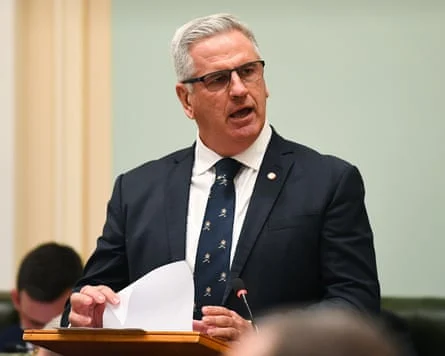
Natural Resources Minister Dale Last, who introduced the bill to parliament, stated that the initiative is focused on "streamlining approvals and making faster decisions." According to Last, the era of activists from distant regions influencing local industrial policy is coming to an end. "Activists based thousands of kilometres away and green groups funded by foreign overseas entities are no longer eligible to have a say," Last told the legislature. He emphasized that objections from individuals or groups outside the 125km boundary whose interests are not directly affected will no longer be accepted by the state.
The shift has been met with condemnation from the Greens and various community action groups. The Lock the Gate Alliance, a prominent advocacy group representing farmers and environmentalists, accused the LNP government of "tearing up democratic and environmental protections" to serve the interests of mining corporations. Critics argue that environmental impacts, such as groundwater contamination and carbon emissions, do not stop at an arbitrary 125km line, making the geographic restriction scientifically and legally flawed.
Ministerial Discretion: A Shift in Legal Oversight
Perhaps the most controversial aspect of the bill is the removal of the automatic referral process to the Land Court. Under current Queensland law, when a formal objection is lodged against a mining project, the matter is automatically sent to the state’s Land Court for an independent assessment. This process provides a transparent forum where evidence regarding environmental, social, and economic impacts can be tested under cross-examination.
The new legislation seeks to amend this by granting the "decision-maker" the power to decide whether or not an objection merits a court hearing. In the context of mining leases, this decision-maker is the Resources Minister. For matters involving environmental approvals, the authority rests with the Director General of the Department of Environment. This shift grants political appointees the power to act as gatekeepers to the judicial system, a move that legal experts warn could lead to a lack of transparency and potential conflicts of interest.
Anthony Gough, acting director of the Queensland Conservation Council, noted that the change allows the minister of the day to "pick and choose" which community objections are heard in open court. "This bill strips community members of their right to have their objection to damaging mining projects heard in court," Gough said. He pointed out that many historical victories for environmental preservation, such as the cessation of sand mining on the World Heritage-listed K’Gari (Fraser Island), were made possible only through the very court processes the government is now seeking to restrict.
Economic Impetus vs. Environmental Protection
Queensland holds a central position in Australia’s economy as the nation’s leading producer of coal and the second-largest mining hub after Western Australia. However, this industrial dominance has made it the most polluting state in the country, largely due to its heavy reliance on coal for both domestic energy production and export revenue. The LNP government argues that the state’s economic future depends on its ability to bring new projects online quickly to meet global demand and secure high-paying jobs.

Minister Last cited the legal battle over the New Acland coal mine expansion as a primary justification for the legislative changes. That specific dispute lasted 11 years, involving multiple rounds of litigation that eventually reached the High Court of Australia. The government views such protracted legal battles as a "debacle" that hinders investment and creates uncertainty for the resources sector. "We are laser-focused on improving approval timeframes," Last said, characterizing the current objection process as one of the biggest obstacles to project timelines.
In contrast, the Oakey Coal Action Alliance, the group of local farmers who led the fight against the New Acland expansion, argued that their 11-year struggle was a legitimate exercise of democratic rights. A spokesperson for the group stated that the new laws are designed to "stop anyone who understands we are in a climate crisis from objecting to putting more CO2 into the atmosphere." The alliance contends that the government is rewriting the rules specifically to prevent similar grassroots victories in the future.
Analysis of the Scrapped Independent Review
The introduction of this bill follows the government’s controversial decision last year to cancel an independent review of mining lease objection laws. The Queensland Law Reform Commission had been conducting a months-long investigation into the system and was reportedly weeks away from releasing its findings when the LNP government intervened. The independent review was abruptly scrapped and replaced by a review conducted by a cabinet sub-committee, a move that critics say allowed the government to bypass impartial legal expertise in favor of a politically motivated outcome.
This procedural shift has fueled accusations from the Greens that the new laws are "corrupt" in their intent. By avoiding the recommendations of a law reform commission and instead relying on internal political deliberations, the government has been accused of prioritizing the wish lists of mining lobbyists over the legal rights of the citizenry. The decision to ignore the commission’s work has become a focal point for those arguing that the new legislation lacks a mandate for such radical change.
Broader Implications for Australian Democracy and Industry
The legislative move in Queensland is being watched closely across Australia, as it reflects a broader tension between resource-rich states and the growing movement for climate accountability. By restricting standing to "local" property owners, the law effectively de-legitimizes the idea that the environment is a collective public good. If an individual in Brisbane or Gold Coast cannot object to a mine in the Galilee Basin that affects the state’s overall water security or carbon footprint, the scope of environmental advocacy is narrowed significantly.
Furthermore, the law aligns with other recent actions taken by the LNP government to facilitate industrial development. Last year, the government expanded objection rights against wind farm approvals while simultaneously passing legislation that allows for the compulsory acquisition of land for coal mining projects. This perceived double standard—making it easier to block renewable energy while making it harder to block fossil fuel extraction—has drawn sharp criticism from energy analysts and environmentalists alike.
Ellen Roberts, national coordinator for the Lock the Gate Alliance, suggested the government is following a "playbook" reminiscent of previous conservative administrations known for aggressive deregulation. "The government is tearing up democratic protections just to make life easier for mining companies," Roberts said. She warned that the removal of independent judicial oversight would ultimately lead to poorer environmental outcomes and increased social friction in rural communities.
Impact on Future Litigation and Community Relations
As the bill moves through the legislative process, the legal community is bracing for a fundamental change in how mining disputes are managed. Without the "safety valve" of the Land Court, many fear that community frustrations will manifest in other ways, such as increased direct action, protests, and civil disobedience. The Land Court has traditionally provided a structured environment for resolving complex disputes; without it, the path to resolution becomes purely political.
For the mining industry, the laws offer the promise of shorter lead times and reduced legal costs. However, some industry analysts warn that bypassing public consent can lead to a loss of "social license to operate." If communities feel they have been silenced by legislative fiat, the long-term stability of mining projects could be compromised by ongoing local resentment.
The legislation is expected to pass given the government’s current parliamentary standing, but the political fallout is likely to continue. With Queensland facing increasing pressure to meet emissions reduction targets while maintaining its status as a mining powerhouse, the "gutting" of objection rights marks a definitive choice by the state to prioritize industrial speed over the traditional avenues of public dissent. The coming months will determine how the Land Court adapts to its new, more limited role and whether the ministerial gatekeeping will withstand the inevitable legal challenges that follow.