Newly obtained internal documents and personal correspondence suggest that U.S. Health Secretary Robert F. Kennedy Jr. provided false testimony to lawmakers during his high-stakes confirmation process last year. The records, which include letters and emails from 2019, directly contradict Kennedy’s repeated assertions to the Senate that a controversial visit to Samoa had "nothing to do with vaccines."
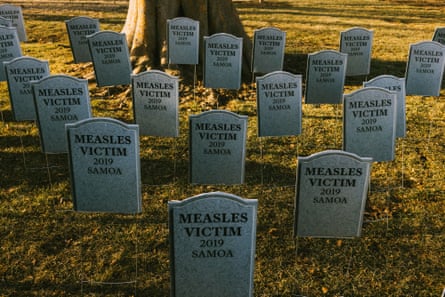
The discrepancy centers on a 2019 trip Kennedy took to the Pacific island nation just months before a devastating measles outbreak killed 83 people, most of them children. During two separate congressional hearings, Kennedy told the senators responsible for his confirmation that his visit was focused entirely on "medical informatics" and administrative efficiency. However, a letter written by Kennedy himself prior to the trip indicates that his primary objective was to investigate the safety and manufacturing of the measles, mumps, and rubella (MMR) vaccine.
The revelation has ignited a political firestorm in Washington, raising questions about the integrity of the nation’s top health official. While Kennedy was not under oath during the hearings, federal law prohibits providing materially false statements to Congress. The documents, obtained by investigative journalists through freedom of information requests, provide a rare look into the private motivations behind a trip that has long been a point of contention for public health experts.
Documentary Evidence Suggests RFK Jr Lied in Senate Confirmation Hearings
The primary piece of evidence is a letter dated January 20, 2019, addressed to then-Samoan Prime Minister Tuilaepa Sailele Malielegaoi. In the correspondence, written on Children’s Health Defense (CHD) letterhead, Kennedy explicitly detailed his desire to study the island’s vaccine program. Analysis of the letter shows that Kennedy used the words "vaccine" or "vaccination" eight times, framing his visit as an inquiry into potential manufacturing defects.
Kennedy wrote to the Prime Minister expressing his hope to be "helpful" to the nation following the deaths of two infants in 2018. Those deaths occurred shortly after the children received MMR vaccinations, an event that led the Samoan government to temporarily halt its national immunization program. Kennedy’s letter proposed that his team conduct a "detailed health informatics assessment" specifically to determine "what happened with your MMR vaccines."

This private proposal stands in stark contrast to the testimony Kennedy delivered to the Senate. When questioned by Senator Ron Wyden, an Oregon Democrat, Kennedy insisted the trip was "unrelated to vaccines." He claimed his only purpose was to introduce a digital record-keeping system to improve health delivery. The newly revealed documents suggest that this "informatics" system was, in fact, a tool specifically designed to track and highlight adverse health events associated with vaccinations.
The 2019 Samoa Measles Outbreak and the Role of Anti-Vaccine Activism
The context of Kennedy’s visit is critical to understanding the gravity of the allegations. In July 2018, two Samoan infants died because nurses accidentally mixed the MMR vaccine with an expired anesthetic instead of water. While the deaths were the result of human error—and the nurses involved later pleaded guilty to manslaughter—the incident caused a collapse in public trust.
The Samoan government suspended all vaccinations for ten months, during which time vaccination rates for infants plummeted from roughly 70% to under 30%. It was during this period of extreme vulnerability that Kennedy and his organization, Children’s Health Defense, began communicating with Samoan officials. Public health experts have argued that the presence of high-profile American anti-vaccine activists emboldened local skeptics and contributed to the continued refusal of life-saving shots.
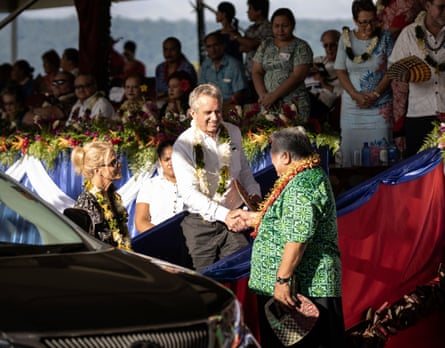
In May and June of 2019, Kennedy, accompanied by his wife, actor Cheryl Hines, and Dr. Michael Graven, arrived in Samoa. Despite the Samoan health ministry having already clarified that the 2018 deaths were due to nurse error and not the vaccine itself, Kennedy’s team continued to suggest that the vaccine lots might be the problem. By late 2019, a measles outbreak swept through the unvaccinated population, sickening thousands and leading to the deaths of dozens of toddlers.
Dissecting the Contradictions in Senate Testimony
During the confirmation process, several senators pressed Kennedy on whether his activism had contributed to the tragedy in Samoa. Kennedy was categorical in his denials. He told Senator Edward Markey of Massachusetts, "My purpose in going down there had nothing to do with vaccines." He further claimed that "you cannot find a single Samoan who will say I didn’t get a vaccine because of Bobby Kennedy."
However, internal emails from Kennedy’s colleague, Dr. Michael Graven, sent to Samoan officials in May 2019, described the upcoming trip as a "mission" specifically related to vaccine outcomes. The emails suggest the team was eager to use Samoa as a "natural experiment" to study a population that had been off vaccines for several months. This language was later echoed in a 2021 blog post on the CHD website, which admitted the team was "curious to measure health outcomes" following the national "respite" from vaccines.
The discrepancy between these private admissions and Kennedy’s public testimony has led to accusations that RFK Jr lied in Senate confirmation hearings to secure his position. Critics argue that had the full extent of his involvement in Samoa been known, the 52-48 vote to confirm him might have gone differently. The narrow margin of his victory underscores the political sensitivity of his past activism.
Legal Ramifications and the Question of Congressional Integrity
Under Section 1001 of Title 18 of the U.S. Code, it is a federal crime to knowingly and willfully make a false statement to a congressional committee. While these cases are most commonly prosecuted when a witness is under oath, the statute also applies to unsworn statements made during official proceedings. Convictions can result in fines and up to five years in prison, though such prosecutions are historically rare for high-ranking executive officials.
The Department of Health and Human Services (HHS) has moved quickly to defend the Secretary. In a statement, an HHS spokesperson called the allegations "outright defamatory" and maintained that the 2019 trip was focused on general health technology. The spokesperson did not, however, explain why Kennedy’s own letter to the Samoan Prime Minister focused so heavily on the MMR vaccine if the trip was truly unrelated.
The irony of the situation has not been lost on political observers. Kennedy has recently advocated for the criminal prosecution of other public health officials, such as Dr. Anthony Fauci, for what he claims was misleading testimony regarding the origins of COVID-19. By signaling an appetite for perjury charges against his predecessors, Kennedy has heightened the scrutiny on his own statements to lawmakers.
Potential Political Consequences and Oversight
The discovery of these documents provides significant ammunition for congressional Democrats. If the political makeup of the House or Senate shifts in future elections, these letters could serve as the basis for an impeachment inquiry or specialized oversight hearings. Senators who originally questioned Kennedy, including Wyden and Markey, have indicated that the new evidence suggests a deliberate attempt to mislead the legislative branch.
The implications for the Trump administration are also significant. As Health Secretary, Kennedy oversees the Centers for Disease Control and Prevention (CDC) and the Food and Drug Administration (FDA), agencies that manage the nation’s vaccine policy. Questions regarding his honesty during his confirmation could undermine the public’s trust in these agencies’ recommendations.
Legal experts note that the federal statute of limitations for lying to Congress is five years. This means that even if the current Justice Department declines to investigate, a future administration could theoretically revisit the case before the clock runs out in 2029. For now, the focus remains on the immediate political fallout and whether the Secretary will be called back to the Hill to explain the contradictions.
Impact on Global Public Health Policy
Beyond the domestic political implications, the controversy touches on the United States’ role in global health. The Samoa incident remains a textbook example of how vaccine hesitancy can lead to a public health catastrophe. If the U.S. Health Secretary is found to have misled Congress about his role in such an event, it could complicate diplomatic efforts to manage future outbreaks in the developing world.
Public health advocates argue that the Secretary’s past actions in Samoa, and his subsequent testimony about them, reflect a broader pattern of skepticism toward established medical science. They contend that the newly revealed letters prove that Kennedy was not merely a passive observer in Samoa but an active participant in a campaign that questioned the safety of a vital vaccine during a period of national crisis.
As the Department of Health and Human Services continues to navigate its new leadership, the shadow of the 2019 Samoa trip remains. The documents revealed this week ensure that the questions Kennedy faced during his confirmation will not go away. Instead, they have evolved into a deeper debate about the standards of truth required for those who hold the highest offices in the American government.