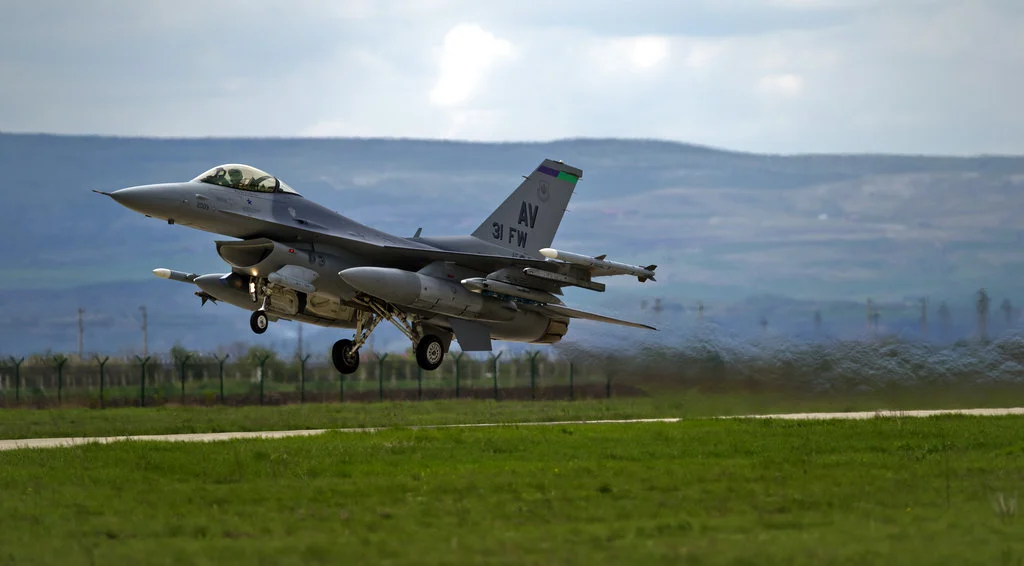
A Romanian F-16 fighter jet successfully intercepted and downed a drone suspected to be of Russian origin after it violated the country’s airspace on Friday, marking a significant escalation in regional tensions and underscoring the persistent risk of the war in Ukraine spilling over into neighboring NATO territories. The incident, confirmed by Romanian authorities, adds to a growing pattern of aerial incursions that have heightened concerns among alliance members.
Escalation Over Romanian Skies
The interception occurred on Friday afternoon when a Romanian Air Force F-16 jet was scrambled to engage an unidentified aerial object detected within Romanian airspace. The drone, which had entered the country’s territory from the east, was tracked for a period before the fighter jet engaged and neutralized it with an air-to-air missile. The downed drone fell in an uninhabited area, preventing any civilian casualties or damage on the ground.
This event represents the first instance of Romania intercepting an intruding aircraft since Russia launched its full-scale invasion of Ukraine in February 2022. The Romanian Ministry of National Defence reported that radar systems first detected the drone approximately 12 miles east of the Black Sea port of Sulina. The aircraft then proceeded inland, traversing paths through Braila, Fetesti, and Buzau counties before being engaged.
NATO Air Policing in Action
The Romanian F-16 was part of a coordinated air defense effort. Two Italian Eurofighter Typhoon jets, currently deployed to Romania as part of NATO’s enhanced Air Policing mission, were also involved in monitoring the situation. This collaborative response highlights the alliance’s readiness to protect its member states against aerial threats.
A Romanian military source, speaking on condition of anonymity, indicated that Russia is the suspected origin of the drone, citing a pattern of similar incursions observed in the region. The source explained that the drone’s flight path and characteristics were consistent with those previously attributed to Russian reconnaissance or attack drones.
A Growing Pattern of Incursions
The incident in Romania is not an isolated event. Several NATO member states bordering Ukraine and the Black Sea have reported a surge in drone incursions and near-misses in recent months. These violations, whether accidental or intentional, have fueled anxieties about the potential for miscalculation and direct confrontation between Russia and the NATO alliance.
The presence of hundreds of drones being deployed daily by both Russia and Ukraine in the conflict zone increases the likelihood of these unmanned aerial vehicles straying into the airspace of neighboring countries. For Romania, a nation that shares a significant border with Ukraine and is a key NATO member in Eastern Europe, these incursions pose a direct and immediate security challenge.
Previous Incidents and Heightened Concerns
The downing of the suspected Russian drone follows a series of concerning aerial incidents in Romania and the wider region. In late May, a drone reportedly struck an apartment building in the Romanian city of Galati, injuring two people. This marked the first time a drone strike had impacted a populated area within a NATO country, drawing strong condemnation from NATO and European Union officials. The European Commission at the time stated that Russia’s war had "crossed yet another line."
A month prior to the Galati incident, a Ukrainian sea drone detonated at the port of Constanta, Romania’s largest port. Ukraine acknowledged launching the vessel, attributing its deviation from course to Russian electronic jamming. This event underscored the dual threat posed by both direct Russian actions and the collateral effects of the conflict spilling across borders.

The Baltic states, including Latvia, have also experienced repeated airspace violations. These incursions contributed to significant political instability, most notably playing a role in the collapse of Latvia’s government in May. The recurring nature of these events has prompted strong statements from NATO leadership.
NATO Secretary General Jens Stoltenberg has repeatedly warned that Moscow’s "reckless behavior is a danger to us all." Similarly, U.S. Ambassador to NATO, Matthew Whitaker, has pledged the alliance’s unwavering commitment to "defend every inch" of its territory, reinforcing NATO’s collective defense posture.
Strategic Implications for NATO
The downing of the suspected Russian drone by a Romanian F-16 serves as a stark reminder of the volatile security environment on NATO’s eastern flank. It underscores the importance of robust air policing capabilities and effective early warning systems. The incident also validates the alliance’s decision to bolster its presence and readiness in Eastern Europe since the full-scale invasion of Ukraine began.
For Romania, the event signifies a critical juncture in its defense posture. While the country has been vigilant, this successful interception demonstrates the effectiveness of its air defense assets and the readiness of its pilots. The ongoing deployment of allied fighter jets under NATO’s Air Policing mission further solidifies the collective security umbrella over the region.
The Broader Context of Drone Warfare
The proliferation of drones in modern warfare has fundamentally altered battlefield dynamics and introduced new challenges for air defense. Russia and Ukraine have both deployed vast numbers of unmanned aerial vehicles for reconnaissance, surveillance, and attack missions. This has, in turn, led to an increased risk of these systems inadvertently or intentionally crossing international borders.
The complexity of identifying and responding to drone threats requires sophisticated radar technology, rapid response protocols, and well-trained personnel. The Romanian Air Force’s successful interception highlights its commitment and capability in this evolving domain of aerial warfare.
Public Perception and National Security
Incidents involving airspace violations and drone crashes, particularly when they occur near populated areas, inevitably heighten public anxiety. While no casualties were reported in the latest Romanian incident, the memory of the drone strike in Galati remains fresh in the minds of citizens. Governments in the region are under pressure to ensure public safety and demonstrate effective measures against potential threats.
The Romanian government’s swift communication of the incident and the details of the interception aim to reassure the public and project an image of robust national security. The involvement of NATO allies in monitoring and responding to such threats also serves to bolster confidence in the collective security arrangements.
Looking Ahead: Vigilance and Deterrence
The downing of the suspected Russian drone over Romania is a significant development that underscores the ongoing risks associated with the conflict in Ukraine. It emphasizes the need for continued vigilance, enhanced intelligence sharing, and a strong, unified response from NATO member states.
The incident serves as a potent reminder that the war’s repercussions extend far beyond Ukraine’s borders, directly impacting the security and stability of neighboring nations. Romania’s decisive action demonstrates its commitment to defending its sovereignty and its role within the NATO alliance. As the conflict continues, maintaining a high state of readiness and a clear deterrence posture will be paramount for preventing further escalation and safeguarding the territorial integrity of all NATO members.