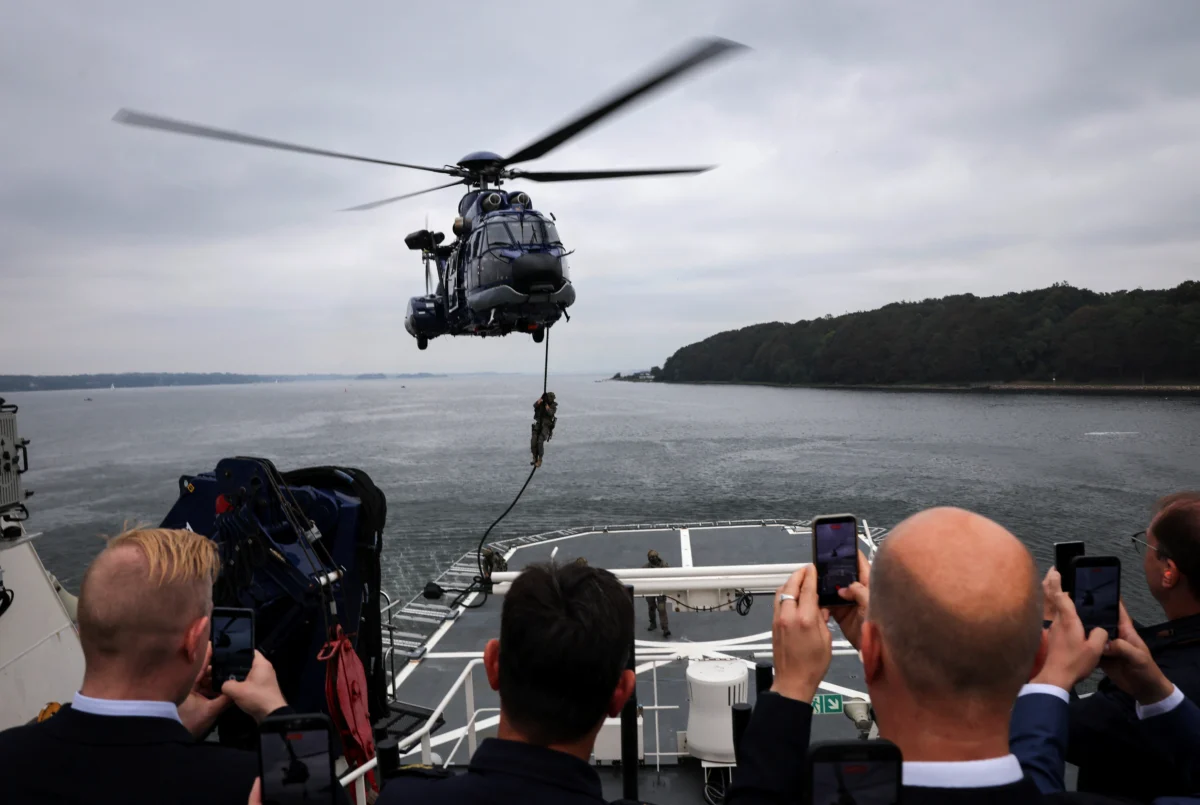
Moscow has issued a stern warning to Denmark, urging it to cease "reckless" actions after a Russian frigate fired flares that narrowly missed a Danish military helicopter operating in the Baltic Sea, escalating tensions between the two nations. The incident, which occurred in international waters off the Danish coast, has prompted a diplomatic exchange with Russia accusing Danish aircraft of provocative maneuvers, while Denmark has condemned the Russian actions as "deeply unprofessional seamanship."
Escalating Tensions in the Baltic Sea
The confrontation unfolded when a Danish Fennec helicopter was engaged in a routine mission to photograph a Russian frigate. According to the Danish defense command, the Russian vessel launched two flares, one of which passed within meters of the helicopter. These flares are typically used as warning signals in maritime operations. The Danish Ministry of Defense confirmed the close call, with Defense Minister Jeppe Bruus stating that the proximity of the flare was alarmingly close, describing it as "a matter of meters."
Russian Accusations and Danish Rebuttal
Russia’s ambassador in Copenhagen, Vladimir Barbin, was quick to place blame on the Danish helicopter, alleging "dangerous maneuvers" by the aircraft precipitated the incident. He conveyed Moscow’s position through state news agency RIA Novosti, stating that a formal diplomatic note had been delivered demanding measures to prevent a recurrence. Barbin characterized the Danish helicopter’s actions as provocative and dismissed Danish assertions that such operations are routine, voicing "serious concern about the possible consequences of such recklessness."
This is not the first instance of friction between Russian naval vessels and Danish helicopters. Ambassador Barbin recalled a previous complaint lodged last year regarding what he described as "dangerous fly-bys and low hovering" by a Danish helicopter over the Russian warship Vice-Admiral Kulakov. These past encounters highlight a pattern of perceived harassment and heightened scrutiny in the strategically vital Baltic Sea region.
Denmark’s Stance on NATO Involvement
Despite the gravity of the near-miss, Denmark has indicated it will not be invoking Article 5 of the NATO treaty, which mandates collective defense in the event of an attack on a member state. Defense Minister Bruus acknowledged that the incident is being taken seriously but stated, "we are not there" in terms of escalating to a NATO-level consultation. This measured response suggests Denmark is seeking to de-escalate the situation diplomatically rather than immediately seeking military alliance intervention, while still maintaining a firm stance on the unprofessionalism of the Russian conduct.
The Strategic Importance of the Danish Straits
The Baltic Sea, particularly the Danish Straits, serves as a critical maritime artery. These straits are the primary shipping gateway to the Baltic Sea and a crucial route for oil transportation, including significant volumes of Russian oil tankers. This strategic positioning makes the region a focal point for naval activity and potential geopolitical friction. Incidents occurring here can have broader implications for regional security and international trade flows, underscoring why both Russia and Denmark are keen to control the narrative and avoid miscalculations.
Broader Context: Hybrid Warfare and Escalation Concerns
Danish Prime Minister Mette Frederiksen characterized the incident as serious but not entirely surprising, viewing it as part of a broader pattern of escalating Russian hybrid warfare tactics aimed at destabilizing Europe and testing NATO’s resolve. "Russia wants to sow fear and discord," Frederiksen stated, emphasizing the need for increased unity and stronger defenses across Denmark and Europe. This perspective aligns with widespread concerns among Western nations regarding Russia’s alleged use of asymmetric tactics to undermine security and sow division.
While Russia denies engaging in hybrid attacks in Europe, the ongoing conflict in Ukraine continues to fuel anxieties about potential escalation and entanglement of NATO member states. The war has already demonstrated Russia’s willingness to employ a range of tactics beyond conventional warfare, leading to increased vigilance among European security agencies.
A Pattern of Provocation?
The Danish Prime Minister’s assessment of a pattern of Russian hybrid warfare is not without precedent. In recent years, several European countries have reported increased instances of cyberattacks, disinformation campaigns, and alleged espionage activities attributed to Russia. These actions are often interpreted as attempts to disrupt democratic processes, weaken public trust, and create internal divisions within NATO and the European Union.
The incident with the Danish helicopter and the Russian frigate can be seen through this lens, as a potential attempt to provoke a reaction, assert naval presence, or gauge the response of a NATO member. The timing of such incidents, amidst heightened geopolitical tensions stemming from the war in Ukraine, further amplifies their significance and the urgency with which they are perceived.
Russian Warnings on Travel to Ukraine
In a related development, a spokeswoman for Russia’s Foreign Ministry issued a warning to Western politicians and diplomats to "soberly" assess the risks of traveling to Ukraine. This warning came after a Russian drone strike targeted a rail line shortly after a train carrying former British Prime Minister Boris Johnson and former Swedish Prime Minister Carl Bildt had passed through the area. The spokeswoman asserted that rail hubs and transport infrastructure supporting Ukraine’s military are legitimate targets, echoing previous Russian statements that have drawn condemnation from international bodies.
This statement from the Russian Foreign Ministry highlights the ongoing information warfare and the strategic signaling that accompanies military actions. By issuing such warnings, Russia aims to deter foreign support for Ukraine and potentially create a narrative of Western recklessness. It also underscores the volatile nature of the conflict and the risks faced by individuals, including high-profile figures, operating in or near Ukraine.
Analyzing the Implications of the Baltic Sea Incident
The near-miss in the Baltic Sea, while not immediately triggering a NATO Article 5 invocation, serves as a stark reminder of the fragile security environment in Northern Europe. The incident underscores the importance of clear communication, adherence to maritime protocols, and de-escalation strategies in preventing unintended confrontations between military forces operating in close proximity.
The incident also raises questions about the effectiveness of current naval diplomacy and confidence-building measures in the region. As military activities increase and geopolitical tensions remain high, the potential for miscalculation or accidental escalation becomes a significant concern. The assertive posture adopted by Russia, coupled with Denmark’s measured but firm response, reflects the complex diplomatic dance that characterizes relations between Russia and NATO members in this strategically sensitive area.
Public Impact and Future Considerations
For the public in Denmark and across Europe, such incidents contribute to a heightened sense of insecurity and underscore the ongoing relevance of collective security alliances like NATO. The repeated assertions of hybrid warfare and territorial testing by Russia fuel public discourse on defense spending, national security strategies, and the broader implications of the conflict in Ukraine.
The Danish government’s approach, balancing a firm condemnation of unprofessional conduct with a reluctance to immediately escalate to NATO consultations, reflects a pragmatic approach to managing a complex geopolitical situation. It signals a commitment to diplomatic solutions while maintaining a strong defense posture. However, the underlying tensions in the Baltic Sea are likely to persist, necessitating continued vigilance and strategic engagement from all parties involved. The international community will be closely watching how this and future incidents are managed, as they hold significant implications for regional stability and the broader security architecture of Europe.