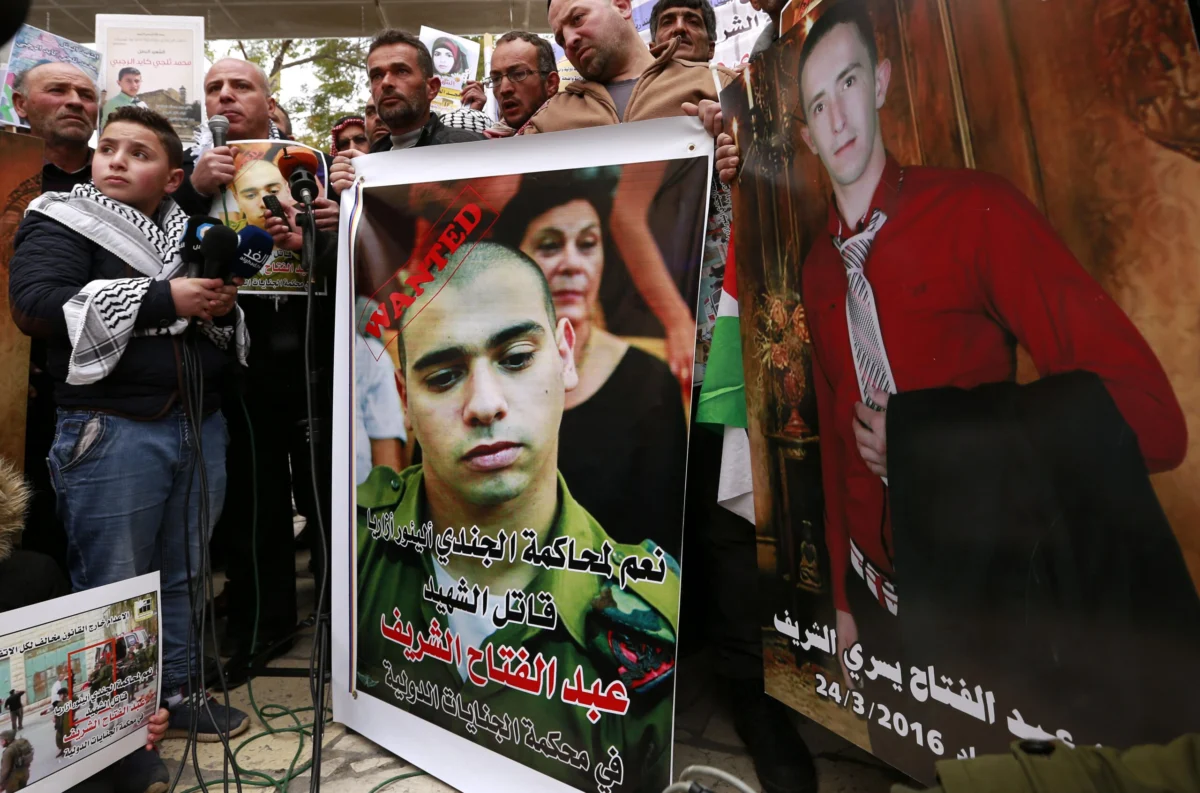
Israeli President Isaac Herzog has officially expunged the criminal record of Elor Azaria, a former Israel Defense Forces (IDF) soldier convicted of manslaughter for shooting and killing a severely wounded Palestinian attacker in Hebron in 2016, a move that has reignited debate surrounding accountability and justice in the Israeli-Palestinian conflict. The presidential pardon, announced Saturday, effectively erases Azaria’s conviction, allowing him to move forward with his life without the legal encumbrance of his past actions.
This significant decision comes despite strong opposition from senior military officials, including IDF Chief of Staff Lieutenant-General Eyal Zamir. Zamir and other high-ranking officers had explicitly communicated their reservations to the defense minister, citing Azaria’s perceived lack of remorse and failure to take full responsibility for the killing, even a decade after the conviction. Their stance underscored a deep-seated concern within the military establishment about the implications of such a pardon on discipline and the perception of justice.
President Herzog’s office acknowledged the military’s position but ultimately determined that the circumstances warranted granting Azaria a chance to "open a new chapter in his life." The president’s statement indicated that the decision was made in the spirit of Yom Kippur, the Jewish Day of Atonement, and stressed that it did not seek to invalidate the original legal proceedings. This framing attempts to balance the concept of clemency with the acknowledgment of the gravity of the events that transpired.
The Hebron Shooting: A Defining Moment
The incident that led to Azaria’s conviction occurred on March 23, 2016, in the volatile city of Hebron. Elor Azaria, then an army medic, was captured on video shooting Abdel Fattah al-Sharif in the head. Al-Sharif, a Palestinian assailant, had moments earlier stabbed and wounded an Israeli soldier. However, by the time Azaria fired the fatal shot, al-Sharif had already been neutralized by other Israeli forces and lay incapacitated on the ground.
The video footage of the shooting quickly went viral, igniting a firestorm of controversy both within Israel and on the international stage. It presented a stark visual testament to the brutal realities of the ongoing conflict and raised profound questions about the conduct of Israeli forces and adherence to international humanitarian law. The case became a symbol of the deep divisions and competing narratives surrounding the Israeli occupation of Palestinian territories.
Legal Proceedings and Public Reaction
Azaria’s trial, which commenced in military court, was a highly charged and intensely scrutinized affair. He was ultimately convicted of manslaughter in January 2017. The initial sentence of 18 months imprisonment was later reduced to 14 months by the court. Azaria served nine months of his sentence before his release in May 2018, a period that many observers deemed insufficient given the severity of the crime.
The decision to pardon Azaria followed a formal request submitted by Defense Minister Israel Katz in July. According to the president’s office, the pardon was granted based on several factors, including the passage of time since the conviction, the completion of his sentence, and a claimed expression of remorse by Azaria. However, the military’s objection highlighted a significant disconnect regarding the assessment of Azaria’s contrition.
Divided Opinions and Political Ramifications
The pardon announcement immediately drew a spectrum of reactions, underscoring the deep societal fissures the case had exposed. Defense Minister Israel Katz lauded the decision, stating on social media platform X that it "sends an important message to [Israeli army] soldiers and their families: We do not abandon our fighters." This sentiment resonated with segments of Israeli society that viewed Azaria as a soldier caught in a difficult situation and unfairly targeted.
Conversely, far-right figures celebrated the pardon with even greater enthusiasm. National Security Minister Itamar Ben-Gvir described the decision as "deeply moving" and extended his praise to President Herzog, even suggesting that the president should extend similar pardons to Prime Minister Benjamin Netanyahu, who is currently facing corruption charges. This linkage highlighted the politicization of the pardon and its use as a tool in broader political discourse.
International Condemnation and Palestinian Perspective
From the Palestinian perspective, the shooting was unequivocally condemned as an "extrajudicial execution" and a "war crime." The Palestinian Ministry of Foreign Affairs at the time asserted that the video evidence "demolished all the slogans chanted by the occupation leaders about the ethics of the Israeli army." The al-Sharif family, devastated by their loss, dismissed the legal proceedings as a "farce" intended to improve Israel’s international image rather than deliver genuine justice for their son.
International bodies also weighed in on the case. The United Nations human rights office, in response to the original sentencing, characterized the jail term as "excessively lenient" and warned that it risked "reinforcing the culture of impunity." This international scrutiny underscored the global concern over potential violations of human rights and the need for robust accountability mechanisms.
Ongoing Consequences and the Shadow of Impunity
The consequences of the 2016 shooting and its subsequent handling continue to ripple. In a significant development in 2024, the United States administration barred Elor Azaria and his immediate family from entering the U.S., citing the incident as an "extrajudicial killing." This U.S. decision signals a continued international condemnation of the act and highlights the lasting repercussions for Azaria.
The pardon granted by President Herzog, while aimed at allowing Azaria to move forward, is unlikely to quell the fundamental debates it reignites. Critics argue that such pardons, particularly when granted against the advice of military leadership, undermine the rule of law and send a message that soldiers can act with impunity. This perspective is particularly prevalent among human rights advocates and Palestinian communities who feel perpetually denied justice.
The Broader Context of Accountability
The Elor Azaria case is not an isolated incident but rather a symptom of a larger, persistent issue regarding accountability for actions taken by Israeli forces in the occupied Palestinian territories. Numerous reports from international organizations and human rights groups have documented instances of excessive force, disproportionate responses, and a perceived lack of thorough investigation and prosecution for alleged violations.
The pardon decision, therefore, carries significant weight beyond the individual case of Elor Azaria. It speaks to the ongoing tension between national security imperatives, the desire to support soldiers, and the imperative to uphold international legal standards and human rights. The differing interpretations of remorse, responsibility, and justice within Israeli society and among the international community continue to shape the discourse surrounding this complex and deeply sensitive issue. The presidential pardon, while closing one chapter for Azaria, opens another in the enduring narrative of conflict and accountability.