The Slovenian Marxist philosopher and cultural theorist, Slavoj Žižek, is set to return to cinemas with his latest documentary, The Pervert’s Guide to Utopias, which will have its world premiere at the Venice Film Festival on September 7. Directed by Sophie Fiennes, this new film marks the third installment in a critically acclaimed series that delves into Žižek’s provocative interpretations of cinema to unpack complex philosophical concepts.
Slavoj Žižek: A Provocateur’s Cinematic Return
Žižek, often dubbed the "Elvis of cultural theory" or the "most dangerous philosopher in the West," has carved out a unique niche as a left-wing provocateur and, somewhat unexpectedly, a viral internet sensation. Known for his distinctive speaking style, his seemingly contradictory yet always engaging "hot takes," and his unwavering commitment to challenging conventional wisdom, Žižek brings a singular blend of Lacanian psychoanalysis, Hegelian philosophy, and Marxist critique to bear on contemporary culture. His return to the silver screen is anticipated by a global audience eager for his unique insights into the human condition, particularly as refracted through the lens of popular cinema.
The Director’s Vision: Sophie Fiennes’ Collaboration
Director Sophie Fiennes has been instrumental in translating Žižek’s dense philosophical ideas into accessible and visually compelling cinematic experiences. Her collaboration with Žižek began with The Pervert’s Guide to Cinema in 2006, followed by The Pervert’s Guide to Ideology in 2012. Across these films, Fiennes has perfected a distinct narrative style: rather than a conventional talking-head documentary, she immerses Žižek directly into meticulously re-created scenes from the films and television series he analyzes. This innovative approach allows the philosopher to physically inhabit the cinematic worlds he dissects, creating a powerful visual metaphor for his argument that our understanding of reality is often shaped by the fictions we consume.
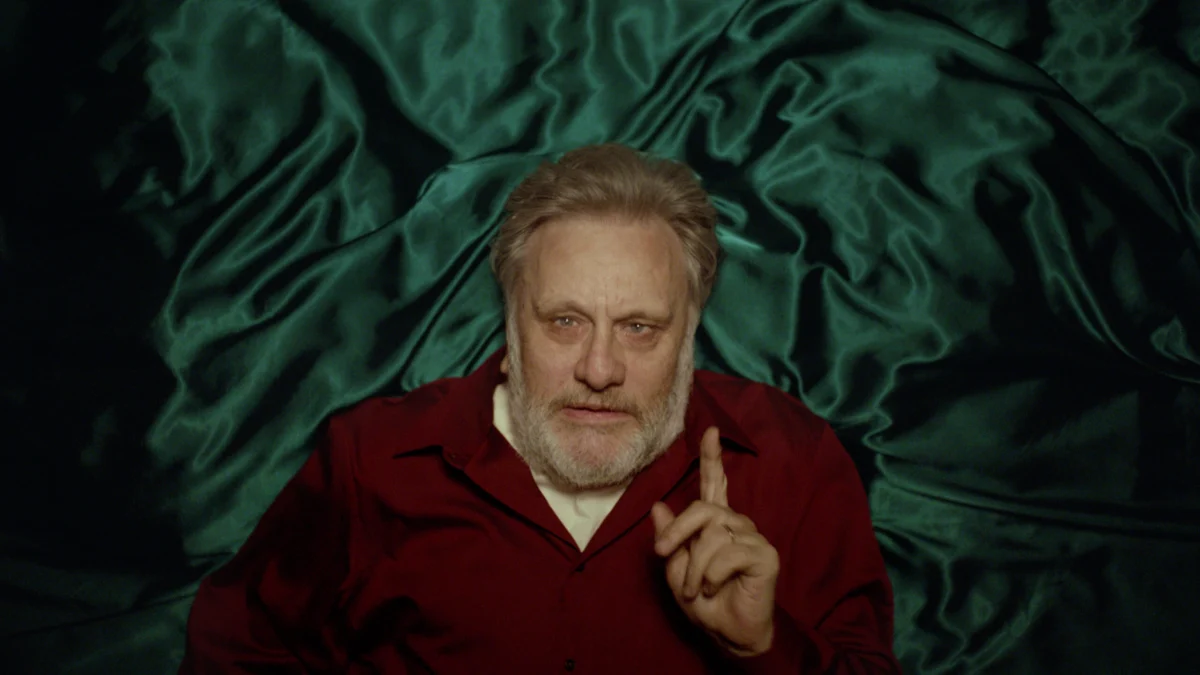
For The Pervert’s Guide to Utopias, Fiennes continues this inventive method. Viewers will see Žižek, for instance, in a wedding dress, reclining in a bathtub reminiscent of Kirsten Dunst’s character in Lars von Trier’s apocalyptic drama Melancholia. In another striking visual, he lies flat on his back on a bed, draped in a red robe, to dissect the dystopian landscape of Hulu’s critically acclaimed series The Handmaid’s Tale. These elaborate stagings are not mere theatrical flourishes; they serve as a crucial pedagogical tool, allowing Žižek to embody the very ideas he explores, drawing audiences deeper into the philosophical interplay between reality and representation.
A Trilogy of Thought: From Cinema to Ideology to Utopias
The "Pervert’s Guide" series has systematically explored fundamental aspects of human experience and societal structure. The Pervert’s Guide to Cinema laid the groundwork by demonstrating how films, through their narratives and visual language, reveal our unconscious desires and anxieties. Žižek argued that cinema doesn’t just show us what we want to see, but how to desire. The Pervert’s Guide to Ideology then escalated this inquiry, examining how cinematic narratives both reflect and reinforce prevailing ideologies, often exposing the hidden mechanisms of power and belief systems that govern our lives.
The Pervert’s Guide to Utopias naturally progresses this intellectual journey, shifting focus to the human yearning for ideal societies and perfect worlds. This exploration is particularly timely in an era grappling with unprecedented global challenges, from climate change to social inequality, which often fuel both genuine utopian aspirations and dangerous ideological traps. The film promises to dissect the allure and the pitfalls of utopian thinking, using cinema as the primary text through which these complex ideas are examined. The choice of Venice for its world premiere underscores its artistic and intellectual gravitas, positioning it as a significant cultural event.
Deconstructing Utopia Through the Lens of Film
Žižek’s analytical approach is characterized by its counter-intuitive nature. He delights in peeling back layers of perceived meaning to expose a deeper, often uncomfortable, truth. For him, cinema is not merely escapism; it is a vital tool for understanding the "utopian presuppositions" that shape our daily lives, often without our conscious awareness. "Our duty is to see things the way they are. And here, cinema helps us," Žižek states in the film’s exclusive trailer. He posits that if aliens were to seek an understanding of humanity, he would direct them not to observe human daily life, but to watch our movies, arguing that films offer a truer, more concentrated distillation of our collective desires, fears, and aspirations.
This perspective is crucial to understanding why we seek utopias in the movies. Žižek suggests that cinema provides a safe space to explore ideal worlds and their inevitable failures, offering a vicarious experience of both the dream and its inherent contradictions. These cinematic utopias, whether they are idealized futures or nostalgic pasts, reveal our collective longing for a different reality, while simultaneously exposing the ideological mechanisms that prevent such realities from materializing. The film delves into how even seemingly straightforward narratives contain hidden utopian or dystopian messages that reflect societal anxieties and desires.
Unpacking Cinematic Narratives: Melancholia and The Handmaid’s Tale
In The Pervert’s Guide to Utopias, Žižek scrutinizes a diverse array of cinematic and television works. His analysis of Lars von Trier’s Melancholia exemplifies his method. The film, which depicts Earth’s collision with a rogue planet, is often interpreted as a meditation on depression and the end of the world. Žižek, however, might explore it through the lens of a "catastrophic utopia," where the destruction of the world paradoxically offers a perverse liberation from the banality and unbearable pressures of everyday life. The image of Žižek in a wedding dress, mirroring Kirsten Dunst’s character Justine, emphasizes this entanglement with the film’s emotional and philosophical core, suggesting a deeper identification with the apocalyptic impulse.
Similarly, his examination of Hulu’s The Handmaid’s Tale offers a dissection of dystopian visions. The series, based on Margaret Atwood’s novel, portrays a totalitarian, theocratic society where women are brutally subjugated. Žižek would likely explore not just the horror of Gilead, but the hidden utopian impulses that might, in some twisted logic, justify its existence. He might question what societal anxieties or perceived failures of liberalism lead to such radical, oppressive "solutions," exposing the fine line between a desired perfect order and a totalitarian nightmare. His physical presence within the red-draped setting of the show’s oppressive regime further underscores the immersive nature of Fiennes’s filmmaking, allowing Žižek to critique the very fabric of these fictional worlds from within.
The Darker Undercurrents of V for Vendetta
One of Žižek’s most provocative interpretations in the new documentary focuses on James McTeigue’s V for Vendetta. The 2006 film is widely celebrated as a triumphant narrative of the masses rebelling against an authoritarian state, a clarion call for individual freedom and collective resistance. However, Žižek posits a far more unsettling subtext. He argues that the film’s "hidden message" is not one of straightforward liberation, but rather a darker, more symbiotic relationship: that fascists need the rebels, and the rebels, in turn, need the fascists, to justify each other’s existence.
This interpretation challenges the simplistic hero-villain dynamic, suggesting a deeper, often unconscious, complicity in the perpetuation of oppressive systems. For Žižek, the rebel’s identity is often defined by the very power structure it seeks to overthrow, creating a perpetual cycle of conflict that, paradoxically, maintains the status quo by channeling dissent into predictable forms. This analysis forces viewers to reconsider the nature of political action and the complexities of power, moving beyond superficial readings to uncover the ideological underpinnings that shape our perceptions of freedom and control. It is precisely these kinds of "perverse" readings that have cemented Žižek’s reputation as a thinker who consistently pushes the boundaries of conventional thought.
The Cultural Resonance of Žižek’s Pop Philosophy
Žižek’s unique ability to blend high philosophy with pop culture references has made him an unlikely but undeniably influential figure in contemporary intellectual discourse. His documentaries are not just for academics; they appeal to a broad audience curious about the deeper meanings embedded in the films and shows they love. By staging himself within cinematic re-creations, Žižek demystifies complex philosophical theories, making them tangible and relatable. This approach positions him as a bridge between the ivory tower and the internet, engaging with concepts like utopia, ideology, and desire in a way that resonates with modern sensibilities.
The impact of the "Pervert’s Guide" series extends beyond film criticism; it encourages a more critical engagement with media consumption itself. In a world saturated with images and narratives, Žižek provides a framework for deconstructing these cultural products, revealing their ideological underpinnings and their profound influence on our understanding of ourselves and our society. His work challenges viewers to move beyond passive entertainment and become active interpreters of the cultural landscape, fostering a deeper, more analytical appreciation for the power of storytelling.
Anticipation and Global Distribution
The world premiere of The Pervert’s Guide to Utopias at the Venice Film Festival is set to generate significant buzz, building on the established reputation of the preceding films. The documentary is produced by Keeper Pictures, P Guide, SPOK Films, The Film Kitchen, and Mattima Films, with Shani Hinto handling world sales, indicating a strategic effort to ensure its global reach.
The anticipation surrounding this third installment highlights Žižek’s enduring appeal and the continued relevance of his philosophical inquiries. In an age where the pursuit of ideal futures often collides with stark realities, Žižek’s cinematic exploration of utopias offers a timely and essential critique. The film promises to be not just a philosophical treatise but a cinematic experience that challenges, provokes, and ultimately enriches our understanding of why we perpetually dream of better worlds, even as we struggle with the complexities of our own.