Spanish Prime Minister Pedro Sánchez has formally requested an emergency summit of European Union interior ministers to address the fallout from a massive border breach in the North African enclave of Ceuta. The Prime Minister’s demand follows what he characterized as "selfish, polarizing, and unlawful" reactions from certain EU member states after more than 50,000 migrants crossed into the Spanish territory from Morocco over a 48-hour period. The unprecedented influx has not only strained local resources but has ignited a fierce diplomatic row within the European bloc regarding border sovereignty and the future of the Schengen free-movement zone.
The crisis began on Thursday and Friday when a surge of people attempted to bypass the border fortifications separating Morocco from Ceuta. At least 67 people are confirmed to have died during the attempt, with many drowning in the Mediterranean or being crushed while attempting to navigate a breakwater barrier. While the Spanish government reported that approximately 48,000 of those who entered had voluntarily returned to Morocco by Friday evening, the sheer scale of the event has left the Madrid government reeling and facing sharp criticism from its neighbors.
Diplomatic Fallout: Spanish PM calls for urgent EU meeting after ‘selfish’ responses to Ceuta crisis
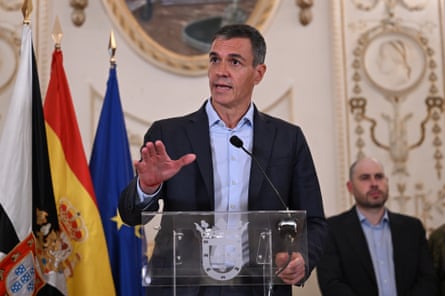
The immediate aftermath of the border crossing has seen a breakdown in European unity. Prime Minister Sánchez expressed frustration in a letter addressed to European Commission President Ursula von der Leyen, European Council President António Costa, and Irish Prime Minister Micheál Martin. In his correspondence, Sánchez noted that while several member states offered solidarity, others utilized the tragedy to launch political attacks against Spain.
The most prominent critic has been Italy, which announced on Friday evening that it would suspend its Schengen arrangements with Spain for one month. This move came despite the fact that Ceuta and Melilla, Spain’s other North African enclave, operate under special rules designed to prevent the unauthorized movement of migrants into mainland Europe. Italian Foreign Minister Antonio Tajani blamed the Sánchez administration for the crisis, citing a recently closed Spanish government initiative that aimed to regularize the status of more than 1 million undocumented migrants. Tajani argued that such programs serve as a "pull factor," incentivizing human trafficking and irregular migration.
Sánchez was blunt in his rebuttal, suggesting that the Italian response was fueled by "prejudice, fake news, ignorance, or political interest." He defended Spain’s record on border security, citing data from Frontex, the EU’s border agency. According to the Prime Minister, Spain remains one of the least porous external borders in the European Union, with irregular entry figures significantly lower than those recorded in Italy between 2021 and 2026.

A Human Tragedy on the North African Coast
The humanitarian cost of the mass crossing has been staggering. The 67 confirmed fatalities represent one of the deadliest single incidents at the Ceuta border in recent memory. Emergency workers and Spanish security forces described chaotic scenes at the Tarajal beach breakwater, where thousands of people jumped into the sea to swim around the physical barriers. Many of those who died were caught in the turbulent waters or succumbed to the physical pressure of the crowds.
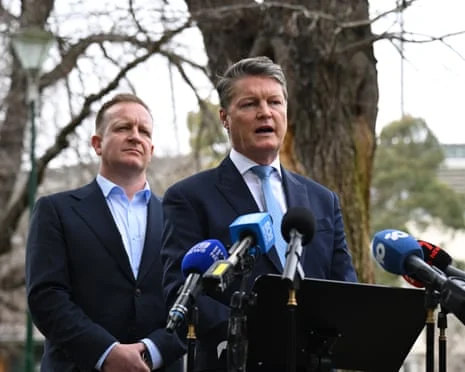
In Ceuta, the local government remains in a state of high alert. Juan Jesús Vivas, the President of Ceuta, stated that while the majority of migrants have returned to Morocco, several thousand remain within the city limits. "We are not back to normal," Vivas told reporters, emphasizing that the atmosphere in the enclave is one of "unease and concern." He has called for the continued deployment of military and police assets to ensure the safety of the local population and to manage the processing of those still in the territory.
Among those waiting in migrant centers are individuals from sub-Saharan Africa who see the enclave as a gateway to economic opportunity. Souleil Boyan, a 19-year-old from Senegal, spoke to reporters about the lack of prospects in his home country. "We hope to go to Europe to work and earn a living," he said. "We all know that in Africa there isn’t much opportunity." This sentiment highlights the ongoing challenge for the EU: balancing humanitarian concerns with the political necessity of border enforcement.
The Roots of the Ceuta Influx: Legal Rulings and Geopolitics
The Spanish government has attributed the sudden surge to "human-trafficking mafias" exploiting a recent legal development. Spain’s Supreme Court recently ruled that individuals intercepted at sea while attempting to enter Ceuta or Melilla could no longer be summarily returned—a practice often referred to as "hot returns." The court argued that these individuals must be processed according to standard asylum and immigration laws, a ruling that the government claims has been misinterpreted by smugglers as an open-door policy.
However, migration experts have questioned this narrative. Mauricio Valiente, Director General of the Spanish Refugee Aid Commission, argued that the geography of Ceuta makes it fundamentally different from the Atlantic route to the Canary Islands. Valiente noted that the proximity of the land border and the ease of swimming around the breakwater make it a viable route for individuals acting independently, rather than those relying on organized crime syndicates. He suggested that the causes of the influx are complex and cannot be reduced to a single court ruling or the actions of traffickers.
Geopolitical tensions also loom large over the situation. This week’s events are reminiscent of a May 2021 crisis when Morocco relaxed its border controls, allowing 10,000 people to enter Ceuta in two days. That incident was widely seen as a retaliatory move by Rabat after Spain allowed the leader of the Polisario Front, a Western Sahara independence movement, to receive medical treatment in a Spanish hospital. While relations between Madrid and Rabat have since improved—largely due to Spain backing Morocco’s plan for Western Sahara—the stability of the border remains heavily dependent on Moroccan cooperation.
Strengthening Barriers and the Future of EU Migration Policy
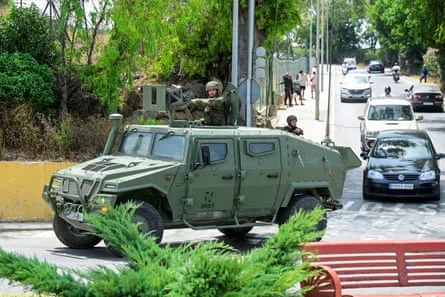
In response to the crisis, the Spanish government has moved to physically reinforce the border. On Saturday, officials announced the installation of new containment barriers at the Tarajal beach breakwater. These measures include a 500-meter-long inflatable barrier and a line of anchored buoys designed to deter swimmers. Spanish military units and armored vehicles continue to patrol the perimeter, a visible sign of the government’s commitment to restoring order.
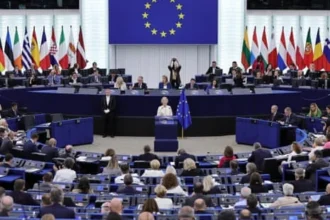
The broader implications for the European Union are significant. The "political crisis response team" convened by the Irish presidency of the EU met on Saturday to discuss the situation. Jim O’Callaghan, Ireland’s Justice Minister, expressed solidarity with Spain and emphasized the need for a coordinated response. Similarly, French Interior Minister Laurent Nuñez broke ranks with Italy, stating that France has no intention of seeking Spain’s suspension from the Schengen zone. "We have great cooperation with Spain," Nuñez said, signaling that Italy’s hardline stance may not have broad support among the bloc’s heavyweights.
European Commission President Ursula von der Leyen has welcomed the proposal for a video conference to "take stock" of the events. She reiterated that fighting illegal migration requires a "united European response," though the definition of such a response remains a point of contention among member states. The clash between Spain and Italy highlights a growing divide between countries that favor a humanitarian approach combined with status regularisation and those that advocate for strictly securitized borders and the deterrence of arrivals.
Domestic Pressure on the Madrid Government
For Prime Minister Sánchez, the Ceuta crisis is a major domestic political challenge. The opposition has seized on the events to portray the government as weak on border security. The regularisation scheme mentioned by Italy’s Tajani has become a lightning rod for criticism at home, with conservative factions arguing that it undermines the rule of law.
Sánchez’s call for an urgent EU meeting is seen by many analysts as an attempt to internationalize the problem and shift the focus toward European solidarity. By framing the Italian response as "selfish," Sánchez is positioning Spain as a defender of European values against the rising tide of populism and unilateralism. However, the success of this strategy will depend on his ability to secure tangible support from Brussels and to maintain the current calm on the ground in Ceuta.
As the situation evolves, the focus remains on the upcoming meeting of EU interior ministers. The outcome of these discussions will likely determine whether the bloc can find a middle ground on migration or if the "selfish, polarizing" rhetoric will lead to a more permanent fracturing of the Schengen agreement. For now, the inflatable barriers and military patrols in Ceuta serve as a stark reminder of the challenges facing a continent divided over how to manage its borders and its conscience.