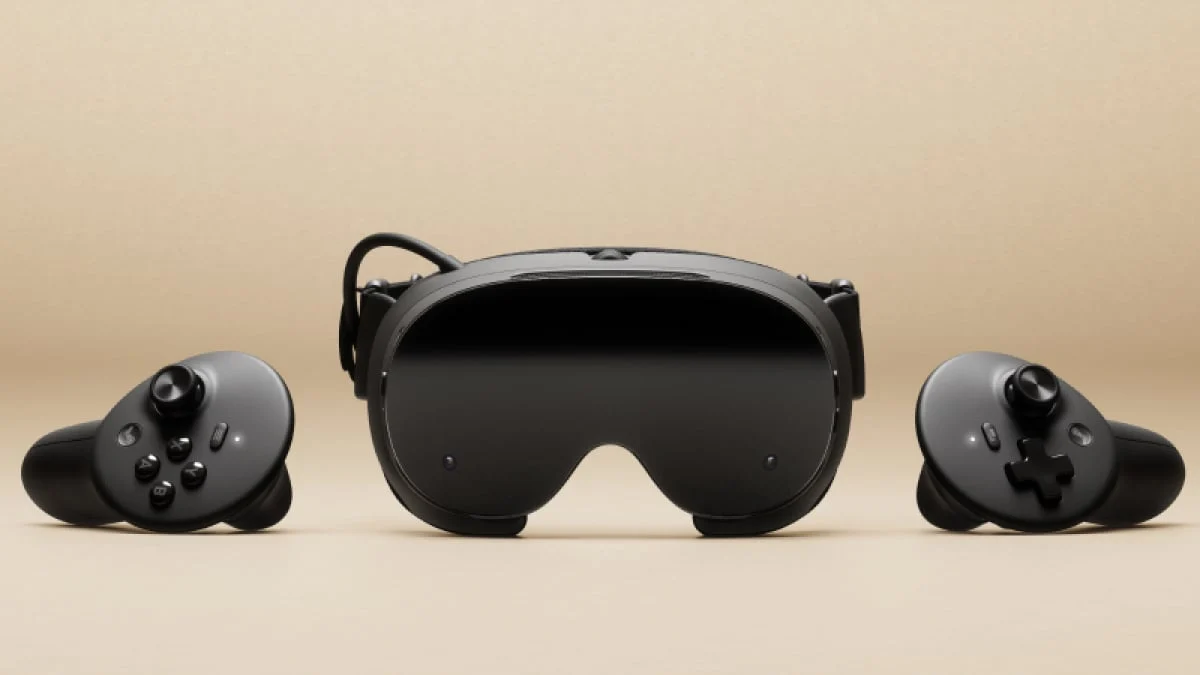
Valve officially released its long-anticipated Steam Frame virtual reality headset on September 18, entering a cooling hardware market with a premium device that attempts to bridge the gap between traditional PC gaming and immersive digital environments. The launch follows a November 2025 announcement that ended years of industry speculation regarding Valve’s successor to the aging Index headset. While early critical reception praises the hardware’s ergonomic design and wireless fidelity, the device faces significant headwinds due to its four-figure price tag and a perceived lack of dedicated software content.
The Steam Frame arrives at a pivotal moment for the parent company, Valve, which has spent the last several years dominating the handheld PC market with the Steam Deck. Industry analysts suggest that the Steam Frame represents an evolution of that mobile computing philosophy, effectively mounting a high-performance gaming rig onto a user’s face. However, with the base model starting at $1,059, the company is positioning the device as an enthusiast-grade tool rather than a mass-market consumer product.
Ergonomics and Design Philosophy of the Steam Frame
Early reviews of the Steam Frame have highlighted the device’s physical construction as one of its most successful attributes. Critics have noted that Valve appears to have prioritized long-term comfort and ease of use, addressing common complaints regarding the weight and complexity of previous-generation VR hardware. Jacob Ridley of PC Gamer characterized the device as "comfortable and straightforward," noting that the barrier to entry for a gaming session has been significantly lowered.
Unlike many of its predecessors, which required complex calibration or tethering to a stationary PC, the Steam Frame is designed for immediate engagement. Reviewers noted that the transition from putting the headset on to launching a game is nearly instantaneous. This focus on convenience suggests that Valve is targeting "frictionless" play, hoping to encourage more frequent use among owners who might otherwise be deterred by the setup time associated with traditional VR.
The physical design also incorporates a "halo" style strap system and balanced weight distribution. These features are intended to mitigate neck strain during extended play sessions. By focusing on the physical experience of wearing the device, Valve is attempting to differentiate the Steam Frame from more utilitarian headsets that prioritize raw technical specifications over user comfort.
Bridging the Gap: The Steam Frame as a Virtual Monitor
One of the most discussed features of the Steam Frame is its ability to function as a high-resolution virtual display for non-VR content. This "hybrid" approach allows users to access their existing Steam libraries and play traditional 2D games on a massive, simulated cinema screen. Jacqueline Thomas of IGN reported that she spent nearly half of her testing time using the device to play standard titles rather than dedicated VR experiences.
This functionality effectively positions the Steam Frame as a portable replacement for a high-end gaming monitor. Users can theoretically take the headset to different rooms or travel with it, maintaining access to a large-scale visual experience without the need for a physical screen. This versatility is seen as a major selling point for gamers who may not be fully invested in the VR ecosystem but see value in a private, high-fidelity display.
The integration with the existing SteamOS platform ensures that the user interface remains familiar to those who have used the Steam Deck or the desktop Steam client. By unifying the software experience, Valve is attempting to make the Steam Frame feel like a natural extension of its broader gaming ecosystem. This strategy may help the company retain users who are already heavily invested in their digital libraries.
Technical Breakthroughs in Wireless PC Streaming
The Steam Frame’s performance as a wireless PC gaming headset has drawn significant praise from technical reviewers. Zack Zwiezen of Kotaku highlighted the device’s ability to stream high-end VR games from a powerful PC without the need for physical cables. Historically, wireless VR has been plagued by latency issues, compression artifacts, and occasional signal drops, but the Steam Frame appears to have overcome these hurdles.
Reviewers described the wireless experience as "revelatory," noting that the lack of cables did not result in any noticeable lag or streaming errors. This achievement is attributed to Valve’s proprietary streaming technology, which optimizes the data transfer between the PC and the headset. For many enthusiasts, the freedom of movement provided by a stable wireless connection is the "biggest win" for the hardware, allowing for full 360-degree immersion without the risk of tripping over wires.
This wireless capability also extends to the device’s standalone mode. While it can tether wirelessly to a PC for maximum graphical fidelity, the Steam Frame also contains internal processing power capable of running titles independently. This dual-mode functionality places it in direct competition with other standalone headsets, though Valve’s focus remains firmly on the high-end PC enthusiast market.
The Economic Challenge of the $1,000+ Steam Frame
Despite the technical accolades, the Steam Frame’s pricing structure remains a point of contention for both critics and potential buyers. The 256GB base model retails for $1,059, while the 1TB version reaches $1,299. In an era where competing standalone headsets are available for significantly less, the "economics of buying one" are a major hurdle for the average consumer.
James Archer of Rock Paper Shotgun pointed out that the high entry price makes the Steam Frame a difficult sell in the current economic climate. While the hardware is undeniably premium, the value proposition is complicated by the fact that the broader gaming industry’s interest in VR has cooled. Critics argue that for over $1,000, consumers expect a transformative experience that justifies the investment, a bar that is difficult to clear when dedicated VR software development has slowed.
Furthermore, the price puts the Steam Frame in a precarious position between consumer electronics and professional-grade enterprise tools. While it lacks the productivity-focused software suite of some high-end competitors, its price is too high for it to be considered a casual gaming peripheral. This "enthusiast tax" may limit the device’s initial adoption to a small niche of dedicated Valve fans and VR early adopters.
Launch Issues: Battery Life and Software Stability
While the Steam Frame’s hardware is impressive, early units have been criticized for various technical shortcomings typical of first-generation launches. Scott Stein of CNET summarized the primary issues as being centered on battery life, buggy software performance, and a lack of compelling launch titles. The battery life, in particular, has been noted as a limitation for those looking to use the device for extended gaming or movie-watching sessions.
Reviewers also encountered "buggy performance" within the SteamOS interface on the headset. While Valve has a history of rapidly iterating on software and providing frequent updates—as seen with the Steam Deck—the initial experience for Steam Frame early adopters may be marred by crashes or UI inconsistencies. These "experimental journey" aspects of the device have led some critics to suggest that the general public should wait for future revisions before purchasing.
The software drought is perhaps the most significant long-term concern. James Archer noted that the supply of original virtual reality games has "slowed to a dribble." Without a "killer app" or a major flagship title like Half-Life: Alyx to accompany the launch, the Steam Frame relies heavily on its ability to play older VR titles and traditional 2D games. This lack of new, native content may make it difficult for Valve to sustain momentum once the initial hardware hype subsides.
The Steam Frame in a Declining VR Market
The timing of the Steam Frame’s release has also been called into question by industry analysts. Devindra Hardawar of Engadget argued that the device is arriving "far too late" to significantly impact the declining state of the VR market. After a period of intense hype in the early 2020s, consumer interest in virtual reality has waned, with many major developers shifting their focus toward artificial intelligence or more traditional gaming formats.
The sentiment among several outlets is that the Steam Frame is a "strange product for a strange time." While it represents the pinnacle of current VR hardware engineering, it enters a landscape where the "push for VR didn’t really pan out" as many had predicted. This creates a vacuum where the hardware is ready, but the cultural and industrial appetite for the medium has diminished.
Despite these challenges, Valve’s entry into the space provides a much-needed jolt of competition. As an "open platform," the Steam Frame allows for more user customization and third-party software integration than the closed ecosystems favored by some competitors. This openness is a core part of Valve’s identity and may attract a dedicated community of modders and developers who are dissatisfied with more restrictive hardware.
Future Outlook and Industry Consequences
The ultimate success of the Steam Frame may depend less on its initial sales and more on Valve’s ability to foster a long-term ecosystem. If the company can use the headset to unify different use cases—from high-end VR gaming to portable virtual monitors—it may carve out a sustainable niche. However, the current consensus among early reviewers is that the device is a "great work-in-progress" that is being stymied by broader market trends.
Valve has signaled that it remains committed to the hardware space, and the Steam Frame is likely just the beginning of a new multi-year cycle for the company. As software updates address initial bugs and potentially improve battery management, the device may become more appealing to a wider audience. For now, the Steam Frame stands as a testament to Valve’s engineering capabilities and a reminder of the persistent challenges facing the virtual reality industry.
As the gaming world watches to see if Valve can replicate the success of the Steam Deck in the VR space, the Steam Frame remains a luxury item for the few. Whether it can eventually "inject life" into a struggling medium or if it will remain a high-end curiosity for enthusiasts is a question that will only be answered as more units reach the hands of consumers in late 2026 and beyond.