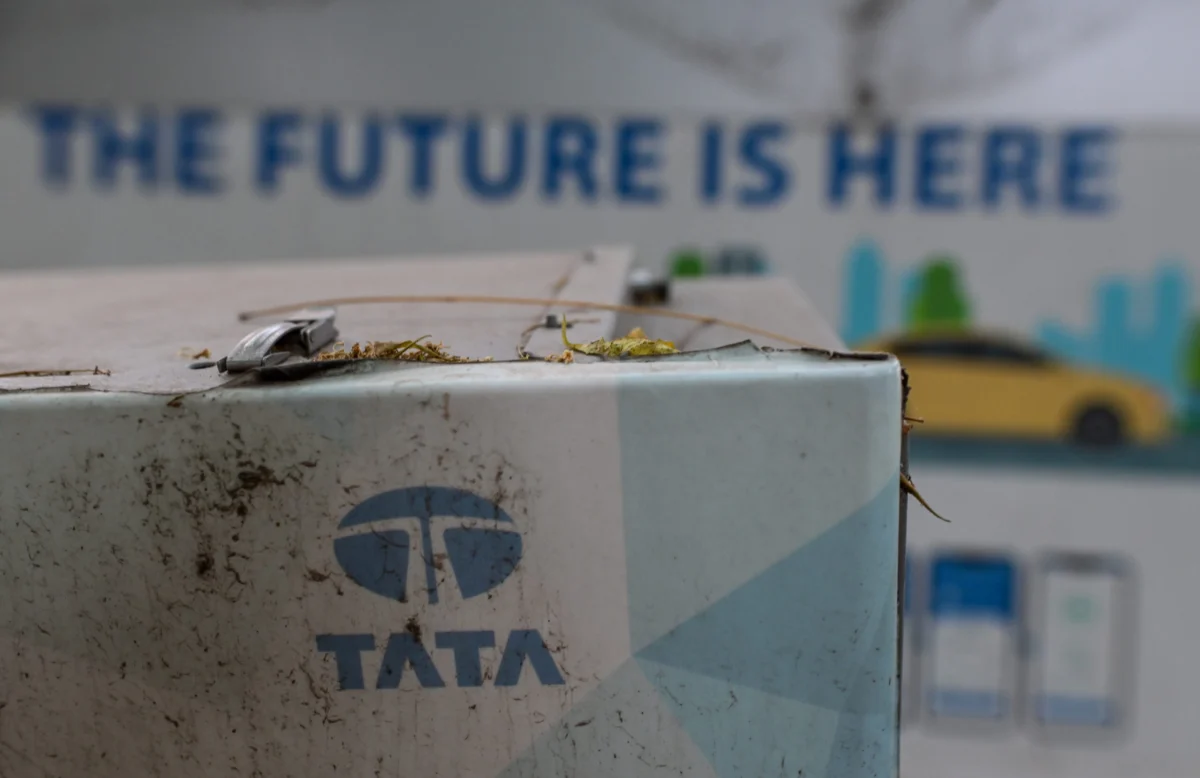
NEW DELHI, INDIA – A seismic power struggle has ignited at the apex of one of India’s most venerable and expansive business empires, pitting the board of its flagship holding company, Tata Sons, against its majority shareholder, the philanthropic Tata Trusts. This internal conflict, unprecedented in its scope and implications, threatens to reshape the future trajectory of the 158-year-old Tata Group, a conglomerate with a sprawling global footprint and a market capitalization exceeding $277 billion across its listed entities.
The immediate flashpoint involves the reappointment of N. Chandrasekaran as Chairman of Tata Sons and the group’s renewed consideration of publicly listing the holding company. These decisions, championed by the Tata Sons board, directly contravene the wishes of Tata Trusts, the family-linked charitable organization that holds a controlling 66% stake in Tata Sons. The dispute highlights fundamental disagreements over the group’s governance, strategic direction, and its very identity as it navigates an increasingly complex economic and regulatory landscape.
The Tata Group’s vast influence extends far beyond its corporate headquarters at Bombay House. Its 26 publicly listed companies, including behemoths like Tata Consultancy Services (TCS) and Tata Motors, collectively impact an estimated 17.7 million retail shareholders, alongside institutional investors such as pension funds, insurers, and mutual funds. This broad stakeholder base underscores the significance of the current boardroom discord, which is reverberating through India’s corporate sector and drawing international attention.

The Enduring Legacy and Vast Reach of the Tata Group
The Tata Group’s origins trace back over 150 years to the entrepreneurial vision of Nusserwanji Tata, who laid the foundation in mid-19th century Mumbai with ventures in trade. His son, Jamsetji Tata, propelled the business into an industrial powerhouse, leveraging opportunities in textiles and, controversially, the opium trade with China. The U.S. Civil War proved a turning point, with disruptions in global cotton supplies dramatically boosting Indian cotton prices and cementing the Tata family’s commercial fortunes.
Subsequent generations expanded the empire, notably through the diversification efforts of JRD Tata, who chaired the group from 1938. Under his stewardship, Tata ventured into aviation, establishing India’s flag carrier Air India, alongside significant investments in chemicals and engineering. In 1991, Ratan Tata assumed leadership, ushering in an era of economic liberalization in India. He unified the sprawling conglomerate, projecting it onto the global stage through high-profile acquisitions like Tetley, Corus, and Jaguar Land Rover. Today, the group is actively investing in cutting-edge sectors, including a significant iPhone assembly operation in India and semiconductor manufacturing.
Historically, Ratan Tata served as a crucial bridge between Tata Sons and Tata Trusts, holding leadership positions in both. His passing in 2024 marked the end of an era and, according to observers, paved the way for a growing divergence in perspectives between the operational leadership of Tata Sons and the philanthropic stewardship of Tata Trusts.
Unpacking the Tata v Tata Confrontation
The current schism intensified on September 17, when the Tata Sons board voted 4-to-1 to reappoint N. Chandrasekaran as chairman, overriding the preference of Tata Trusts for its nominee, Noel Tata. Noel Tata, who is Ratan Tata’s half-brother, assumed the chairmanship of Tata Trusts in October 2024 following Ratan Tata’s death. He is currently the sole senior executive with a direct family lineage actively involved in Tata Sons’ top leadership.

The conflict, however, extends beyond the chairman’s tenure and encompasses critical strategic decisions, most notably the potential public listing of Tata Sons. This move is also entangled with the desire of the Shapoorji Pallonji Group, Tata Sons’ second-largest shareholder with an 18.4% stake, to monetize its investment amidst significant debt challenges.
Chandrasekaran’s Controversial Reappointment
N. Chandrasekaran, 60, had previously indicated he would not seek another term as chairman beyond February 2027. However, the Tata Sons board requested he reconsider, citing the group’s "larger interests," a plea he accepted. This decision was met with strong opposition from Noel Tata, who declared the reappointment "illegal" under Tata Sons’ articles of association. He asserted that trust nominees on the board were expected to vote in unison, a protocol he claims was breached when Venu Srinivasan, the other trust nominee, voted in favor of Chandrasekaran’s reappointment. This specific dispute is now slated for resolution in the courts.
The Imperative of Listing Tata Sons
India’s central bank, the Reserve Bank of India (RBI), mandates that companies with assets exceeding $10.45 billion must publicly list. Tata Sons had attempted to circumvent this regulation by deregistering as a non-banking financial company. However, the RBI recently rejected this request, pushing Tata Sons closer to a public offering. The group’s structure is atypical, with its privately held parent company overseeing numerous publicly traded subsidiaries, a dynamic that has long shielded Tata Sons from direct market scrutiny.
At the board meeting, Tata Sons indicated its intention to comply with RBI requirements, a move Noel Tata vehemently opposed. He argued that a public listing would fundamentally alter the character of a group deeply intertwined with extensive philanthropic endeavors. This stance reflects a philosophical divide on whether the group’s commercial imperatives should be balanced with its long-standing charitable mission.

Shapoorji Pallonji’s Strategic Exit
The Shapoorji Pallonji Group, a major infrastructure and construction conglomerate, is reportedly seeking to divest its substantial stake in Tata Sons, valued at approximately $2.61 billion. The group is heavily indebted and views its shareholding as a key asset to liquidate. Tata Trusts revealed that Noel Tata proposed a plan for the sale of a portion of this stake. Tata Sons has yet to formally respond to this proposal. Shapoor Mistry, the patriarch of the Shapoorji Pallonji Group and Noel Tata’s brother-in-law, reportedly supports the public listing of Tata Sons, placing him at odds with Noel Tata’s position.
Broader Economic and Governance Implications
The Tata boardroom saga transcends internal corporate politics, raising critical questions about India’s economic future and the evolving governance norms for its corporate giants. The central debate revolves around the public listing of Tata Sons and its potential impact on the group’s unique ethos.
Noel Tata articulated his perspective in a statement, asserting that the Tata Group was "conceived as a national service carried on through business." He argued that Tata Sons’ private structure has enabled it to prioritize national interests and act in ways that a purely commercial entity might not. "A listing will destroy its character and strike at the heart of this principle," Tata Trusts has contended.
However, Santosh Mehrotra, a prominent Indian development economist, argues that a public listing for Tata Sons is an unavoidable necessity. "There is a law for everyone, and Tata cannot be an exception to that," Mehrotra stated. He further suggested that India is at a juncture where large business houses can no longer operate with unchecked autonomy.

Mehrotra pointed to the accelerating concentration of industrial power across various sectors under Prime Minister Narendra Modi’s administration, a trend he believes has been facilitated by the government. He noted that major business houses, including those of billionaires Gautam Adani and Mukesh Ambani, have expanded horizontally and vertically, capturing diverse sectors. This consolidation, he posits, has come at the expense of smaller players and contributes to inflation by enabling price manipulation.
InGovern, a corporate governance advisory firm, echoed these sentiments in a recent note, asserting that a holding company wielding significant influence over businesses of such magnitude cannot remain outside the governance and transparency expectations increasingly applied to systemically important conglomerates.
The Shadow of Past Disputes and Future Legal Battles
The Tata Group is no stranger to internal strife. The 2016 ouster of Cyrus Mistry, the first non-Tata family chairman, by the Tata Sons board, following a contentious relationship with Ratan Tata over strategy and governance, serves as a stark precedent. Mistry’s subsequent legal challenges, which concluded with the Supreme Court upholding the board’s decision in 2021, underscored the power of Tata Trusts’ majority stake and the rights of its nominated directors. Notably, legal heavyweights Harish Salve and Abhishek Singhvi represented Tata Sons in that case, and are now on opposing sides in the current dispute.
The current legal contest pits Salve, representing Tata Sons, against Singhvi, now representing Tata Trusts. Singhvi has expressed regret over the inability to resolve the issues amicably, emphasizing that fundamental shareholder rights must be protected to prevent a negative precedent for corporate governance across India. He described the prospect of decoupling Tata Trusts and Tata Sons as "unthinkable" given their intertwined history.

The outcome of this high-stakes boardroom battle is now being closely watched, with legal experts anticipating protracted court proceedings. The decisions made in the coming months will not only define the future of the Tata Group but also provide critical insights into the evolving landscape of corporate governance and regulatory oversight in India.