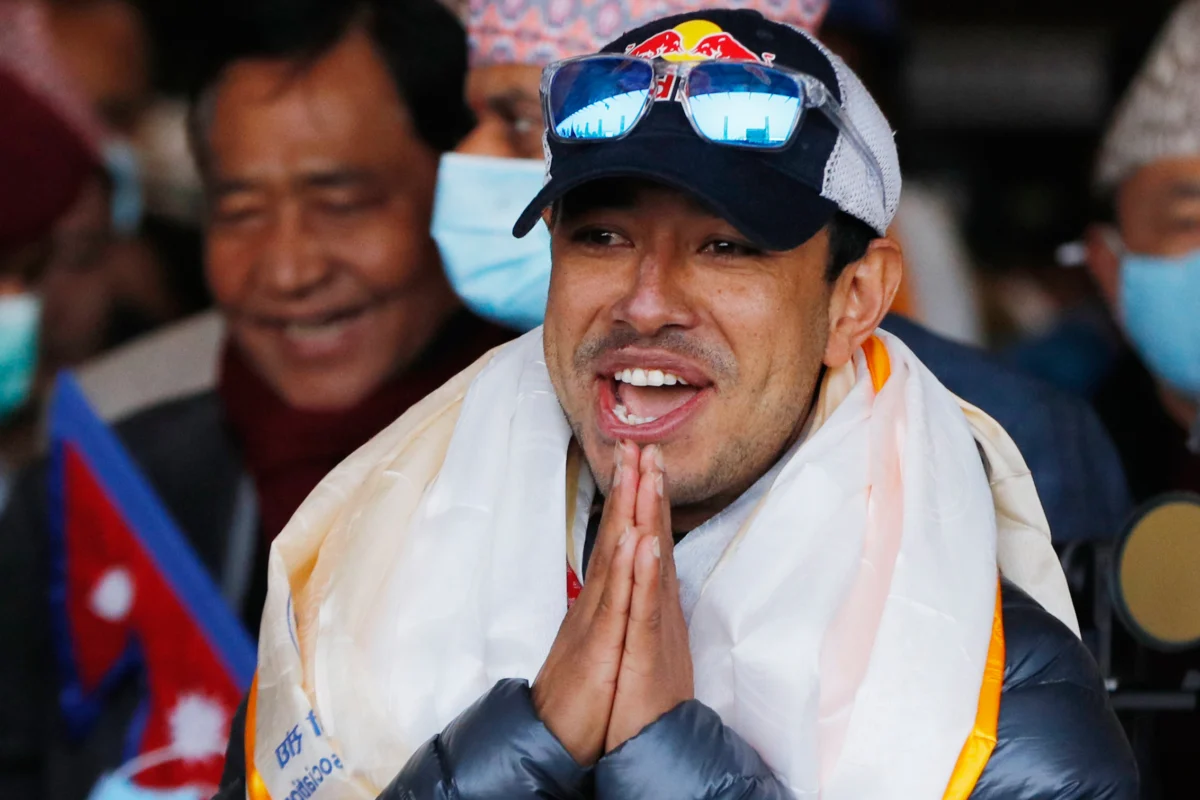
A team of ten international climbers, including the celebrated Nepali mountaineer Nirmal Purja, known globally as Nims Dai, is feared missing following a significant avalanche incident on Broad Peak in Pakistan’s Karakoram range. The Alpine Club of Pakistan (ACP) confirmed late Thursday that contact with the expedition was lost shortly after the avalanche, sparking urgent rescue efforts. Broad Peak, standing at an imposing 8,047 meters (26,399 feet), is the twelfth-highest mountain on Earth and a formidable challenge for even the most seasoned climbers.
Avalanche Strikes Broad Peak Expedition
The perilous situation unfolded in the remote northern reaches of Pakistan, a region synonymous with some of the world’s most challenging and majestic peaks. The ACP, the official governing body for mountaineering in Pakistan, issued a stark announcement detailing the concerning reports. "The Alpine Club of Pakistan (ACP) has received deeply concerning reports of an avalanche that struck a team of climbers on Broad Peak (8,047m) in the Karakoram mountain range," the statement read. The club emphasized that the team, led by the highly decorated Nirmal Purja, had been unreachable since the catastrophic event.
The composition of the expedition underscores the international nature of high-altitude mountaineering. The group comprises ten individuals, representing a diverse range of nationalities. Five climbers hail from Nepal, the homeland of many of the world’s most accomplished Sherpa guides and mountaineers. Pakistan, the host nation, has one climber on the team. The expedition also includes climbers from Oman, China, and the United States. The ACP stated that the nationality of one additional foreign climber had not yet been disclosed, adding to the uncertainty surrounding the group’s precise makeup.
"The entire team has reportedly been out of communication since the avalanche," the ACP confirmed, highlighting the severity of the situation and the potential scale of the disaster. The lack of immediate communication from such a high-altitude expedition is a critical indicator of a significant incident. The remote location and extreme weather conditions typical of these giants often hamper swift communication and rescue operations.
Mobilizing Rescue Efforts Amidst Treacherous Conditions
In response to the crisis, Pakistani authorities and mountaineering organizations have pledged to mobilize all available resources. The ACP assured that "every possible effort is being made to ensure that helicopter support and all available rescue resources are mobilised at the earliest opportunity." However, the announcement was tempered with a crucial caveat: the swift deployment of rescue teams is heavily dependent on prevailing weather and operational conditions. High-altitude rescues are notoriously dangerous, with avalanches, extreme cold, high winds, and poor visibility posing constant threats to rescuers.
The involvement of Nirmal Purja in this expedition immediately drew global attention due to his unparalleled reputation in the mountaineering world. Purja, 43, affectionately known as Nims Dai, has redefined the boundaries of extreme mountaineering since transitioning to a full-time career in 2018 after his distinguished service in the British military. His achievements are legendary, marked by a series of groundbreaking records that have captivated the global climbing community and beyond.
Nims Dai’s Legacy of Record-Breaking Feats
Purja’s most celebrated accomplishment remains his astonishing "Project Possible," where he climbed all 14 of the world’s peaks exceeding 8,000 meters (26,000 feet) in an unprecedented six months and six days between April and October 2019. This feat shattered the previous record by a significant margin, cementing his status as one of the greatest high-altitude mountaineers of all time. His ability to push human endurance and logistical capabilities to their limits earned him widespread admiration and respect.
More recently, in 2021, Purja was a key member of the team that achieved the first-ever winter ascent of K2, the world’s second-highest and notoriously dangerous mountain. This historic achievement, accomplished with eight other Nepalese climbers, further underscored his exceptional skill and leadership in the most challenging alpine environments. His presence on any expedition signals a serious, high-stakes undertaking, making the news of his disappearance particularly alarming.
Broad Peak: A Giant of the Karakoram
Broad Peak, situated in the Karakoram mountain range on the border of Pakistan and China, is one of the most formidable 8,000-meter peaks. Its name, derived from its broad, summit ridge, belies its extreme technical difficulty and the severe weather conditions that frequently plague climbers. The mountain is part of the Gasherbrum massif, a cluster of colossal peaks that draws elite climbers from around the globe seeking to test their mettle against the planet’s highest terrestrial challenges.
The Karakoram range, often referred to as the "K2 range," is home to K2, Broad Peak, Gasherbrum I, Gasherbrum II, and the iconic Trango Towers. These mountains present a unique set of hazards, including unpredictable weather patterns, treacherous icefalls, and a high risk of avalanches, especially during the climbing seasons. The altitude itself presents significant physiological challenges, reducing oxygen levels to a point where survival without supplemental oxygen is impossible for extended periods.
The Specter of Avalanches in High-Altitude Climbing
Avalanches are a constant and often underestimated threat in high-mountain environments. They are sudden, rapid movements of snow, ice, and debris down a slope. In the context of mountaineering, an avalanche can be triggered by various factors, including heavy snowfall, rapid temperature changes, strong winds, or even the vibrations caused by climbers or helicopters. The sheer force and speed of an avalanche make it incredibly difficult to escape, and survivors often suffer from trauma, hypothermia, or suffocation if buried.
The 2023 climbing season in Pakistan’s northern areas has been particularly active, with numerous expeditions targeting the region’s famous peaks. Broad Peak typically sees significant activity during the summer climbing window, which runs from June to August. However, weather conditions can be highly volatile, with early or late season storms posing risks. The ACP’s statement suggests the incident occurred during an active climbing period, increasing the possibility of other teams being in the vicinity or being aware of the avalanche.
International Implications and the Future of High-Altitude Expeditions
The disappearance of an international team, particularly one led by a figure as prominent as Nirmal Purja, sends ripples through the global mountaineering community and beyond. It raises critical questions about safety protocols, risk assessment, and the inherent dangers of pushing human limits in extreme environments. Such incidents often prompt reviews of rescue procedures and the responsibilities of expedition organizers and governing bodies.
The recovery efforts will be a race against time, with rescuers facing immense logistical and environmental hurdles. The success of these operations will depend on a confluence of factors: favorable weather windows for helicopter deployment, the availability of skilled mountain rescue personnel, and the potential for ground teams to navigate the treacherous terrain. The ACP’s commitment to mobilizing resources, while constrained by conditions, offers a glimmer of hope.
The mountaineering world will be closely monitoring developments, holding its breath for any positive news regarding the missing climbers. The focus now shifts to the arduous task of rescue, a testament to the human spirit’s resilience and determination in the face of nature’s formidable power. The story of Nirmal Purja and his team, unfortunately, highlights the ever-present risks that define the allure and the peril of climbing the world’s highest peaks. The outcome of this search and rescue mission will undoubtedly shape future discussions on safety and preparedness in high-altitude mountaineering.