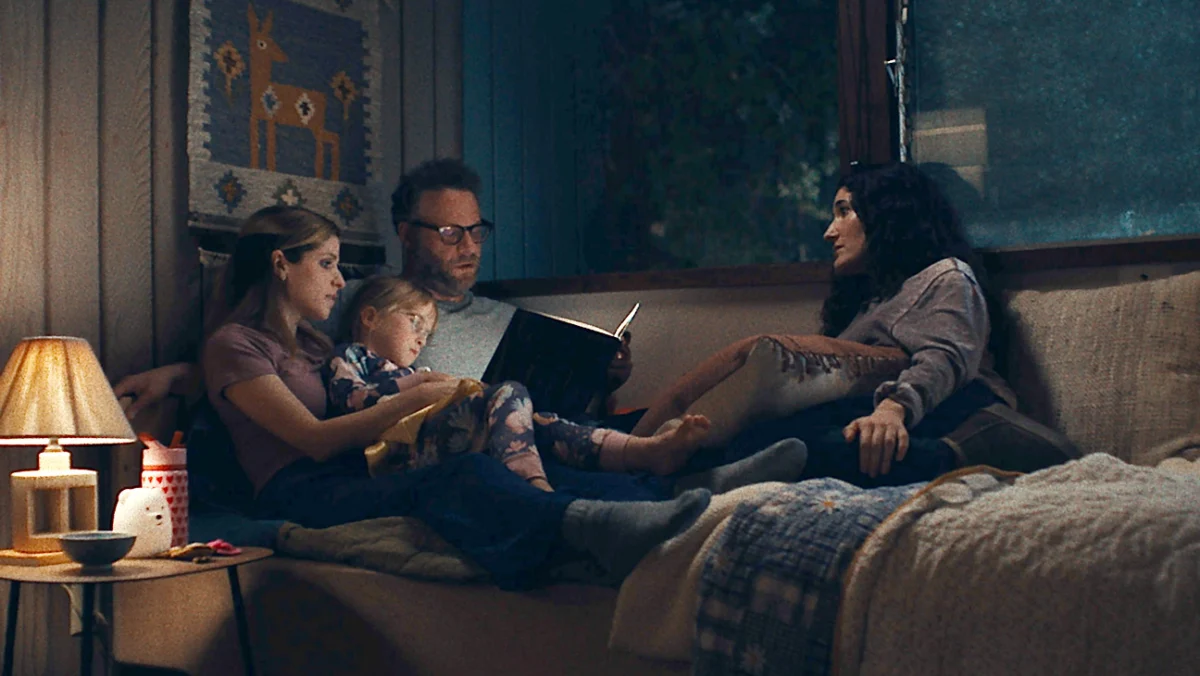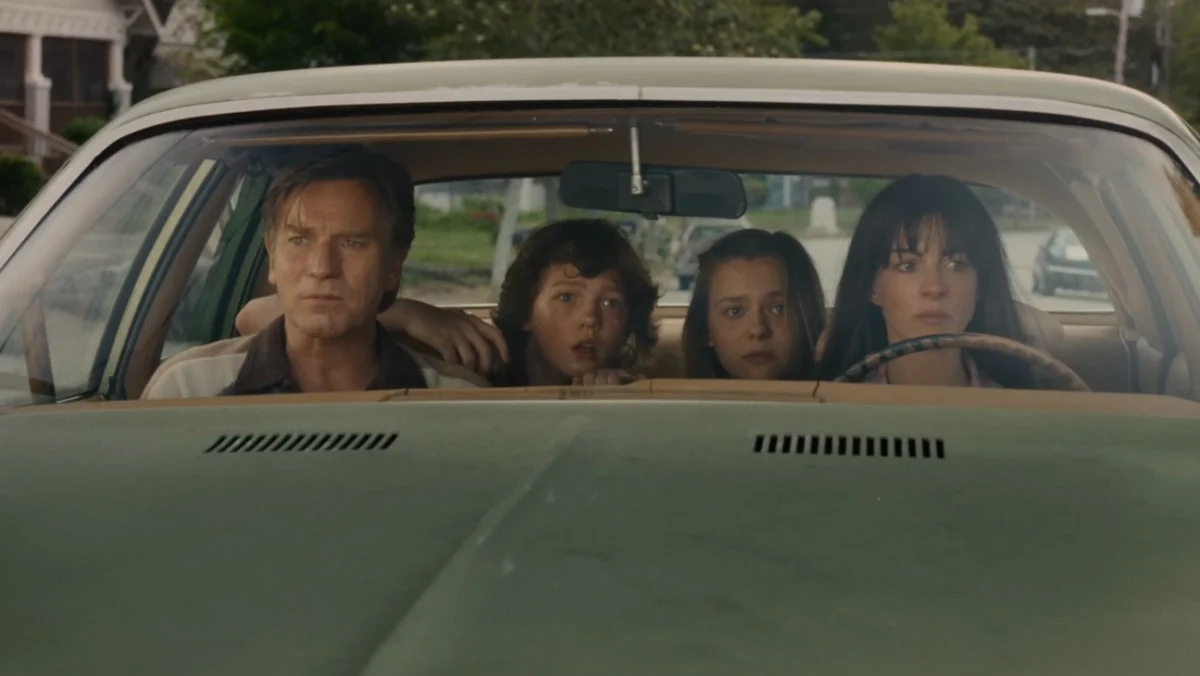
David Robert Mitchell’s latest cinematic offering, "The End of Oak Street," has premiered, presenting a peculiar blend of suburban drama and Mesozoic chaos that features Anne Hathaway and Ewan McGregor grappling with prehistoric predators in a seemingly idyllic 1982 cul-de-sac. The film, which has garnered a PG-13 rating and runs for 1 hour and 40 minutes, aims for a nostalgic ’80s Amblin vibe but often veers into a realm critics are labeling as "high-end trash"—a designation that paradoxically suggests both entertainment value and a certain lack of serious artistic ambition. Set for release on Friday, August 14, the movie places a dysfunctional family at the heart of an improbable prehistoric invasion, leveraging star power and a distinct aesthetic to deliver a unique summer blockbuster experience.
David Robert Mitchell’s Evolving Vision
The director, David Robert Mitchell, previously garnered significant critical acclaim in 2014 with "It Follows." That film was lauded for its taut, lo-fi supernatural horror, distinguishing itself through sustained creepiness and visceral scares achieved largely through skilled use of practical effects. This marked a breakthrough for Mitchell, establishing him as a distinctive voice in independent genre cinema.
His subsequent feature, 2018’s "Under the Silver Lake," was a self-indulgently Lynchian Los Angeles noir that proved more divisive, facing both critical and commercial challenges despite attracting a dedicated base of staunch defenders. "The End of Oak Street" represents a significant departure from these earlier works, pivoting sharply towards digital effects and a more overtly comedic, blockbuster-oriented tone. This shift positions Mitchell in a different cinematic landscape, exploring the potential of large-scale spectacle rather than the intimate, unsettling narratives that defined his initial success.
The Allure of Amblin and ’80s Throwbacks
"The End of Oak Street" openly embraces a worshipful homage to 1980s Amblin Entertainment productions, particularly the canonical works of Steven Spielberg. This aesthetic choice aligns with a broader trend in contemporary cinema and television, where ’80s nostalgia continues to captivate audiences. Films like J.J. Abrams’ 2011 effort "Super 8" previously explored similar territory, blending childhood wonder with sci-fi elements, often inheriting comparable strengths and weaknesses in their execution.
The film meticulously recreates the suburban milieu of 1982, from period-specific details in home decor to character archetypes familiar from classic ’80s adventure stories. This deliberate throwback seeks to tap into a collective cultural memory, promising viewers a journey back to a simpler, albeit often more fantastical, time in cinematic storytelling. The challenge, however, lies in transcending mere imitation to forge a distinct identity within this well-trodden nostalgic framework.
A Suburban Apocalypse: The Platt Family’s Ordeal
The narrative begins amidst a quintessential 1982 summer block party, introducing the Platt family at a crucial juncture in their lives. Denise Platt, portrayed by Anne Hathaway, is a frustrated housewife who barely conceals her irritation with her husband, Greg, played by Ewan McGregor. Greg, depicted as underachieving, has secretly been laid off from his job weeks prior, resorting to sneaking slugs of whiskey in the garage and delivering pizzas like a flaky college student. Hathaway’s character harbors secret aspirations, evident in a novel she is covertly writing, whose protagonist keeps a suitcase packed, fantasizing about escaping her suffocating life.
Their children add further layers to the family dynamic. Audrey, a smart, mid-teens science and astronomy geek portrayed by Maisy Stella (known for her delightful performance in "My Old Ass"), defies conventional stereotypes by also being depicted as cool, with subtle hints of a burgeoning sexuality that diverges from retro popcorn movie norms. She is fiercely protective of her younger brother, Brian (Christian Convery), a sensitive pre-teen who worries about his parents’ escalating tensions. Brian, a bit of a whiner, carries a bow and arrow everywhere but proves to be remarkably inept, managing to hit a target only once when it is too large and slow to miss. He is initially part of an inseparable quartet of friends—a composition reminiscent of Stephen King’s archetypal groupings—though the other three vanish from the narrative after an early scene, making this particular homage feel somewhat self-conscious.
The Inciting Incident and Prehistoric Incursion
The story’s inciting incident unfolds with a series of mysterious flashes of blinding light in the night sky, accompanied by fierce winds and deafening noise. These unexplained phenomena cease as abruptly as they begin, but they leave the Platts’ adorably feisty Australian cattle dog, Starbuck, on high alert. The morning after one such event, the entire street is inexplicably cut off from the rest of town, now surrounded by bodies of water and thick tropical jungle, under unseasonably steamy temperatures.
This sudden transformation into a Twilight Zone-esque scenario marks the arrival of prehistoric beasts. These time-traveling creatures begin to emerge from the dense vegetation, the skies, and the water, each seemingly bigger and more vicious than the last. The sheer absurdity and spectacle of these ancient interlopers interacting with suburban life are central to the film’s appeal. Watching dinosaurs rifle through garbage cans, trample fences, toss cars around like toys, or slurp up soft serve from an overturned ice cream truck provides a significant source of the film’s "big-dumb-fun" entertainment. The stakes are quickly raised as the creatures demonstrate their deadly nature, ripping apart an annoying neighbor and biting the head off another, validating the Platts’ frantic warnings to seek shelter.
Creature Design and Visual Spectacle
The design of the dinosaurs themselves contributes significantly to the film’s distinctive aesthetic. Notably, some feature densely feathered outer coverings, likened to "emus raised too close to a nuclear reactor." Among the standout creatures is a chunky, mile-long snake—identified as a Titanoboa, though humorously dubbed "Fat Bastard"—that initially slithers with sloth-like slowness before turning aggressively, revealing a mouth full of spiked teeth.
The computer-generated imagery (CGI) for these creatures is generally slick and effectively rendered, creating believable threats and spectacles. However, the visual quality occasionally falters, particularly in a scene where the camera gets too close to huge, armored herbivores whose cartoon eyes evoke images of plastic Mattel toys. This inconsistency highlights the perpetual challenge of balancing realistic rendering with stylized character design in creature features, particularly those aiming for a nostalgic, almost toy-like quality.
Performance Dynamics and Narrative Inconsistencies
The film’s central emotional anchor lies in the Platt family’s struggle for survival, which necessitates their rediscovering a closeness that had been fragmenting prior to the prehistoric invasion. This arc, where mutual reliance reignites family bonds, is a conventional but effective dramatic device in survival narratives.
Anne Hathaway’s performance as Denise Platt is widely regarded as the essential glue holding the film together. Despite playing a character "below her pay grade," Hathaway imbues Denise with a compelling blend of domestic frustration and nascent heroism. Her character’s transformation from an unfulfilled housewife into a fearless protector, unloading shotgun bullets into leathery reptiles, is a source of genuine enjoyment for audiences. Her ability to run screaming from a hungry beast in close pursuit, while maintaining a degree of gravitas, underscores her pivotal role.
Ewan McGregor, on the other hand, struggles with the role of Greg. His performance is described as "terrible," not solely due to a frequently slipping American accent, but also because he is stuck playing a somewhat ineffectual character. Even when wielding a sledgehammer against prehistoric threats, his "shambolic performance" often conveys a lack of genuine stakes.
Narrative inconsistencies also punctuate the film. Audrey, the intelligent teenager, is shown witnessing carnage and spouting scientific theories one minute, only to be found weeping in the car, singing along to Steve Winwood on the radio the next, a moment that bafflingly draws attention to her vulnerability. Brian’s heedlessness in dashing out to chase his beloved Starbuck makes a little more sense, driven by youthful attachment. Furthermore, the film’s explanation for the temporal anomaly—a few rushed words from Audrey about tremors and time portals—is notably thin. Similarly, the exit strategy, involving large spheres of light reminiscent of Glinda’s travel in "The Wizard of Oz," demands a suspension of disbelief that borders on the absurd.
Technical Craft and Sensory Impact
Despite its narrative flaws, "The End of Oak Street" boasts strong technical elements that contribute to its "giddy charms." Michael Giacchino’s frantic score plays a crucial role in amplifying the film’s scares, while the sound design is described as capable of ripping through the audience like a "surprise bowel movement," ensuring a visceral auditory experience.
Cinematographer Michael Gioulakis, a frequent collaborator with Mitchell, provides the movie with a dynamic visual kick. His work features vigorous tracking shots, rapid zooms, and split diopters, creating a visually engaging and energetic presentation. Production designer Maya Shimoguchi deserves credit for crafting a setting rich in character and period detail, particularly within the Platt family’s house, which serves as a detailed playground for the unfolding chaos. These elements collectively enhance the film’s overall entertainment value, even when the script veers into risible moments, such as the Platts chattering away in their front yard oblivious to a house-sized monster creeping up on them.
Critical Reception and Broader Implications
"The End of Oak Street" has elicited a range of responses, particularly from a press-and-public preview audience that was "laughing up a storm," indicating its success as a crowd-pleaser. However, critics note its struggle to define its identity beyond a fervent homage to the 1980s. While mindlessly entertaining in a "big-dumb-fun" way, the film’s "half-jokey tone" often undermines its attempts at genuine terror, creating a peculiar blend of comedy and creature feature.
The film’s "giddy charms," particularly the nasty Titanoboa, are acknowledged, but the overall experience is seen by some as an "underwhelming return" for a director of Mitchell’s caliber. His decision to dip his toes into "blockbuster waters" inevitably invites comparisons to "Jurassic Park" and its numerous descendants. The predictable arc of Denise coming to a new appreciation for Greg after almost losing him, coupled with a "laughably easy" and anticlimactic escape from their predicament, reinforces the idea of a film that prioritizes spectacle and nostalgia over narrative depth or consistency.
As "The End of Oak Street" enters the summer movie landscape, it positions itself as a flawed but often fun ride, a nostalgia trip with prehistoric teeth. It underscores the ongoing fascination with ’80s pop culture and the enduring appeal of creature features, even when delivered with a knowing wink. For David Robert Mitchell, it marks a significant genre pivot, showcasing his versatility but also raising questions about his future artistic direction after a varied filmography. The film stands as a testament to Anne Hathaway’s ability to anchor even the most outlandish premises, navigating the absurdity with a blend of dramatic conviction and comedic timing.