President Donald Trump delivered a defiant address to the United Nations General Assembly on Tuesday, threatening to "annihilate" Iran in a display of global brinkmanship that contrasted sharply with his eroding influence at home. As the 80-year-old commander-in-chief seeks to project an image of absolute authority on the world stage, a convergence of economic instability, legal setbacks, and internal party fractures suggests that the phrase ‘the weaker he gets, the more dangerous he gets’ has become the defining theme of his second term.
The president’s appearance in New York was marked by immediate friction with the domestic press corps. Before entering the UN building, Trump engaged in a sharp exchange with CNN anchor Kaitlan Collins, whose network had recently won a court battle to restore its White House access. Trump expressed visible irritation at the presence of the outlet he had previously attempted to ban, telling Collins she "should not be here." The confrontation served as a microcosm of the current administration: a president attempting to exert unilateral control while being increasingly reined in by the judicial system and constitutional norms.
This latest outburst highlights a widening chasm between the president’s rhetoric of invincibility and the political reality of a waning mandate. Now 20 months into his second administration, Trump faces a landscape where federal courts, once seen as a bastion of his judicial legacy, are increasingly blocking his executive actions. Simultaneously, his approval ratings have cratered to historic lows, fueled by a combination of persistent domestic inflation and the mounting human and financial costs of an unpopular military conflict in Iran.
Institutional Defiance and the Limits of Executive Reach
The executive branch’s traditional levers of power appear to be slipping from the president’s grasp. In recent weeks, the Federal Reserve has openly defied the White House on interest rate policy, signaling an independence that Trump has frequently criticized. This institutional resistance extends to the Supreme Court, which recently dealt a significant blow to the administration by blocking efforts to impose new federal restrictions on mail-in ballots ahead of the upcoming midterm elections.
The judicial pushback has extended to more personal grievances. After a judge prevented the president from adding his name to the Kennedy Center, Trump responded by threatening the national arts complex with demolition. In a separate ruling, a federal judge ordered the immediate reinstatement of press credentials for three news outlets—CNN, MS Now, and Politico—concluding that the administration’s ban was a violation of First Amendment protections. These legal defeats have contributed to a perception of an administration in a defensive crouch, lashing out at institutions it can no longer dominate.

Critics argue that these setbacks are fueling a more volatile temperament within the Oval Office. Rick Wilson, a veteran Republican strategist and co-founder of the Lincoln Project, suggests that the country is entering a period of unparalleled negativity. Wilson noted that the current pessimism among the electorate has reached levels not seen since the Carter administration, suggesting that the "aura of authority" that once surrounded Trump is rapidly evaporating.
Economic Volatility and the Toll of Foreign Conflict
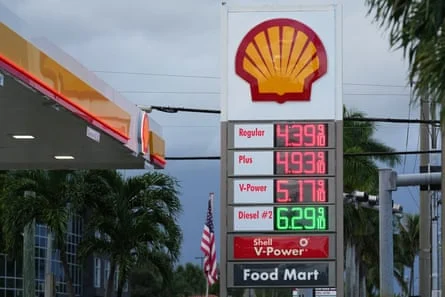
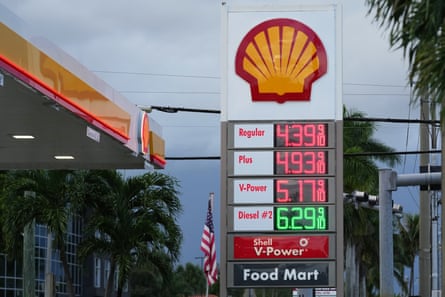
The primary driver of the public’s growing discontent appears to be the economy. Despite White House claims of a "winning, commonsense agenda," American consumers are grappling with the highest fuel and food prices in decades. The administration’s involvement in the Iran conflict has exacerbated these pressures, with global energy markets reacting to the instability and the threat of a wider war.
Voters have begun to link the president’s foreign policy directly to their domestic financial struggles. Political analysts point out that while Trump’s base remained loyal through various controversies in his first term, the tangible impact of gas prices and grocery bills is testing that devotion. This economic anxiety is reflected in polling data, which shows Trump’s approval rating dipping as low as 29% in certain surveys.
The political consequences of this downturn are becoming evident as the November midterm elections approach. Control of both the House of Representatives and the Senate is at stake, and many Republican candidates are beginning to view the president as a liability rather than an asset. This shift in the political wind has led to a noticeable change in behavior among elected officials who were once the president’s most steadfast defenders.
‘The weaker he gets, the more dangerous he gets’: Internal Party Fractures
The phrase ‘the weaker he gets, the more dangerous he gets’ is increasingly used by observers to describe the president’s reaction to the growing dissent within the Republican Party. For nearly a decade, the GOP maintained a posture of near-total submission to Trump, driven by the fear of a primary challenge or a targeted social media attack. However, as his poll numbers tumble, the instinct for political self-preservation is beginning to outweigh party loyalty.
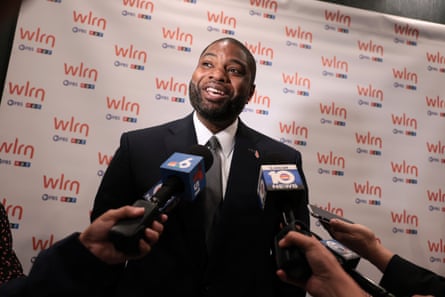
In Florida, a state long considered the heart of Trump’s political empire, the cracks are becoming visible. Byron Donalds, the Republican candidate for governor, has reportedly removed numerous references to the president from his campaign materials. Meanwhile, Congresswoman María Elvira Salazar has launched advertisements that distance her from the administration’s immigration policies. Salazar’s campaign has openly stated that federal enforcement has gone "too far" and that Latino voters feel "betrayed" by the current direction of the White House.
Rick Wilson compared the current mood among congressional Republicans to a wildlife documentary, describing them as "gazelles on the savannah" who can smell a predator in the wind. Wilson argued that the "magic" of Trump’s endorsement has faded, and that many in the party now view him as the primary risk factor to their continued hold on power.
The White House Defense: A ‘Winning Agenda’ Amid Criticism
The Trump administration has moved aggressively to counter the narrative of a failing presidency. White House spokesperson Davis Ingle dismissed claims of waning influence, asserting that the president remains the "unequivocal leader" and "unmatched motivator" for the Republican Party. In a statement, Ingle highlighted what the administration considers its core achievements, including large-scale tax cuts, a reduction in prescription drug costs, and record-high 401(k) balances.
According to the White House, the president’s "unleashing of an energy revolution" and his efforts to secure the border are the primary drivers of his agenda. The administration contends that the choice facing voters in the midterms is between Trump’s "commonsense" policies and the "extreme liberal policies" of the Democratic opposition. Despite these assertions, the disconnect between the administration’s messaging and the public’s perception of the economy continues to widen.
The White House also maintains that the president is committed to maintaining Republican majorities in Congress. However, the internal pressure to choose between loyalty to Trump and the demands of local constituencies is creating a "vicious circle." As Wilson argues, the more the president demands loyalty that he does not receive, the more he lashes out, further alienating the very allies he needs to sustain his legislative and political power.
The Second-Term Curse and the Looming Succession
Historians and political scientists are viewing Trump’s current struggles through the lens of the "second-term curse." Allan Lichtman, a history professor at American University, noted that second terms have historically been difficult for presidents, citing the examples of Richard Nixon’s Watergate scandal, Bill Clinton’s impeachment, and George W. Bush’s struggles with the Iraq War. Lichtman suggests that Trump’s unique personality makes this phase particularly volatile.
According to Lichtman, Trump is driven by a need for attention and glory, and the prospect of becoming irrelevant is his greatest fear. This drive, combined with the immense and often unchecked power of the presidency, creates a "frightening" scenario. Lichtman warned that even as the president’s approval numbers drop, his willingness to use executive authority—including the pardon power and control over the Justice Department—remains unconstrained by traditional norms.
The attention of the political world is also beginning to shift toward the 2028 presidential race, a transition that is reportedly causing significant friction within the administration. Potential successors, such as Vice President JD Vance and Secretary of State Marco Rubio, are already being scrutinized as the future of the party. Bill Galston of the Brookings Institution observed that the shift of the spotlight away from the president is "intensely painful" for him, describing attention as the "oxygen" Trump needs to function spiritually and emotionally.
Accountability and the Prospect of a Lame-Duck Collision
The final two years of the Trump presidency are shaping up to be a period of intense confrontation. If Democrats succeed in winning control of the House of Representatives in November, they have signaled a comprehensive plan to launch investigations into the administration. These probes are expected to focus on allegations of the abuse of office for personal enrichment, the hollowing out of federal agencies, and the awarding of government favors to political supporters.
This looming threat of oversight, combined with the president’s shrinking domestic authority, suggests a collision course between a "lame-duck" executive and an emboldened opposition. Conservative commentator Charlie Sykes noted that the notion of Trump "going quietly" is naive. Sykes argued that as the president’s traditional power base erodes, he is likely to revert to his most aggressive tactics: manufacturing cultural conflicts, attacking the press, and testing the limits of his executive reach.
As the 2026 midterm elections approach, the American political landscape remains deeply unsettled. The paradox of the current moment lies in the tension between the president’s perceived weakness and his remaining capacity to disrupt national and international stability. Whether through further military escalation abroad or the unchecked use of executive orders at home, the final chapter of the Trump presidency appears set to be defined by a refusal to accept the natural waning of political power.