Gaza City, Gaza Strip – Families in Gaza are increasingly seeking refuge in damaged buildings teetering on the brink of collapse, a desperate situation driven by a severe housing crisis exacerbated by years of conflict and reconstruction blockades. For many, these precarious structures represent their only available shelter, with official warnings to evacuate often going unheeded due to a lack of viable alternatives.
The Looming Threat of Structural Failure
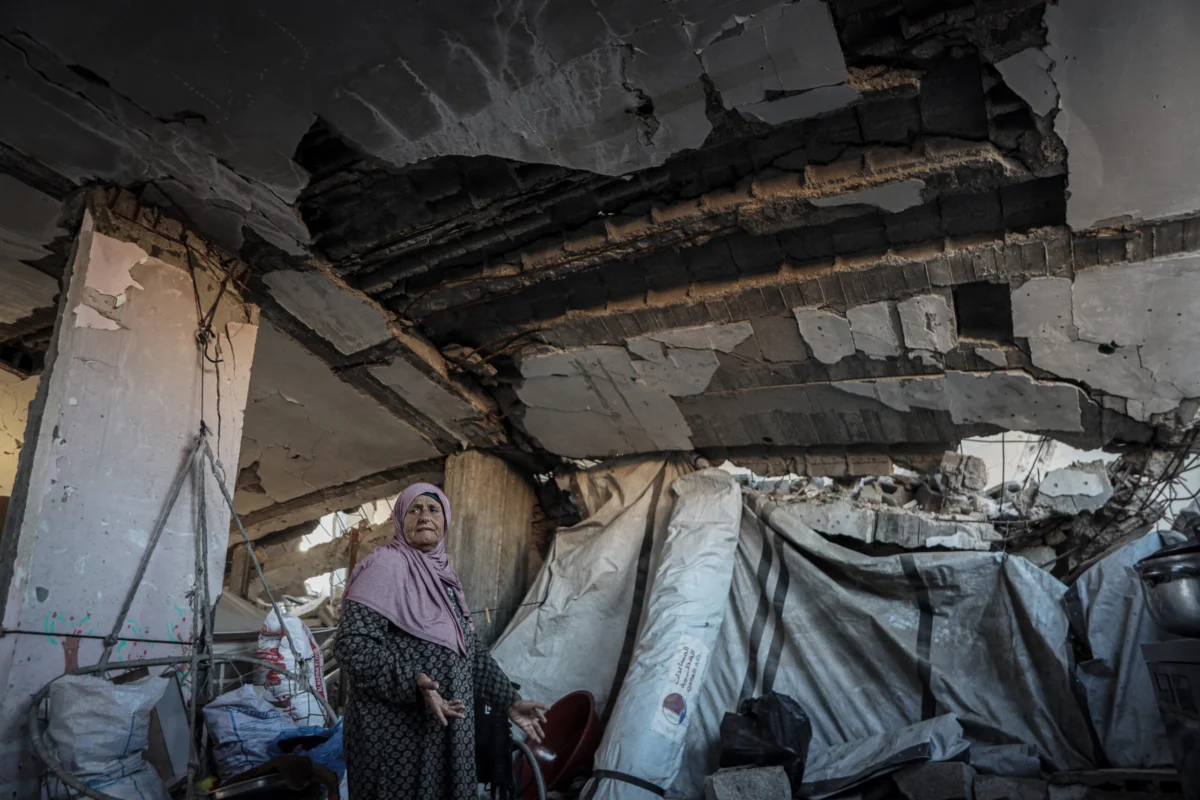
Masada Abu Jarad, 60, lives in an apartment in Gaza City where the roof has partially collapsed, exposing a jagged landscape of broken concrete and twisted steel bars. Her family has pitched a tent beneath the open section of their room, a makeshift solution to shield them from the elements. Despite being warned by the Palestinian Red Crescent and Civil Defence of the building’s inherent danger, the Abu Jarad family, like many others, has nowhere else to go.
"We have no options," Masada stated, her voice tinged with resignation. "I want to leave, but who will give me an alternative?" The family originally hailed from Beit Lahiya in the northern Gaza Strip but was forced to flee early in the conflict when their home area was decimated. They remain unable to return, a common refrain for countless displaced Gazans.

The prospect of repeated displacement, coupled with the prohibitive cost of rental housing, leaves families trapped. "Even if there is a better place, tell me how I can afford to rent it," Masada added, highlighting the economic desperation that underpins the housing crisis. Her experience is a stark microcosm of a wider predicament affecting Palestinians who have survived the ongoing conflict.
A Devastated Housing Landscape
The scale of destruction in Gaza’s housing sector is staggering. A joint assessment by the United Nations, World Bank, and European Union revealed that as of October 2025, a staggering 371,888 housing units, or 76.6 percent of the total housing stock, had been destroyed or severely damaged. Rebuilding Gaza is projected to cost over $71 billion spanning the next decade, a monumental task complicated by persistent blockades on essential reconstruction materials.
The life-threatening consequences of living in damaged structures were tragically underscored on September 16, when a six-story residential building in Gaza City, already weakened by war, collapsed. The incident claimed the lives of 21 people, including 12 children, according to United Nations and Gaza Civil Defence reports. This devastating event serves as a chilling warning to thousands of other families residing in similarly compromised buildings across the Strip.
Living Under Constant Threat

Abdullah Abu Hajar, 40, shares his home with his wife and five children in the al-Najma building in Gaza City’s southern Remal neighborhood. This six-story structure is severely damaged and unstable, currently housing approximately 17 families, totaling 50 to 60 individuals. Municipal notices plastered on the exterior walls serve as grim reminders of the building’s precarious state, warning residents and passersby of its imminent collapse risk.
At night, Abdullah’s primary concern is the safety of his sleeping family. He remains awake, his senses heightened by every unfamiliar sound – the shifting of concrete, the movement of stones, or an unexplained creaking within the building’s structure. "I stay awake all night, keeping watch," he confessed. "I can’t close my eyes. I keep just listening to sounds around me."
Despite the children’s apparent adaptation to the constant danger, Abdullah’s anxiety remains palpable, intensified by the recent building collapse. He admits to sleeping very little since the incident, living in a perpetual state of apprehension. "I’m already on edge," he said, "But I don’t know where I can go."
Abdullah and his family were displaced from Beit Hanoon in northern Gaza after it was targeted, leading to multiple relocations throughout the war. They eventually found refuge in the al-Najma building. His extended family faces a similar existential quandary. Abdullah recounted how a relative has been continuously moving between southern and northern Gaza, desperately searching for a patch of land to pitch a tent.
"I told him to come and stay with us," Abdullah shared, "But he is hesitant because of the condition of this building. At the same time, he has nowhere else to go." This sentiment encapsulates the cruel dilemma faced by many: the fear of remaining in a dangerous structure versus the impossibility of finding any safer alternative.

A Room Among the Rubble
For Islam Hassanein, 36, a mother of five, the same pervasive fears are interwoven with the very fabric of her current dwelling. She and her family have spent nearly a year occupying a single room on the third floor of a damaged building, a space they found after extensive searching and subsequently cleared of rubble and debris. "We cleaned it and stayed in it," she explained.
The building itself exhibits visible damage and a concerning lean. Essential services like plumbing are non-existent, forcing the family to utilize an outdoor bathroom. The living conditions are a far cry from a traditional family home. Yet, the prospect of leaving is as daunting as staying. "We keep looking, but we can’t find anywhere," Islam said. "They might even force us out of here. What are we supposed to do?"
Islam expressed a readiness to leave immediately if a safe haven were provided. "If they find us a good place and provide us with a tent, we will leave from the morning," she stated emphatically. "But where is this place? And where is the tent?" This question highlights the critical shortage of essential resources, including temporary shelter materials, a situation exacerbated by import restrictions.
The building’s deteriorating condition serves as a constant reminder of the peril. "Every day, you hear the cracking," Islam described. "People who live here tell us, ‘It’s cracking.’ Then a column fell, and they took us out of the building temporarily." These episodes of localized structural failure add to the pervasive anxiety.

Winter’s Approaching Threat
The approaching winter months amplify these concerns. Colder temperatures and increased rainfall pose significant threats to already weakened structures. Water ingress through exposed roofs and walls can further compromise the integrity of the buildings, placing additional strain on their compromised foundations.
"Last winter was terrifying," Islam recalled. "We were constantly afraid that the building would collapse. I spent most days in my family’s tent because this building was full of openings and would flood whenever it rained." The prospect of enduring another harsh winter in such conditions fills her with dread. "Now, I am very afraid of this winter, and I don’t know what we are going to do."
The United Nations reports that thousands of individuals are taking refuge in buildings deemed unsafe due to the absence of any viable alternative housing. Israeli restrictions on the import of tents, tarpaulins, and other crucial shelter materials are compounding the crisis, trapping Gaza in a cycle of vulnerability. This situation leaves the population in a state of perpetual uncertainty, unable to rebuild or move forward, especially with the constant threat of further escalation.
Overcrowding and Inadequate Shelters

UNICEF estimates that approximately 84 percent of Gaza’s population, representing over 1.76 million people, are living in overcrowded displacement sites or inadequate and damaged shelters. These conditions offer minimal protection against the elements, including cold weather, heavy rains, and flooding, further jeopardizing the health and safety of residents.
Islam’s narrative underscores the profound impact of the war on families, forcing them into situations that were once unimaginable. The fear for her five children is paramount, yet the available options are severely limited. "They are all afraid," she said, her voice heavy with maternal concern. "But what can we do? If there is an alternative, I will leave. We leave it to God." This reliance on faith in the face of overwhelming adversity reflects the profound sense of helplessness and the desperate hope for a reprieve. The damaged al-Najma building stands as one of many structures across Gaza that symbolize this grim reality, a testament to the ongoing housing crisis and the urgent need for sustained humanitarian aid and reconstruction efforts.