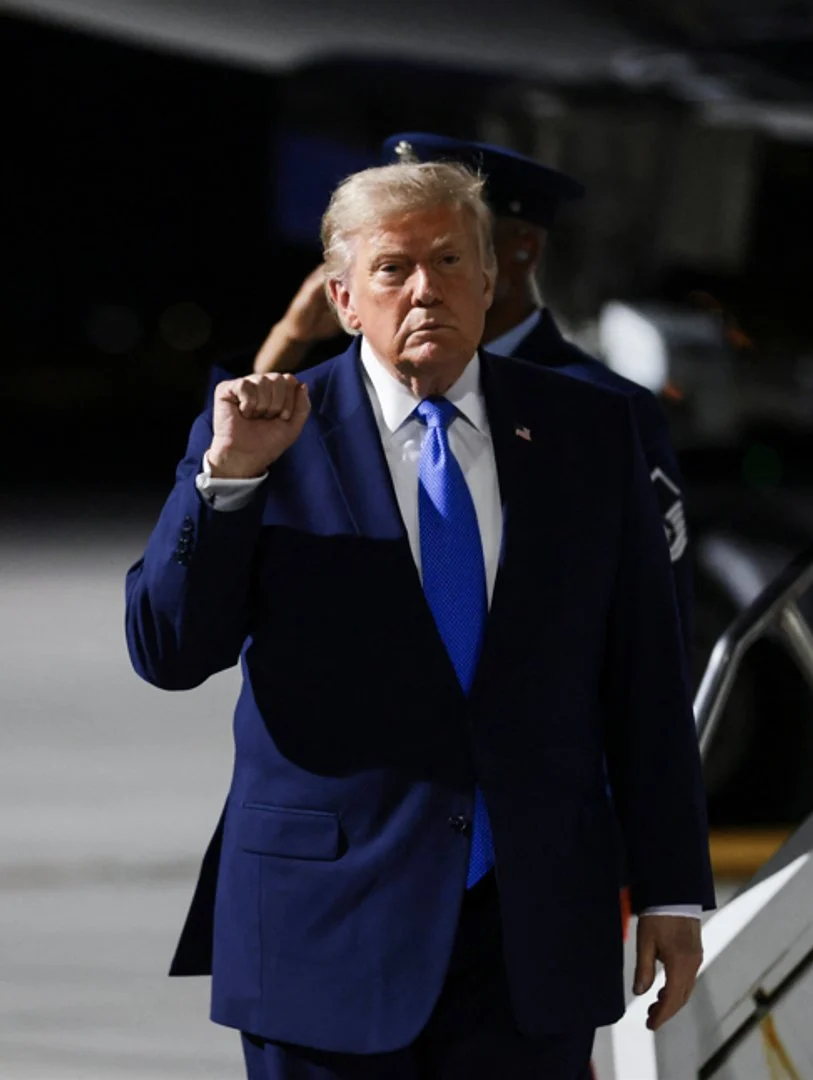
U.S. President Donald Trump declared on August 5, 2026, that progress has been made in diplomatic efforts with Iran, but concurrently issued a stern warning that the "hardest hit is yet to come" should negotiations ultimately fail to yield a satisfactory agreement. Trump asserted that the United States had halted what he characterized as the "biggest military attack since World War II" after Tehran indicated a willingness to engage in talks.
The dual pronouncements from the White House signaled a delicate and precarious phase in the ongoing tensions between the U.S. and Iran, a relationship that has been characterized by escalating rhetoric and intermittent crises. The President’s remarks, delivered amidst reports of quiet, back-channel communications, underscored the administration’s commitment to exploring diplomatic avenues while simultaneously maintaining a posture of formidable military readiness.
Shifting Sands of Diplomacy and Deterrence
The diplomatic overture from Iran, reportedly conveyed through intermediaries, appears to have been a pivotal moment, averting an immediate military escalation that had been widely anticipated. U.S. intelligence agencies had previously indicated that preparations were underway for a significant retaliatory strike against Iranian targets in response to alleged provocations, including the downing of a U.S. drone and attacks on oil tankers in the Persian Gulf.
Trump’s assertion that he "paused" these military operations suggests a direct link between Iran’s expressed interest in dialogue and the de-escalation of imminent conflict. This move, if accurate, would represent a significant gamble on the part of the administration, shifting from a policy of maximum pressure to one that embraces negotiation, albeit under the shadow of potential military reprisal. The success of this strategy, however, hinges on Iran’s willingness to engage in substantive discussions and its commitment to altering its regional behavior and nuclear program.
A History of Escalation and Sanctions
The current diplomatic standoff did not materialize in a vacuum. For years, the United States, under the Trump administration, has pursued a policy of "maximum pressure" against Iran, reimposing and intensifying sanctions following the U.S. withdrawal from the Joint Comprehensive Plan of Action (JCPOA), commonly known as the Iran nuclear deal, in 2018. These sanctions have severely impacted Iran’s economy, leading to widespread inflation, currency devaluation, and significant hardship for its population.
Iran, in response to the sanctions and perceived U.S. hostility, has gradually increased its uranium enrichment levels, exceeding the limits set by the JCPOA. The Islamic Revolutionary Guard Corps (IRGC) and its affiliated proxy groups have also been accused of destabilizing activities across the Middle East, including in Iraq, Syria, Lebanon, and Yemen. These actions have been a persistent source of friction and have fueled regional instability.
The period leading up to August 2026 had seen a particularly sharp increase in tensions. A series of maritime incidents in the Strait of Hormuz, coupled with Iran’s downing of a U.S. surveillance drone in June 2019, had brought the two nations to the precipice of open conflict. The U.S. military had reportedly been on high alert, and discussions about potential retaliatory measures, including air strikes, were reportedly underway within the highest echelons of the U.S. government.
The Unseen Negotiations and Their Implications
The revelation that Iran requested talks, leading to the halting of military action, suggests a complex web of communication and negotiation operating beneath the surface of public pronouncements. The specific channels through which these requests were made, and the details of any initial exchanges, remain largely undisclosed. However, the fact that such a significant military operation was reportedly averted indicates a substantial shift in the immediate threat landscape.
The "hardest hit" warning from President Trump is a clear indication that the administration’s diplomatic overtures are not born out of weakness but rather a strategic recalibration. It implies that while the U.S. is open to negotiation, it retains its capacity and willingness to employ overwhelming force if its objectives are not met. This dual approach of diplomacy and deterrence is a hallmark of the Trump administration’s foreign policy strategy.
Examining the ‘Progress’ Claimed by the U.S.
President Trump’s claim of "progress" is open to interpretation. It could refer to initial signals from Tehran indicating a willingness to discuss specific issues, such as de-escalation of regional tensions, limitations on ballistic missile programs, or even a renewed willingness to negotiate a revised nuclear agreement. Without further clarification, the nature and extent of this progress remain speculative.
However, any perceived progress is likely tempered by deep-seated mistrust and decades of adversarial relations. Iran’s leadership has historically been wary of U.S. intentions, viewing American influence in the region with suspicion. The U.S., conversely, has consistently criticized Iran’s human rights record, its support for militant groups, and its pursuit of nuclear capabilities.
The Economic Pressure Cooker
The impact of U.S. sanctions on Iran’s economy cannot be overstated. The reimposition of sanctions after the U.S. withdrawal from the JCPOA had a devastating effect, crippling Iran’s oil exports and restricting its access to international finance. This economic hardship has been a significant factor in domestic Iranian politics, fueling discontent and creating pressure on the government to seek relief.
The prospect of further economic pressure, or conversely, the easing of sanctions in exchange for concessions, represents a critical lever in any potential negotiation. The success of diplomatic efforts will likely be tied to the U.S.’s willingness to offer sanctions relief and Iran’s willingness to implement verifiable changes to its policies.
Regional Repercussions and the Specter of War
The broader implications of any U.S.-Iran agreement, or its failure, extend far beyond the bilateral relationship. The Middle East is a complex geopolitical landscape, and any shift in the U.S.-Iran dynamic would inevitably have ripple effects across the region.
Allies such as Saudi Arabia and Israel have long advocated for a tougher stance against Iran, viewing its regional activities as a direct threat to their security. Their reactions to any diplomatic breakthrough, or conversely, any renewed escalation, will be closely watched. A failure to reach an agreement, leading to renewed military confrontation, could destabilize the entire region, disrupt global energy markets, and potentially draw in other international actors.
Public Opinion and International Scrutiny
Domestically, the administration’s handling of Iran has been a subject of intense debate. Supporters of a more assertive policy argue that strong deterrence and economic pressure are necessary to curb Iran’s destabilizing influence. Conversely, critics have warned of the dangers of escalating rhetoric and the potential for miscalculation that could lead to war.
Internationally, the U.S. withdrawal from the JCPOA and its subsequent "maximum pressure" campaign have been met with mixed reactions. European allies, in particular, have expressed concerns about the economic fallout of sanctions and have sought to preserve the nuclear deal. Any diplomatic progress or a return to heightened conflict will undoubtedly attract significant international attention and scrutiny.
The Path Forward: A Tightrope Walk
The coming weeks and months will be critical in determining the trajectory of U.S.-Iran relations. The U.S. appears to be engaging in a delicate balancing act, attempting to leverage the threat of military force to achieve diplomatic gains. The success of this strategy will depend on a myriad of factors, including the internal political dynamics within Iran, the willingness of all parties to compromise, and the ability of U.S. leadership to navigate the complex geopolitical currents of the Middle East.
President Trump’s warning of a "hard hit" serves as a stark reminder of the stakes involved. While diplomacy has seemingly averted immediate conflict, the underlying issues that have fueled decades of animosity remain unresolved. The path forward is fraught with uncertainty, and the international community will be closely observing whether the current period of tentative dialogue can translate into a lasting peace or whether the specter of war will once again loom large over the region. The administration’s commitment to achieving a deal, coupled with its readiness to impose severe consequences for non-compliance, sets the stage for a critical period of diplomatic engagement and potential confrontation.