Jury selection commenced Monday in a Las Vegas courtroom for the high-stakes murder trial of Duane "Keffe D" Davis, a former gang leader accused of orchestrating the 1996 drive-by shooting that claimed the life of hip-hop icon Tupac Shakur. The proceedings in Clark County District Court mark a pivotal moment in one of the most notorious cold cases in American history, coming nearly three decades after the 25-year-old rapper was gunned down on the Las Vegas Strip.
The court summoned approximately 75 potential jurors to begin the arduous process of seating an impartial panel for a case that has remained a fixture of global pop culture and conspiracy theories for 28 years. Judge Carli Kierny is presiding over the trial, which is expected to last between four and five weeks. Davis, 63, faces a charge of murder with a deadly weapon and could be sentenced to life in prison without the possibility of parole if convicted.
Prosecutors intend to portray Davis as the tactical mastermind behind the fatal encounter. While the state does not allege that Davis personally pulled the trigger, they argue that under Nevada law, he is equally responsible for the killing because he provided the firearm and commanded the hit. Davis is the last living individual among the four men who were inside the white Cadillac from which the fatal shots were fired.
The Fatal Night: September 7, 1996
The events leading to the shooting began earlier that evening at the MGM Grand Hotel and Casino, where Shakur had attended a heavyweight championship boxing match between Mike Tyson and Bruce Seldon. Following the match, a brawl broke out in the casino lobby involving Shakur, Death Row Records CEO Marion “Suge” Knight, and their associates. The group attacked Orlando "Baby Lane" Anderson, a member of the South Side Compton Crips and the nephew of Duane Davis.
According to police reports and grand jury testimony, the casino altercation was a retaliatory act for a previous theft of a Death Row Records medallion. This physical confrontation served as the catalyst for the drive-by shooting that occurred hours later. Prosecutors allege that Davis, incensed by the assault on his nephew, immediately sought a weapon and mobilized a team to hunt down Shakur and Knight.

Later that night, Shakur was riding in the passenger seat of a black BMW 750iL driven by Knight. As the vehicle stopped at a red light at the intersection of Flamingo Road and Koval Lane, a white Cadillac pulled alongside them. An unidentified shooter opened fire, striking Shakur four times. The rapper died six days later at University Medical Center due to internal bleeding. Knight was grazed by a bullet fragment but survived the attack.
The Long Road to Prosecution
For more than twenty years, the investigation into Shakur’s death was hampered by a lack of physical evidence and a pervasive "code of silence" within the gang communities of Los Angeles and Las Vegas. Despite numerous theories linking the murder to the East Coast-West Coast hip-hop rivalry, law enforcement struggled to bring formal charges.
The case saw a dramatic resurgence in 2019 following the publication of Davis’s memoir, Compton Street Legend. In the book, Davis provided a detailed, first-hand account of the night of the murder, identifying himself as one of the occupants of the Cadillac. He further expanded on these claims in several televised documentaries and YouTube interviews, seemingly confident that a 2008 "proffer" agreement with federal authorities—made during a separate drug investigation—shielded him from prosecution.
However, Nevada prosecutors determined that the immunity granted in that agreement did not extend to state-level murder charges. In July 2023, Las Vegas Metropolitan Police executed a search warrant at Davis’s residence in Henderson, Nevada, seizing computers, photographs, and other materials related to the shooting. Two months later, a grand jury indicted Davis, leading to his arrest in September 2023.
Gang Rivalries and Record Label Wars
The trial is expected to delve deeply into the violent intersections of the 1990s music industry and street gang affiliations. At the time of his death, Shakur was the flagship artist for Death Row Records, a label that prosecutors say was protected by the Mob Piru Bloods, a gang with which Suge Knight was closely associated.
In contrast, Bad Boy Records—the New York-based rival label founded by Sean "Diddy" Combs—reportedly utilized members of the South Side Compton Crips for security during their West Coast visits. This environment turned professional competition into a deadly proxy war between the Bloods and the Crips.
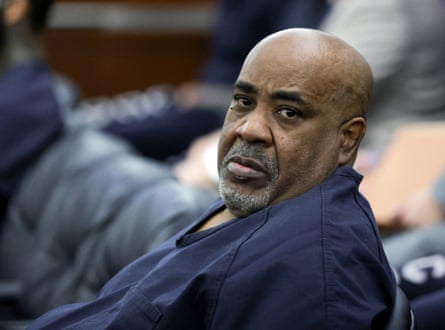
The prosecution’s witness list is expected to include former gang members and law enforcement experts who will testify about the structure of the South Side Compton Crips and Davis’s role as a "shot caller." The defense, led by attorney Carl Johnson, is expected to argue that Davis’s previous admissions were mere "storytelling" intended for financial gain and that the state lacks the forensic evidence required to link Davis to the crime scene.
Impact on the Shakur Family and Legacy
Outside the courtroom on Monday, members of the Shakur family expressed a mixture of relief and somber reflection. William Lesane, a cousin of the late rapper, told reporters that the trial represents the culmination of three decades of trauma. He emphasized that the family’s primary goal is to ensure that the correct person is held accountable for the loss of a man who was not only a superstar but a beloved son and brother.
The trial also arrives at a time of renewed scrutiny regarding other figures in the 1990s rap scene. A wrongful death lawsuit filed earlier this year by Shakur’s stepbrother, Maurice Shakur, cites allegations that Sean Combs may have had knowledge of or involvement in the conspiracy to kill Tupac. While Combs has never been charged in connection with the case and has consistently denied any involvement, the allegations continue to shadow the proceedings.
Tupac Shakur remains one of the most influential figures in music history, having sold over 75 million records worldwide. His lyrics often explored themes of social injustice, poverty, and the struggles of Black Americans, making him a cultural icon whose influence transcends the genre of hip-hop. The lack of resolution in his murder has long been cited as a failure of the American justice system, a narrative this trial seeks to rectify.
Legal Challenges and Jury Selection
Seating a jury for such a high-profile case presents significant challenges for both the prosecution and the defense. Potential jurors must be screened for their knowledge of the case, their opinions on gang culture, and their ability to separate the "legend" of Tupac Shakur from the specific legal facts of the trial.
Judge Kierny told the prospective jurors on Monday that they must be able to judge the case based solely on the evidence presented in court. The selection process is expected to take several days, with opening statements likely beginning next week.
The defense has already attempted to have the case dismissed on several occasions, arguing that the delay in prosecution has prejudiced Davis’s ability to defend himself, as many key witnesses and other suspects are now deceased. Orlando Anderson, the man many believe was the actual shooter, was killed in an unrelated gang shooting in 1998. The other two occupants of the Cadillac have also since passed away.
The Path Forward in Clark County
As the trial moves forward, the eyes of the music world and the legal community remain fixed on Las Vegas. The proceedings represent more than just a criminal trial for Duane Davis; they are a historical reckoning for an era of violence that robbed the world of one of its most prolific artists.
The state’s case rests heavily on the theory of "vicarious liability." If the prosecution can convince the jury that Davis was the orchestrator who provided the means and the motive for the killing, he will face the same consequences as if he had pulled the trigger himself.
The trial is slated to feature testimony from lead investigators who worked the case in the 1990s, as well as modern forensic experts who have re-examined the evidence. Regardless of the verdict, the trial of Duane "Keffe D" Davis ensures that the final chapter of the Tupac Shakur mystery will be written in a court of law rather than in the pages of a memoir or the lyrics of a song.