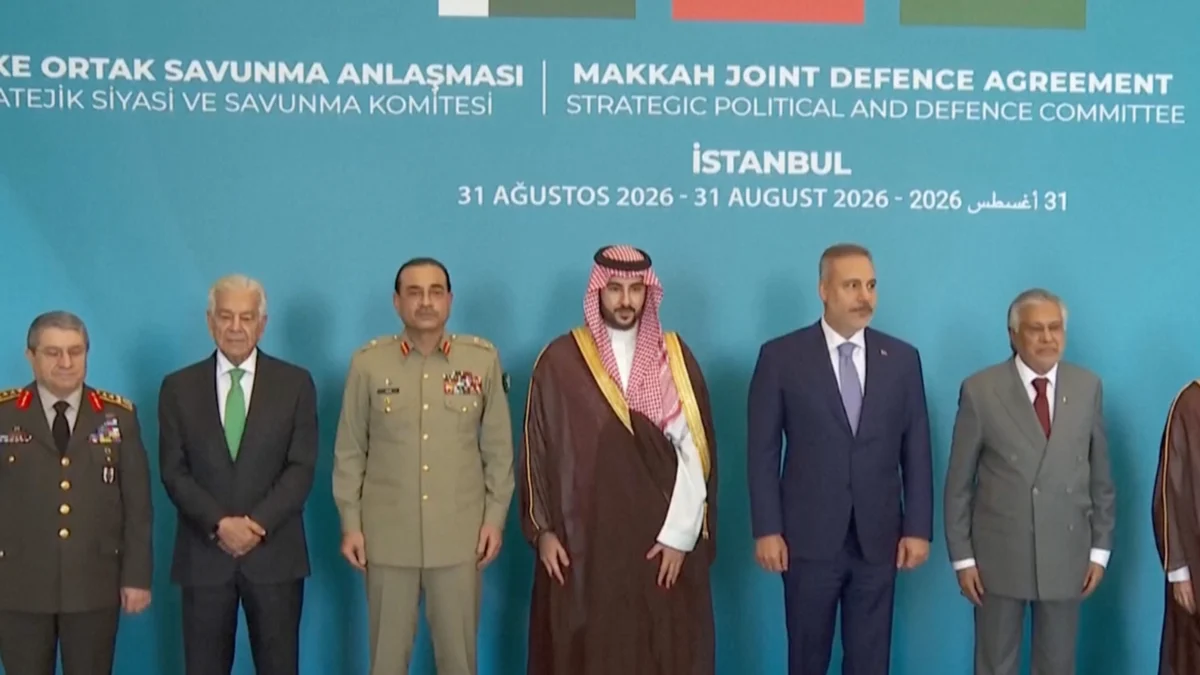
The inaugural meeting of the defense pact signed by Turkiye, Saudi Arabia, and Pakistan, known as the Mecca Defence Agreement, convened today in Istanbul. This landmark gathering signifies the formal operationalization of a security framework designed to enhance collective deterrence and mutual defense among the three nations. The agreement, inked previously, establishes a crucial principle: any armed aggression against one signatory will be considered an act of aggression against all, triggering a unified response.
This summit marks a significant step in strengthening security cooperation within a strategically vital region. The participation of high-level defense officials from Ankara, Riyadh, and Islamabad underscores the seriousness with which each nation views the pact. The discussions are expected to focus on practical mechanisms for implementing the agreement, including intelligence sharing, joint military exercises, and coordinated responses to potential threats.
Genesis of the Mecca Defence Agreement
The conceptualization of the Mecca Defence Agreement emerged from a shared recognition of evolving geopolitical challenges and a desire to bolster regional stability. Diplomatic overtures and consultations between Turkiye, Saudi Arabia, and Pakistan in the preceding years laid the groundwork for this comprehensive security understanding. The agreement itself is rooted in a commitment to safeguarding the sovereignty and territorial integrity of each member state.
Its core tenet, the principle of collective defense, is a cornerstone of international security alliances. This provision is designed to act as a powerful deterrent, signaling to any potential aggressor that an attack on one is an attack on three. This mutual defense clause aims to preempt conflict by ensuring that the cost of aggression would be unacceptably high.
Strategic Importance and Regional Dynamics
The strategic importance of the Mecca Defence Agreement cannot be overstated, particularly given the complex security landscape in the Middle East and South Asia. The pact brings together three significant regional players with distinct but complementary capabilities. Turkiye, a NATO member, possesses a robust defense industry and a strategically pivotal location bridging Europe and Asia. Saudi Arabia, a key player in the Gulf Cooperation Council (GCC), holds considerable economic influence and plays a crucial role in regional energy security. Pakistan, with its large military and strategic position bordering Afghanistan and Iran, adds significant weight to the alliance.
The formation of this defense pact occurs against a backdrop of shifting global power dynamics and persistent regional instability. Factors such as ongoing conflicts, the rise of non-state actors, and the potential for asymmetric warfare necessitate enhanced collaboration among like-minded nations. The agreement aims to address these challenges by creating a more cohesive and formidable security bloc.
Key Provisions and Operational Framework
While the specific details of the Mecca Defence Agreement remain largely confidential, its publicly stated objectives provide a clear indication of its intent. The pact is designed to foster enhanced intelligence sharing, enabling early warning and proactive threat assessment. This collaborative approach is crucial for identifying and neutralizing potential aggressions before they escalate.
Furthermore, the agreement is expected to pave the way for joint military exercises and training programs. These initiatives would serve to synchronize military doctrines, enhance interoperability between the armed forces of the three nations, and build mutual trust and understanding. Such exercises are vital for ensuring that a coordinated response, should it become necessary, would be effective and efficient.
Istanbul Summit: First Steps Towards Implementation
The meeting in Istanbul represents the critical first phase of translating the agreement from a signed document into an operational reality. Defense ministers and senior military officials are likely deliberating on the establishment of joint command structures, communication protocols, and crisis management mechanisms. The objective is to create a seamless and responsive defense framework.

Discussions may also encompass the potential for joint procurement of defense equipment and technology, leading to greater standardization and cost efficiencies. This collaborative approach to defense acquisition could further solidify the strategic partnership and enhance the collective military capabilities of the alliance. The summit is expected to chart a roadmap for future cooperation and set tangible goals for the pact’s development.
Broader Geopolitical Implications
The establishment and operationalization of the Mecca Defence Agreement carry significant geopolitical implications. It signals a desire by Turkiye, Saudi Arabia, and Pakistan to enhance their collective security autonomy and to play a more proactive role in shaping regional security architecture. This move could potentially influence existing alliances and partnerships in the broader Middle East and beyond.
The pact’s focus on collective deterrence could contribute to a more stable regional environment by discouraging potential aggressors. However, it may also be viewed with scrutiny by other regional and global powers, prompting adjustments in their own strategic calculus. The long-term impact will depend on the pact’s effectiveness in achieving its stated objectives and its ability to foster sustained cooperation among its members.
Economic and Security Synergies
Beyond the military and security dimensions, the Mecca Defence Agreement also holds the potential for fostering economic synergies. Enhanced security and stability often translate into increased investor confidence and greater opportunities for economic cooperation. Trade, investment, and joint ventures could flourish in an environment characterized by predictable security.
The pact could also facilitate cooperation in areas such as counter-terrorism, maritime security, and cybersecurity. These are critical domains in the contemporary global landscape, and a coordinated approach by three significant nations could yield substantial benefits in addressing transnational threats. The collective strength derived from the agreement can amplify each nation’s ability to protect its economic interests and critical infrastructure.
Public Perception and National Security
For the citizens of Turkiye, Saudi Arabia, and Pakistan, the Mecca Defence Agreement represents a commitment by their governments to enhance national security and regional stability. The pact is likely to be viewed positively by those who prioritize a strong defense posture and a secure regional environment. It underscores a shared vision for a more peaceful and prosperous future.
The effectiveness of the agreement will ultimately be measured by its ability to deter aggression, de-escalate tensions, and foster a climate of security. Public awareness and understanding of the pact’s objectives and mechanisms will be crucial for building sustained support and ensuring its long-term success. Transparent communication about the agreement’s evolution and achievements will be vital in this regard.
Future Trajectory and Potential Expansion
The Istanbul meeting is just the beginning of what is envisioned as a long-term strategic partnership. The participating nations are expected to continue regular high-level dialogues and operational engagements. The pact’s framework is designed to be adaptable, allowing for the incorporation of new security challenges and evolving geopolitical realities.
While the current focus is on the three founding members, the possibility of future expansion cannot be ruled out. As the pact demonstrates its efficacy and the benefits of cooperation, other like-minded nations in the region might express interest in joining or forging similar security understandings. Such developments would further solidify the collective security architecture that Turkiye, Saudi Arabia, and Pakistan are endeavoring to build. The enduring success of the Mecca Defence Agreement will hinge on its continued relevance, the unwavering commitment of its members, and its tangible contributions to regional and global peace.