British Prime Minister Andy Burnham has firmly signaled that a new vote on Scottish independence is not on the table, emphasizing his government’s commitment to economic growth and cost-of-living relief for all citizens across the United Kingdom.
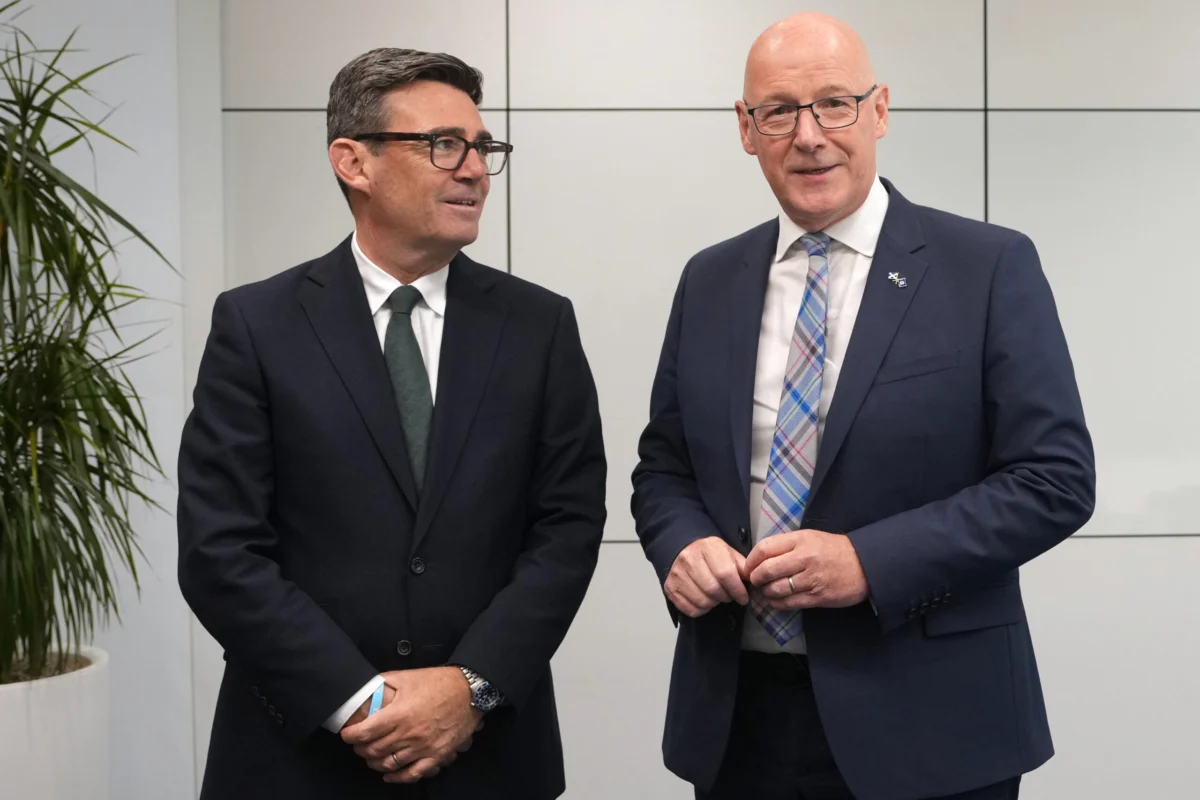
Burnham, who assumed the premiership on July 20, articulated this stance during a significant meeting with Scotland’s First Minister John Swinney in Glasgow on Thursday. The conversation underscored a clear divergence in priorities, with the Prime Minister prioritizing immediate economic concerns over constitutional questions. This position marks a definitive closure of the door on renewed calls for a second independence referendum, at least under his administration.
Economic Imperatives Take Precedence Over Constitutional Debates
The core of Prime Minister Burnham’s message revolved around the economic challenges facing the UK. He asserted that a protracted debate and potential campaign for a new Scottish independence referendum would inevitably divert crucial attention, resources, and political capital away from his administration’s paramount objectives: stimulating economic expansion and alleviating the burdens of the rising cost of living. These economic priorities have been central to Burnham’s nascent government, with early policy announcements signaling a focus on fiscal measures aimed at improving household finances.
Burnham explicitly stated that his government’s focus is not on "point scoring or discussing constitutional changes like referendums." Instead, the Prime Minister articulated a vision centered on implementing "practical measures to help people live well" across "every postcode" of the United Kingdom. This approach underscores a desire to foster national unity through tangible improvements in citizens’ daily lives, rather than through divisive constitutional referendums.
The Lingering Shadow of the 2014 Referendum
Scotland’s relationship with the United Kingdom has been a recurring theme in British politics since the landmark independence referendum held in 2014. In that vote, a significant majority of Scottish voters, 55 percent, opted to remain within the UK. However, the political landscape has continued to evolve, particularly in the wake of the UK’s decision to leave the European Union.
The Scottish National Party (SNP) and its leaders have consistently argued that Brexit fundamentally altered the circumstances under which the 2014 referendum was held. They point to the fact that 62 percent of Scots voted to remain in the EU, and that leaving the bloc against the will of the Scottish electorate has created a new impetus for independence. First Minister John Swinney has echoed these sentiments, suggesting that Scottish independence could offer a path out of what he described as "political chaos and economic stagnation" and lead to "greater security and prosperity" as a member of the European Union.
Legal Hurdles and Political Stalemate
The path to a second independence referendum has also been complicated by legal rulings. Britain’s Supreme Court has definitively ruled that the Scottish government does not possess the legal authority to unilaterally hold a second referendum on independence. Such a vote, the court determined, would require the explicit approval of the British Parliament in Westminster. This legal precedent has placed a significant constitutional barrier in the way of any immediate move towards a new ballot.
Despite these legal constraints, the Scottish government has continued to advocate for the right to hold another vote. This ongoing advocacy has created a persistent political tension between Edinburgh and London. Prime Minister Burnham’s recent remarks appear to be a clear attempt to put an end to this protracted debate, at least for the foreseeable future.
"Agree to Disagree" on the Constitutional Question
Reports indicate that Prime Minister Burnham communicated his firm stance to First Minister Swinney during a telephone call earlier in the week, suggesting that the two leaders would have to "agree to disagree" on the fundamental question of Scottish independence. This diplomatic phrasing acknowledges the existence of differing viewpoints while firmly establishing the current government’s unwillingness to engage with the prospect of a referendum.
This approach signals a strategic shift from confronting the constitutional question head-on to focusing on areas of potential cooperation and common ground. Downing Street confirmed that Burnham welcomed Swinney’s "willingness to engage in that process," referring to discussions on enhanced devolution.
The Path Forward: Devolution and Economic Recovery
In his discussions with First Minister Swinney, Prime Minister Burnham reportedly highlighted his government’s agenda for increased "devolution." This policy aims to grant more autonomy and power to regional governments, with the stated objective of revitalizing struggling economies at a local level. Burnham believes that empowering local communities and decision-makers can be a more effective strategy for economic revival than pursuing constitutional upheaval.
This focus on devolution suggests a commitment to strengthening the bonds within the United Kingdom through a more distributed model of governance, rather than through a binary choice on separation. It represents an attempt to address potential grievances and economic disparities through practical administrative reforms.
Engagement with Other Nations Within the UK
Burnham’s visit to Scotland was part of a broader engagement with leaders of the constituent nations of the UK. Later on Thursday, he was also scheduled to meet with Wales First Minister Rhun ap Iorwerth. These meetings underscore Burnham’s intention to foster a collaborative relationship with devolved administrations and to address national issues on a pan-UK basis.
The Prime Minister’s itinerary also included attending the opening ceremony of the 2026 Commonwealth Games in Glasgow. This high-profile event provided a platform for international engagement and showcased Scotland’s capabilities on a global stage, further highlighting the UK’s interconnectedness.
Public Reaction and Political Implications
The Prime Minister’s firm stance on a new independence referendum is likely to be met with mixed reactions. Supporters of the Union will welcome the clarity and perceived stability offered by Burnham’s position. They will likely view his focus on economic issues as a responsible approach to governance, prioritizing the immediate needs of the population.
Conversely, those advocating for Scottish independence will likely express disappointment and frustration. They may argue that Burnham’s administration is ignoring the democratic will of the Scottish people and failing to acknowledge the changed circumstances brought about by Brexit. The Scottish National Party, in particular, will face the challenge of recalibrating its strategy in the absence of an immediate prospect of a referendum.
The political implications are significant. Burnham’s clear rejection of a referendum could lead to a period of reduced constitutional tension, allowing governments at both Westminster and Holyrood to concentrate on policy delivery. However, it could also fuel resentment among independence supporters, potentially leading to continued political campaigning and advocacy for self-determination through other means.
The Economic Landscape and Future Prospects
The UK’s economic performance remains a critical factor in shaping public opinion and political discourse. If Prime Minister Burnham’s government can successfully implement policies that lead to tangible improvements in the economy and a reduction in the cost of living, it could bolster his mandate and potentially diminish the appeal of independence as a solution to economic woes.
Conversely, any prolonged economic downturn or failure to address the cost-of-living crisis could provide renewed ammunition for the independence movement, allowing them to argue that the current economic model is not serving Scotland’s best interests. The success of his devolution agenda will also be closely watched, as it represents a significant experiment in governance and could set a precedent for future relationships between the UK and its devolved administrations.
A Shift Towards Pragmatism in Governance
Prime Minister Burnham’s approach signifies a broader shift towards pragmatism in British politics. By prioritizing concrete economic solutions over what he perceives as the distractions of constitutional debates, he is attempting to reconnect with a public that may be weary of political wrangling and eager for tangible improvements in their lives.
This strategy aims to unite the country around shared economic goals, fostering a sense of common purpose that transcends national identities. The success of this pragmatic approach will depend on his government’s ability to deliver on its promises and to demonstrate that a united United Kingdom can effectively address the pressing challenges of the 21st century. The ongoing dialogue on devolution, coupled with a steadfast focus on economic recovery, will be key indicators of the future direction of the UK’s internal political landscape.