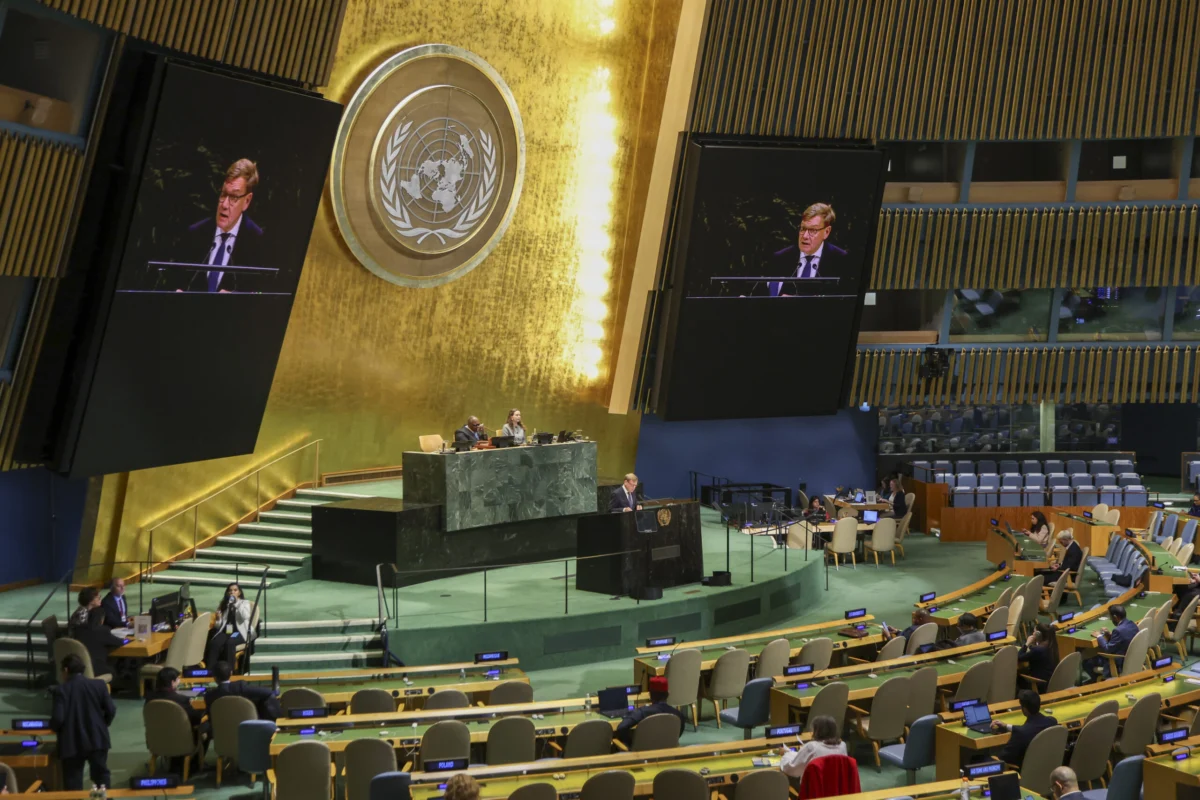
The 81st United Nations General Assembly (UNGA) concluded Monday, with artificial intelligence, the protracted Israel-Palestine conflict, and geopolitical tensions surrounding Iran dominating the discourse among world leaders. UN Secretary-General Antonio Guterres, in what may be his final address before his term concludes, issued a stark warning, asserting that the world’s future will be defined by four critical tests: artificial intelligence, climate change, ongoing wars, and deepening inequality. Guterres emphasized that power dynamics are the decisive factor across all these challenges, underscoring the enduring relevance of the UN Charter and the United Nations’ mission.
Speeches throughout the general debate ranged from urgent calls for UN reform to impassioned pleas for the adherence to international law, a framework increasingly perceived as undermined by unilateral foreign policy initiatives. The assembly served as a critical platform for nations to voice their concerns and chart potential pathways forward in a complex and often volatile global landscape.
The Intensifying Crisis in Palestine Dominates UNGA 81 Discussions
The dire situation in Palestine emerged as a paramount concern for member states, particularly in light of Israel’s ongoing military operations in Gaza and the escalating settler violence in the occupied West Bank. Several nations, including France, Canada, Iraq, and the United Kingdom, used their platforms to advocate for Palestinian sovereignty and self-determination.
French President Emmanuel Macron delivered a pointed address, questioning the international community’s credibility in the face of inaction regarding the humanitarian catastrophe in Gaza. "What credibility do we have if we continue to remain inactive in the face of Gaza?" Macron asked, criticizing what he termed a "supposed peace" that had not facilitated the reopening of humanitarian routes. He further lamented, "Must we stand by and watch this spectacle that shames us all?"
Parallel to these calls for action, a significant meeting on Palestinian statehood was convened by prominent leaders, including Macron, British Prime Minister Andy Burnham, Canadian Prime Minister Mark Carney, and Saudi Foreign Minister Prince Faisal bin Farhan Al Saud. This gathering occurred amidst Israel’s accelerated construction of illegal settlements and its alleged provision of impunity to settlers in the occupied territories, actions that actively undermine the prospect of a viable Palestinian state.
Adding another layer to the complex situation, the U.S.-led "Board of Peace" unveiled a reconstruction blueprint for the Gaza Strip, proposing $2.4 billion in funding. However, this plan notably excluded the United Nations Relief and Works Agency for Palestine Refugees (UNRWA), citing its perceived lack of a role in Gaza’s future. Palestinian political analyst Ahmed Najar described this decision to Al Jazeera as a move aligned with Israeli objectives to "marginalize and ultimately dismantle the agency, removing it not only from Gaza’s present but from its future." The exclusion of UNRWA, a critical humanitarian lifeline for millions, drew sharp criticism and highlighted deep divisions on the approach to Palestinian relief and reconstruction.
The tension surrounding the conflict was palpable, with dozens of delegates reportedly walking out of the hall in protest as Israeli Prime Minister Benjamin Netanyahu delivered his speech, during which he reiterated Israel’s commitment to confronting Hamas and Iran.
Trump’s Assertive Stance on Venezuela and Iran
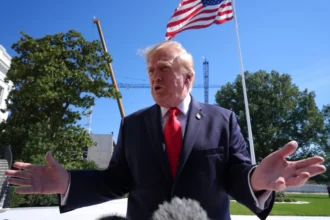
In a notable address, former U.S. President Donald Trump presented a contrasting narrative, asserting that his administration had "made peace" while others spoke of it. Trump defended his actions regarding the apprehension of former Venezuelan President Nicolas Maduro, claiming that his subsequent military operation had led to the release of hundreds of political prisoners. He also highlighted a significant oil deal signed by Venezuela, which he stated would benefit both nations and contribute to global energy cost reduction.
Trump further reiterated his firm stance against Iran developing nuclear weapons, referencing a "12-day war" in July 2025 that he claimed had "obliterated their nuclear program beneath mountains of rubble." He also detailed the impact of the ongoing U.S.-Israel war on Iran, stating that 159 Iranian naval ships had been sunk. Addressing the future, Trump posed a rhetorical question about whether to engage in a deal that would allow Iran to rebuild or to "annihilate the Islamic Republic and do it quickly," expressing a belief that a deal would be made post-elections.
Iranian Officials Seek Dialogue Amidst Global Scrutiny
Iranian officials found themselves in high demand during sideline discussions and bilateral meetings at the UNGA. President Masoud Pezeshkian, in his address, asserted that Iran had primarily acted in self-defense against attacks and the killing of its citizens, including Supreme Leader Ayatollah Ali Khamenei, scientists, and children. "We are not terrorists, our innocent people have been the targets of cowardly attacks and aggressions imposed upon our country," Pezeshkian declared, emphasizing Iran’s resilience.
Pezeshkian also articulated Iran’s position on peaceful nuclear technology, stating that the nation would not relinquish its inherent right to pursue it, despite a perceived exclusivity held by a few countries. "We will not bow our head and give up the right that is inherently ours," he asserted.
In parallel diplomatic efforts, Foreign Minister Abbas Araghchi engaged in meetings with his counterparts from India, Qatar, Turkiye, Pakistan, Ukraine, and other nations. Notably, Araghchi also participated in a four-hour meeting mediated by Qatar with U.S. Special Envoy Steve Witkoff and Jared Kushner, former President Trump’s son-in-law, signaling a potential for dialogue on sensitive geopolitical issues.
Artificial Intelligence: A Double-Edged Sword at the Forefront of Global Discourse
The transformative potential and inherent risks of artificial intelligence (AI) were a recurring theme throughout the general debate, with world leaders calling for a unified global approach to its development and deployment. Finnish President Alexander Stubb described AI as the "most consequential technology in the history of mankind," positing that it would profoundly impact science, economics, politics, security, and the very essence of humanity. Stubb advocated for a cooperative rather than competitive approach to AI, stating, "For me, cooperation is the best way forward."
While a consensus on the existential threat of AI is emerging, divergent views surfaced regarding its regulation and governance. UN Secretary-General Guterres and representatives from the European Union pushed for robust safety standards and international regulatory frameworks. Conversely, Donald Trump argued that AI innovation should not be stifled by international regulations, asserting that the United States should maintain control over its AI sector. This divergence highlights a key challenge in establishing global norms for a technology with far-reaching implications.
The rapid advancement of AI presents both unprecedented opportunities for progress and significant risks of misuse, exacerbating existing inequalities or creating new ones. The debate at the UNGA underscored the urgent need for international dialogue and cooperation to ensure that AI development is guided by ethical principles and serves the collective good.
Xi Jinping’s Absence and China’s Stance on Middle Eastern Affairs
Chinese President Xi Jinping’s decision to skip the 81st UNGA, despite being in the United States for a summit with Donald Trump, drew attention. Xi typically maintains a limited presence at the UNGA, with Vice President Han Zheng representing China this year. This absence, while not unprecedented, underscores China’s strategic approach to global multilateral forums.
In his address, Han Zheng reiterated Beijing’s long-standing position on respecting the sovereignty and security of Middle Eastern countries, including those in the Gulf region, though he did not specifically mention Iran. On the Israeli-Palestinian conflict, China advocated for the advancement of West Bank governance and the post-conflict reconstruction of Gaza under Palestinian leadership, emphasizing the return of the Palestinian question to the two-state solution framework.
Regarding AI, Han called for a "people-centered approach" to develop the technology for positive outcomes, aiming to narrow the digital divide and promote universally beneficial development. China’s emphasis on inclusive and beneficial AI development aligns with its broader vision of a multipolar world order.
The UNGA 81 discussions have laid bare the multifaceted challenges confronting the international community. From navigating the ethical and geopolitical implications of artificial intelligence to addressing the persistent humanitarian crises and seeking pathways to lasting peace, the assembly served as a crucial barometer of global concerns and aspirations. The coming year will be a critical period for translating these discussions into tangible actions and collaborative solutions.