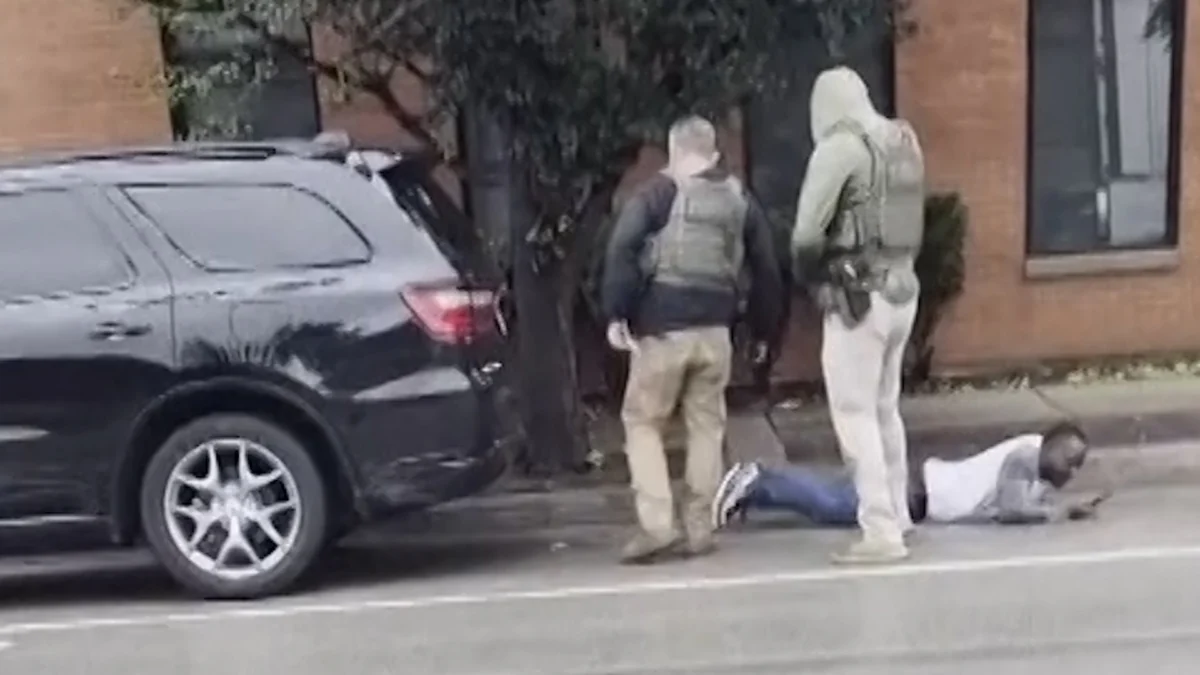
A U.S. citizen was hospitalized with head and neck injuries after U.S. Immigration and Customs Enforcement (ICE) agents mistakenly arrested him in the Chicago suburb of Evanston, Illinois, a situation captured on bystander video that has since gained widespread attention. The federal officers were reportedly targeting a different individual when they apprehended the U.S. citizen, leading to an ongoing investigation into the incident.
Evanston Arrest Sparks Outrage and Scrutiny of ICE Operations
The harrowing incident unfolded on a recent afternoon in Evanston, a vibrant community north of Chicago known for its diverse population and the presence of Northwestern University. Eyewitnesses described a scene of confusion and alarm as plainclothes ICE agents, operating under the belief they were apprehending a specific target, forcibly detained a man who was later confirmed to be a U.S. citizen. The video, shared extensively on social media platforms, shows a struggle during the arrest, with the man appearing to resist as he is taken into custody.
The Unfolding Events: A Chronology of Misidentification
According to initial reports and accounts from individuals present, the operation was conducted by ICE Enforcement and Removal Operations (ERO) officers who had received intelligence indicating the presence of a wanted individual in the Evanston area. The agents, acting on this information, approached the U.S. citizen, believing him to be their quarry. The misidentification quickly escalated, leading to a physical altercation.
The bystander footage, filmed by a concerned resident, offers a raw glimpse into the chaotic moments. It depicts agents surrounding the man, demanding compliance, and ultimately employing force to subdue him. The intensity of the arrest, coupled with the subsequent confirmation of the individual’s U.S. citizenship, has ignited a firestorm of criticism.
Following the arrest, the injured U.S. citizen was transported to a local hospital for treatment of his head and neck injuries. The extent of these injuries and his current condition remain a subject of concern for his family and community advocates. The Evanston Police Department has confirmed its involvement in the investigation, working in conjunction with federal authorities to understand the precise circumstances that led to the mistaken arrest.
ICE’s Mission and the Fallout from Wrongful Arrests
U.S. Immigration and Customs Enforcement is a federal law enforcement agency within the Department of Homeland Security responsible for enforcing immigration and customs laws. Its mandate includes identifying and apprehending individuals who pose a threat to national security or public safety, as well as those who have violated immigration laws. However, the agency has faced persistent scrutiny regarding its operational tactics and the potential for errors in identifying and apprehending individuals.
Wrongful arrests, though rare, carry significant consequences, not only for the individuals directly affected but also for the public’s trust in law enforcement agencies. Such incidents can erode community relations, foster fear among immigrant populations and their allies, and raise questions about the adequacy of training and oversight within federal agencies.
Historical Context of ICE Operations and Civilian Concerns
ICE operations, particularly those conducted in communities with significant immigrant populations, have often been a focal point of public debate. Advocates for immigrants’ rights have frequently raised concerns about the aggressive nature of some enforcement actions, the potential for racial profiling, and the impact of these operations on families and communities.
Past incidents, while varying in their specifics, have sometimes involved allegations of excessive force or mistaken identity. These events have led to calls for greater transparency, accountability, and reform within ICE. The Evanston incident, amplified by its visual documentation, has reignited these discussions with renewed urgency.
The Power of Viral Video in Public Discourse
The bystander video played a crucial role in bringing the Evanston incident to national prominence. In an era where digital media can rapidly disseminate information, such footage serves as immediate, unfiltered evidence that can shape public perception and accelerate official responses. The video’s virality underscores the power of citizen journalism and its ability to hold institutions accountable.
The footage immediately sparked outrage online, with many users expressing disbelief and anger at the actions of the ICE agents. The visual evidence provided a stark counterpoint to official narratives and fueled demands for a thorough and transparent investigation. Social media platforms became a hub for discussion, condemnation, and calls for action, demonstrating the interconnectedness of local events and global public opinion.
Impact on Community Relations and Trust
Incidents like the one in Evanston can have a profound impact on community relations. When individuals, particularly those who are citizens, experience aggressive or mistaken enforcement actions, it can breed distrust and fear towards law enforcement agencies. This can make it more difficult for these agencies to gather intelligence, cooperate with communities, and effectively carry out their duties.
For the immigrant community, such events can exacerbate existing anxieties about deportation and law enforcement. Even if the individual arrested was not an immigrant, the perception of overreach by federal agents can create a chilling effect. It highlights the sensitive nature of immigration enforcement and the need for meticulous accuracy in identifying targets.
Investigation and Potential Consequences
The Evanston Police Department’s involvement in the investigation is critical. While ICE is a federal agency, local law enforcement often plays a supporting role or conducts parallel inquiries, especially when incidents occur within their jurisdiction. The investigation will likely focus on several key areas: the intelligence that led to the operation, the procedures followed by the ICE agents, the justification for the use of force, and the process of identification that resulted in the mistaken arrest.
Potential consequences for ICE, depending on the findings of the investigation, could range from internal disciplinary actions against the agents involved to broader policy reviews and retraining initiatives. If systemic issues are identified, there could be increased pressure for reforms within the agency’s operational protocols. The Department of Homeland Security, which oversees ICE, will be under scrutiny to ensure that appropriate measures are taken to prevent similar incidents in the future.
Legal and Civil Liberties Implications
The wrongful arrest of a U.S. citizen raises serious questions about civil liberties and due process. While federal law enforcement agencies are granted broad powers to conduct arrests, these powers are not absolute and are subject to constitutional protections. The injured individual may have grounds for legal action against the government, seeking compensation for his injuries and the violation of his rights.
Civil rights organizations are likely to monitor the investigation closely, advocating for accountability and potentially offering legal support to the victim. These organizations often play a vital role in challenging what they perceive as overreach by government agencies and ensuring that the rights of all individuals, regardless of their background, are protected.
Broader Implications for Immigration Policy and Enforcement
The Evanston incident, while specific in its location and circumstances, taps into a larger national conversation about immigration policy and the methods of its enforcement. It comes at a time when debates about border security, pathways to citizenship, and the treatment of immigrants are ongoing.
Critics of current enforcement strategies often point to such incidents as evidence of a system that is prone to error and can inflict harm on innocent individuals. They argue that a more humane and less aggressive approach is needed, one that prioritizes due process and minimizes the risk of collateral damage to communities.
Conversely, proponents of robust enforcement may argue that such incidents, while regrettable, are an unfortunate but necessary byproduct of a complex and challenging mission. They might emphasize the importance of apprehending dangerous individuals and maintaining the integrity of immigration laws.
The Role of Technology and Human Error
The incident also prompts reflection on the role of technology in law enforcement and the persistent challenge of human error. While advanced surveillance and intelligence-gathering tools can aid in identifying targets, the ultimate decision-making and execution of operations still rely on human agents. The potential for misidentification, whether due to faulty intelligence, inadequate training, or procedural breakdowns, remains a significant concern.
Ensuring that officers have the most accurate and up-to-date information, coupled with rigorous verification processes, is paramount. The training that federal agents receive on de-escalation techniques, cultural competency, and the legal parameters of their authority also comes under renewed focus following such events.
Community Response and Calls for Accountability
In Evanston and beyond, the incident has spurred a strong community response. Local activists, civil rights groups, and concerned residents have voiced their anger and demanded a full accounting from ICE. Rallies and public statements have been organized, calling for transparency in the investigation and concrete steps to prevent future occurrences.
The U.S. citizen’s family, understandably distressed, has also appealed for justice and accountability. Their experiences highlight the deeply personal and devastating impact that mistaken enforcement actions can have on individuals and their loved ones. The legal and public pressure building around this case underscores the importance of holding federal agencies accountable for their actions.
The Path Forward: Rebuilding Trust and Ensuring Justice
The investigation into the wrongful arrest of the U.S. citizen in Evanston will be closely watched. The outcome will not only determine the fate of the individuals involved but also send a message about the commitment of federal agencies to accuracy, accountability, and the protection of civil liberties. Rebuilding trust between law enforcement and the communities they serve is a continuous process, and incidents like this present both challenges and opportunities for meaningful reform.
Ultimately, the goal of any investigation is to uncover the truth, assign responsibility where appropriate, and implement measures to ensure that such errors are not repeated. The incident serves as a stark reminder of the high stakes involved in immigration enforcement and the critical need for meticulous procedures and unwavering adherence to the principles of justice.