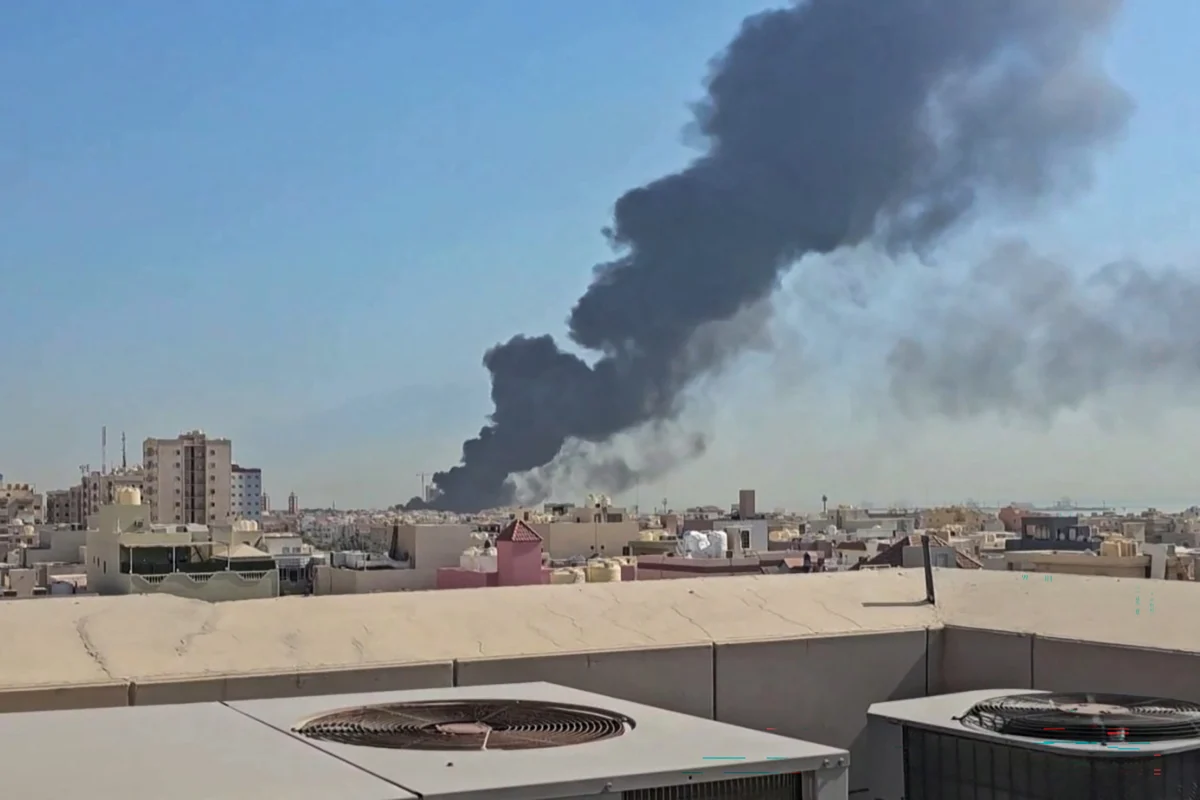
The United States launched a new wave of retaliatory strikes against Iran early Sunday, targeting key military installations and naval assets, in response to a deadly Iranian drone and missile barrage that killed two American service members in Jordan late Friday. The intensified military actions mark the eighth consecutive night of American offensive operations against Iran, significantly escalating a conflict that had recently seen a fragile ceasefire crumble.
The renewed hostilities have sent shockwaves through the region, raising fears of a wider conflagration that could destabilize vital global trade routes and draw in other international actors. The U.S. Central Command (CENTCOM) confirmed the strikes, which began around 03:30 GMT on Sunday, aimed to degrade Iran’s capacity to threaten maritime commerce in the Strait of Hormuz and directly punish the Islamic Revolutionary Guard Corps (IRGC) for the fatal attack on American forces.
Escalation in the Gulf: U.S. Strikes Target Iranian Military Infrastructure
CENTCOM stated that its military assets specifically targeted Iranian coastal surveillance and air defense facilities, maritime capabilities, and missile and drone storage sites. The operational objective, as articulated by CENTCOM, was to "further degrade Iran’s ability to threaten commercial shipping in the Strait of Hormuz and swiftly punish Islamic Revolutionary Guard Corps forces who launched attacks against American service members in Jordan last night."
Reports from Tehran, relayed by Al Jazeera, indicate that the U.S. strikes are strategically designed to isolate southern Iran, severing critical transportation and logistical links. Resul Serdar Atas, reporting from the Iranian capital, described the impact on civilian infrastructure, noting that bridges, railways, tunnels, airports, and roads have been hit. This destruction is reportedly severely restricting the movement of people, goods, and supplies, leading to the evacuation of hospitals and the postponement of school examinations.
Atas further elaborated on the strategic implications, suggesting that while the U.S. aims to weaken the IRGC’s operational capabilities, the civilian infrastructure also bears the brunt of the attacks. The isolation of southern Iran is seen as an effort to prevent the IRGC from controlling the Strait of Hormuz, a vital chokepoint for global oil transit. The IRGC, conversely, has vowed to maintain its presence and control over the waterway.
Additional reports from Tehran, including those from Tohid Assidi for Al Jazeera, confirmed the sounds of jet aircraft over Kish Island and explosions in the city of Sirik. Sirik’s geostrategic importance lies in its proximity and oversight of the Strait of Hormuz. Explosions were also reported in the southern Iranian port city of Bandar Abbas, with multiple attacks targeting nearby Qeshm Island. Iranian media outlets, including Mehr and Tasnim news agencies, reported that a location near Qeshm was struck, with Tasnim detailing at least six missiles hitting areas on the island’s outskirts. U.S. jets also reportedly targeted a site near Shadegan in Iran’s southwestern Khuzestan province.
Iran’s Retaliation: Attacks in Kuwait and Bahrain
In parallel with the U.S. strikes, Iran announced its own offensive actions, claiming to have launched a large-scale drone attack on two U.S. military facilities in Kuwait. Iranian media reported that the targets included an ammunition depot at Camp al-Adiri and air defense radars at Ali Al Salem airbase. The Kuwaiti military confirmed that its air defenses were actively engaged in confronting "hostile missile and drone attacks," attributing the incident to "sinful Iranian aggression."
Air raid sirens also sounded across the Gulf kingdom of Bahrain, including its capital, Manama. Bahrain’s Ministry of Interior issued a statement urging citizens and residents to remain calm and seek the nearest safe locations. These retaliatory actions by Iran underscore the escalating tit-for-tat nature of the current conflict, demonstrating Tehran’s intent to project its military reach and retaliate against perceived threats and attacks.
Official Reactions and Rhetoric Amidst the Conflict
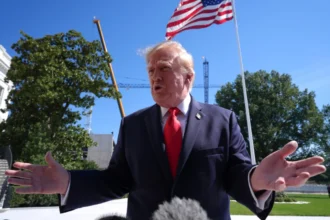
The escalating violence has drawn sharp reactions from leaders on both sides. U.S. President Donald Trump, addressing the deaths of the American soldiers in Jordan, described the incident as "a very sad thing." He reiterated a strong stance against Iran’s nuclear ambitions, stating, "We’re never allowing Iran to have a nuclear weapon."
Iran’s Supreme Leader, Mojtaba Khamenei, issued a stern warning on Saturday, asserting that the U.S. would face "unforgettable lessons" at the hands of Tehran and its regional allies. Khamenei accused the United States of repeatedly violating a previously established memorandum of understanding (MoU) between the two nations. A statement attributed to Khamenei, broadcast on state television, characterized President Trump’s signature on the MoU as "utterly worthless and invalid," highlighting a deep distrust and disregard for diplomatic agreements.
Adding to the belligerent rhetoric, Major-General Ali Abdullahi, commander of Iran’s Khatam al-Anbiya Central Headquarters, warned the United States that "any aggression or barbarism will be met with a decisive and devastating response" from Iran’s armed forces. In a statement carried by Iranian state media on Sunday, Abdullahi employed highly charged language, referring to the U.S. as "the Great Satan" and "the criminal, treacherous and deceitful enemy." This rhetoric underscores the ideological animosity fueling the current confrontation.
Broader Implications and the Shadow of Wider Conflict
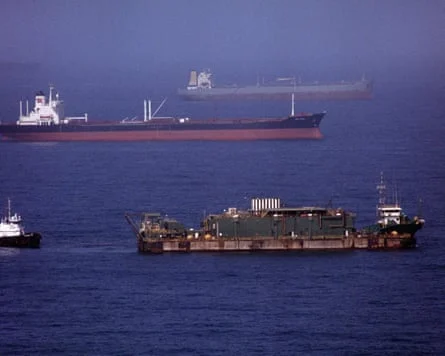
The ongoing military exchanges between the United States and Iran carry profound implications for regional stability and global security. The Strait of Hormuz, a critical artery for global energy supplies, has become a focal point of this escalating tension. Any disruption to shipping in this vital waterway could trigger significant global economic repercussions, impacting oil prices and supply chains worldwide.
The involvement of regional allies and proxies on both sides raises the specter of a broader, more intractable conflict. The current situation risks drawing in other Middle Eastern nations, potentially igniting a wider regional war with devastating humanitarian and economic consequences. International efforts to de-escalate the situation and restore diplomatic channels appear increasingly fragile in the face of this escalating military confrontation.
The recent attacks and counter-attacks have effectively derailed any prospects for renewed ceasefire negotiations, which had offered a glimmer of hope for a de-escalation of hostilities. The cycle of violence and retribution, fueled by deep-seated animosities and strategic objectives, suggests a prolonged period of heightened tension and potential for further military engagement. The international community faces the urgent challenge of finding diplomatic solutions to prevent this regional crisis from spiraling further out of control.
Public Impact and Geopolitical Fallout
The heightened military activity has understandably generated significant public concern, both within the countries directly involved and among the international community. Families of U.S. service members are living with the constant anxiety of further casualties, while the populations of Iran and its neighbors are experiencing the direct impact of strikes and the looming threat of wider conflict. The economic ramifications are also a significant concern, with potential disruptions to global trade and energy markets creating uncertainty for businesses and consumers worldwide.
Geopolitically, the current trajectory of U.S.-Iran relations is creating significant challenges for diplomatic efforts and international cooperation. The breakdown of communication and the embrace of aggressive military postures make it exceedingly difficult to find common ground or pursue peaceful resolutions. The actions of both nations are being closely scrutinized by global powers, with potential shifts in regional alliances and international security frameworks on the horizon. The world watches with apprehension as this dangerous confrontation continues to unfold.