Public backing for the ongoing U.S. military engagement in Iran has plummeted to its lowest point since the conflict’s inception, coinciding with President Donald Trump’s approval rating reaching a new nadir, according to a comprehensive Reuters/Ipsos poll. The findings reveal a significant erosion of support, particularly among Republicans, and highlight growing public apprehension regarding the war’s duration and economic repercussions.
Declining Public Mandate for Iran Conflict
The latest Reuters/Ipsos survey, released Monday, indicates a stark decline in American appetite for military action against Iran. Just 31 percent of U.S. adults surveyed expressed support for the military campaign, a notable drop from 37 percent in March and 34 percent registered earlier in the current month. This waning public enthusiasm is further underscored by a significant decrease in support among Republican respondents, which has fallen to 69 percent from 77 percent in March.
This erosion of support suggests that the protracted nature of the conflict and its tangible impacts on American households are increasingly outweighing initial justifications for the military intervention. The poll data points to a growing segment of the population questioning the strategic objectives and the associated costs of the engagement in Iran.
Trump’s Approval Rating Plummets Amidst War Concerns
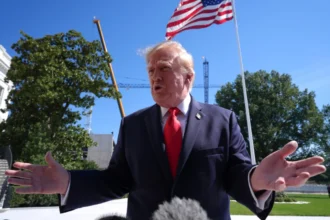
The war in Iran continues to exert a significant drag on President Trump’s standing with the electorate, as evidenced by his approval rating hitting a record low for the second consecutive Reuters/Ipsos survey. A mere 33 percent of respondents indicated approval of Trump’s performance as president, matching the lowest figure recorded across both his first and second terms in the polling series.
This sustained dip in presidential approval ratings suggests that the administration’s handling of the Iran conflict is a key factor contributing to public dissatisfaction. The confluence of declining war support and a record low presidential approval rating presents a considerable challenge for the administration as it navigates domestic and international pressures.
Roots of the Conflict and Shifting Justifications
The military engagement in Iran, initiated on February 28th with coordinated strikes by U.S. and Israeli forces, was initially framed by the Trump administration as a necessary measure to prevent Iran from developing nuclear weapons. President Trump has consistently defended the campaign on these grounds, asserting that preemptive action was crucial to regional and global security.
However, the narrative surrounding the war has evolved, with the economic consequences becoming a dominant concern for many Americans. The conflict has disrupted regional oil supplies, leading to a significant increase in U.S. gasoline prices, which have climbed to levels not seen in years. This economic fallout is directly impacting household budgets and fueling public discontent.
Economic Warfare: The "Operation Economic Outcast" Strategy
In response to the escalating economic pressures and the ongoing conflict, the Trump administration has intensified its efforts to cripple Iran’s economy through stringent sanctions. Treasury Secretary Scott Bessent announced on Monday a significant expansion of economic pressure, targeting all of Iran’s revenue streams, including its oil exports. This initiative, dubbed "Operation Economic Outcast," aims to isolate Tehran financially and prevent other nations and companies from engaging in trade with the country.
The administration’s strategy underscores a shift towards economic warfare as a primary tool to achieve its objectives in Iran. The success and broader implications of "Operation Economic Outcast" remain to be seen, but it is clear that the economic dimension of the conflict is a growing focus for both policymakers and the public.
The Specter of a Protracted Conflict
A growing majority of Americans now anticipate that the war in Iran will extend for a considerable period. The Reuters/Ipsos poll reveals that 83 percent of respondents believe the conflict will last for an extended duration, an increase from 80 percent recorded earlier this month. This widespread expectation of a long-term engagement amplifies concerns about the sustained human and economic costs of the war.
The prospect of a prolonged military commitment stands in stark contrast to President Trump’s 2024 campaign promises, which emphasized a reduction in inflation and an "America First" approach focused on minimizing foreign military entanglements. The disconnect between campaign rhetoric and the current reality of a drawn-out conflict is likely contributing to public skepticism and dissatisfaction.
Economic Fallout: Fueling Public Anxiety
Six months into the conflict, the economic repercussions are becoming increasingly palpable for the average American. Gasoline prices have surged by more than $1 per gallon compared to pre-war levels, placing additional financial strain on households. This rise in fuel costs, a direct consequence of the disruptions stemming from the Iran war, is particularly concerning for voters as the nation approaches the crucial midterm elections in November.
The economic burden imposed by higher fuel prices could prove detrimental to the Republican party, which currently holds narrow majorities in Congress. The potential for widespread voter discontent over economic hardships, directly linked to the Iran conflict, could significantly influence electoral outcomes.
Independent Voters Lean Towards Democrats Amidst Economic Woes
The Reuters/Ipsos poll also sheds light on shifting political allegiances, particularly among independent voters. When asked about their preference in a hypothetical congressional election held today, a notable percentage of independents indicated a leaning towards the Democratic party. Thirty-three percent of independents stated they would vote for a Democrat, compared to 19 percent who would choose a Republican.
This trend among independent voters, often seen as a bellwether for broader electoral shifts, suggests that the economic fallout from the Iran war and President Trump’s declining approval rating are creating an environment favorable to the opposition party. The ability of Democrats to capitalize on these sentiments could have significant implications for their prospects in upcoming elections.
Methodology and Margin of Error
The Reuters/Ipsos survey, which forms the basis of these findings, questioned 1,215 adults across the United States over a four-day period. The poll is designed to provide a representative sample of the American public’s views on critical issues. The survey has a margin of error of 3 percentage points in either direction, meaning that the reported figures are subject to a small degree of statistical variation.
This margin of error is standard for polls of this nature and ensures that the results are generally considered reliable indicators of public opinion, while acknowledging the inherent limitations of statistical sampling. The comprehensive nature of the poll allows for detailed analysis of trends and demographic variations in public sentiment.
Broader Implications for U.S. Foreign Policy and Domestic Politics
The declining public support for the Iran war and President Trump’s record low approval ratings signal a growing disconnect between the administration’s foreign policy objectives and the sentiments of the American populace. The sustained economic impact of the conflict, particularly the rise in gas prices, is a powerful factor shaping public perception and political attitudes.
The midterm elections loom large, and the economic anxieties fueled by the Iran war could become a defining issue for voters. Republican candidates may find themselves on the defensive, tasked with explaining the rationale behind the ongoing conflict and its tangible costs to their constituents. Conversely, Democrats may seek to leverage public dissatisfaction to their advantage, framing the war and its economic consequences as failures of the current administration.
The administration’s reliance on economic sanctions, as exemplified by "Operation Economic Outcast," suggests a strategic pivot towards less conventional warfare. The long-term effectiveness and ethical considerations of such strategies will undoubtedly be subject to ongoing debate and scrutiny, both domestically and internationally.
Ultimately, the confluence of waning public support for the Iran war and President Trump’s struggling approval rating underscores the complex interplay between foreign policy decisions, economic realities, and electoral politics in the United States. The coming months will reveal whether these trends translate into significant shifts in the political landscape and U.S. foreign policy towards Iran.