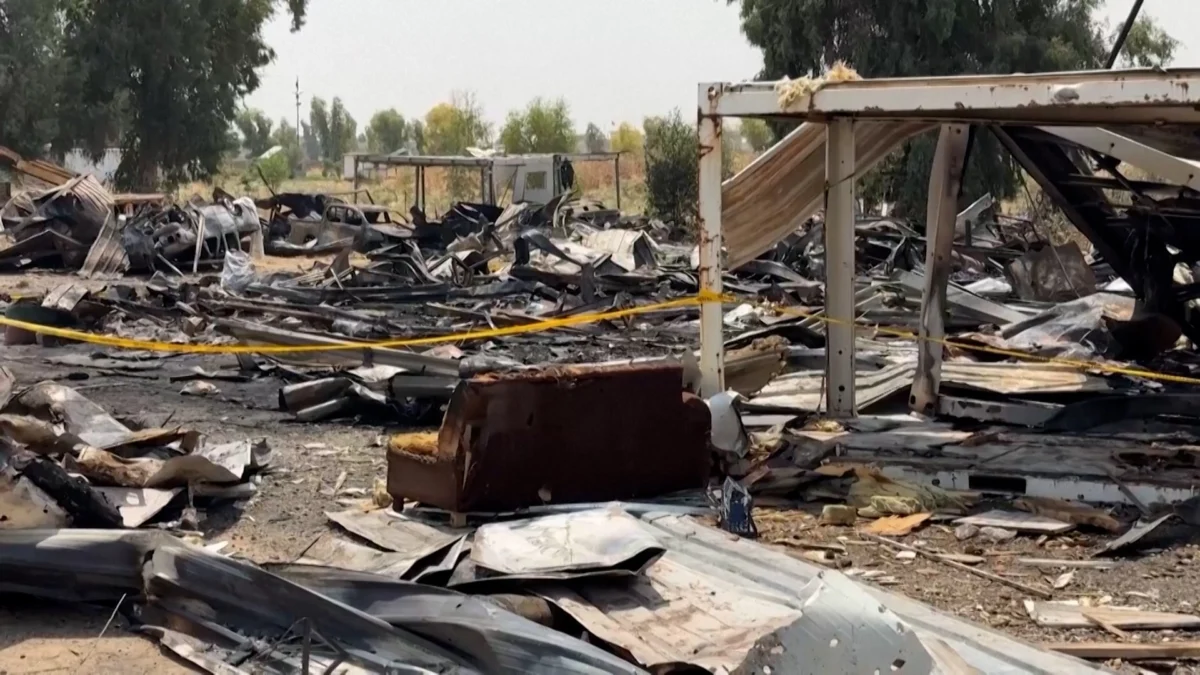
Shocking footage has emerged documenting the devastating aftermath of coordinated airstrikes conducted by United States and Saudi forces against Popular Mobilization Forces (PMF) bases across Iraq, with initial reports indicating that approximately 20 fighters were killed. The strikes, launched in a swift retaliatory action, were a direct response to what U.S. and Saudi officials described as sustained and escalating drone attacks targeting critical Saudi oil facilities.
The pre-dawn operations, characterized by their precision and scale, targeted multiple locations believed to be key operational hubs for Iran-backed militias operating under the PMF umbrella. The visual evidence, circulating rapidly on social media platforms and subsequently verified by intelligence sources, depicts widespread destruction, including collapsed structures, burning debris, and damaged military hardware. These images provide a stark, tangible representation of the kinetic response from the U.S.-Saudi coalition, underscoring the gravity with which the alleged drone assaults were perceived.
Escalation of Regional Tensions Fuels Retaliatory Strikes
The coordinated strikes against Iraq PMF bases represent a significant escalation in a volatile regional landscape, where proxy conflicts and asymmetric warfare have become increasingly common. For months, a shadowy campaign of drone attacks, often attributed to Iran and its affiliated groups, has targeted vital energy infrastructure in Saudi Arabia. These attacks have not only threatened the global oil supply but have also been interpreted as direct challenges to the security and sovereignty of Saudi Arabia, a key U.S. ally.
The decision to launch direct military action against targets within Iraq signifies a departure from previous diplomatic or sanctions-based responses. U.S. and Saudi defense officials have consistently voiced concerns over the proliferation of advanced drone technology and the sophisticated operational capabilities of certain Iran-backed militias. The PMF, a paramilitary umbrella organization formed to combat the Islamic State, has increasingly been accused by the U.S. and its allies of acting as a proxy force for Tehran, furthering Iran’s regional agenda.
The Genesis of the Strikes: A Trail of Alleged Drone Attacks
The immediate catalyst for the U.S.-Saudi airstrikes was a series of alleged drone attacks that have increasingly disrupted Saudi Arabia’s oil production and export capabilities. In the weeks preceding the Iraqi strikes, Saudi authorities reported multiple successful incursions by unmanned aerial vehicles, which struck oil fields and processing facilities. These incidents not only caused significant, albeit temporary, disruptions to supply chains but also raised alarm bells regarding the vulnerability of the Kingdom’s most critical economic assets.
Intelligence assessments, shared between Washington and Riyadh, reportedly identified specific PMF units and their operational bases in Iraq as the launch points for these drone operations. U.S. military commanders, working in concert with their Saudi counterparts, concluded that a decisive military response was necessary to deter further attacks and degrade the capabilities of the groups responsible. The strikes were meticulously planned to minimize civilian casualties, focusing on military installations and known weapons caches.
Operational Details and Initial Casualties
Sources within the U.S. military and the Saudi Ministry of Defense have confirmed that the strikes were conducted using a combination of air-launched precision-guided munitions and cruise missiles. The operational tempo was reportedly high, with aircraft from both nations participating in the synchronized assault. The initial casualty figures, though preliminary, suggest a significant blow to the targeted PMF factions. Reports of 20 fighters killed have been circulating, with unconfirmed accounts suggesting higher numbers and the destruction of substantial military materiel.
The aftermath, as captured in the viral videos, paints a grim picture. Wrecked buildings, some reduced to rubble, are visible alongside smoldering vehicles and what appear to be remnants of missile systems. The chaotic scenes underscore the intensity of the bombardment. Analysts are closely examining the footage for clues regarding the types of ordnance used and the specific infrastructure targeted, which could provide further insight into the strategic objectives of the operation.
The Popular Mobilization Forces: A Complex Entity
The Popular Mobilization Forces (PMF) represent a complex and multifaceted organization within Iraq. Officially established in 2014 as a state-sponsored umbrella group of predominantly Shia militias, its primary mandate was to counter the rapid advance of the Islamic State (ISIS). The PMF played a crucial role in reclaiming significant territory from ISIS, earning widespread praise for its bravery and effectiveness on the battlefield.
However, over time, certain factions within the PMF have been accused of becoming increasingly aligned with Iran, receiving funding, training, and weaponry from Tehran. This perceived Iranian influence has led to friction with the Iraqi government, the United States, and other regional powers. The U.S. has specifically designated several PMF-affiliated groups and their leaders as terrorist organizations, citing their involvement in attacks against U.S. forces and their alignment with Iran’s destabilizing activities. The recent strikes underscore this ongoing tension and the U.S. commitment to countering perceived Iranian proxies.
Geopolitical Ramifications and Regional Instability
The U.S.-Saudi airstrikes on Iraq PMF bases send a clear message to Iran and its network of proxy forces: the era of unchecked aggression against U.S. allies and their critical infrastructure may be drawing to a close. This action has the potential to significantly alter the strategic calculus in the Middle East, raising the stakes for all parties involved. The immediate concern is the possibility of Iranian retaliation, either directly or through its various proxy groups in the region, potentially targeting U.S. interests or further escalating attacks on Saudi Arabia.
The strikes also place additional pressure on the Iraqi government, which finds itself caught between its relationship with its powerful neighbor, Iran, and its security partnership with the United States. Baghdad has consistently called for de-escalation and adherence to its sovereignty, yet it struggles to exert full control over the powerful paramilitary groups operating within its borders. The Iraqi government’s response to these strikes will be closely scrutinized by both regional and international powers.
The Shadow of Drone Warfare
The increasing reliance on drones by state and non-state actors alike has fundamentally reshaped modern warfare and the nature of regional conflicts. The ability to deploy unmanned aerial vehicles for reconnaissance, attack, and even sabotage has lowered the barrier to entry for projecting power across borders. The alleged drone attacks on Saudi oil facilities are a prime example of this evolving threat landscape.
The U.S. and Saudi Arabia’s response highlights the growing efforts to develop countermeasures and offensive capabilities to counter this pervasive threat. The precision and reach of modern drone technology, coupled with the difficulty in attribution and the potential for plausible deniability, create a complex challenge for international security. The events of the past few days underscore the urgent need for robust international dialogue and cooperation to establish norms and limitations for the use of drone technology.
Public Reaction and the Specter of Wider Conflict
The release of videos showing the aftermath of the U.S.-Saudi strikes on Iraq PMF bases has predictably generated a spectrum of reactions. Within Saudi Arabia, the strikes are likely to be viewed as a necessary and justified act of self-defense, aimed at protecting vital national interests. In the United States, the action will be framed as a decisive response to Iranian aggression, reinforcing the commitment to regional security and stability.
However, in Iraq and among pro-Iranian factions, the strikes are likely to be condemned as an act of aggression and a violation of Iraqi sovereignty. This could fuel further anti-American sentiment and potentially galvanize support for retaliatory actions. The international community is likely to express concern over the escalating tensions and the potential for a wider regional conflict. Diplomatic channels are expected to be abuzz as nations attempt to de-escalate the situation and prevent a full-blown conflagration.
Looking Ahead: A Precarious Equilibrium
The immediate future remains uncertain, with all eyes on how Iran and its proxies will respond to this significant military action. The U.S. and Saudi Arabia have demonstrated a willingness to take decisive action when their interests are threatened, but this could also provoke a dangerous escalation. The strategic objective of the strikes was to degrade the capabilities of the PMF units responsible for the drone attacks and to deter future assaults.
The effectiveness of this strategy will be judged by whether it achieves these goals without triggering a broader conflict. The coming days and weeks will be critical in assessing the trajectory of this volatile situation. The world watches as the complex geopolitical chess match in the Middle East continues, with the potential for devastating consequences if the delicate balance of power is further disrupted. The images of destruction serve as a stark reminder of the human cost of these escalating regional rivalries.