The escalating tit-for-tat tariffs imposed by the Trump administration have thrown a wrench into the carefully balanced economic relationship between the two North American neighbors, creating an environment of uncertainty and fear. The imposition of substantial tariffs on billions of dollars worth of goods signals a dramatic shift in trade policy, moving away from decades of generally free and open commerce.
This trade dispute, ignited by U.S. President Donald Trump, has triggered a series of retaliatory measures, setting the stage for a prolonged economic battle. The ramifications are being felt across industries and are raising alarms about the broader economic stability of both countries.
US Imposes Steep Tariffs, Canada Responds in Kind
The latest salvo in this burgeoning trade war was fired on Saturday, when the United States implemented a 50 percent tariff on $20 billion worth of Canadian goods. This drastic measure followed the collapse of ongoing trade negotiations, a development that caught many by surprise and sent shockwaves through the business communities on both sides of the border.
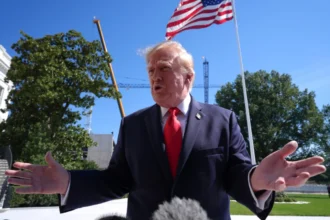
Adding to the pressure, President Trump escalated his demands on Monday, threatening Canada with new 50 percent levies on all automotive products, slated to take effect on January 1. This automotive sector, deeply integrated across the U.S. and Canada, is now directly in the crosshairs of the escalating trade conflict.
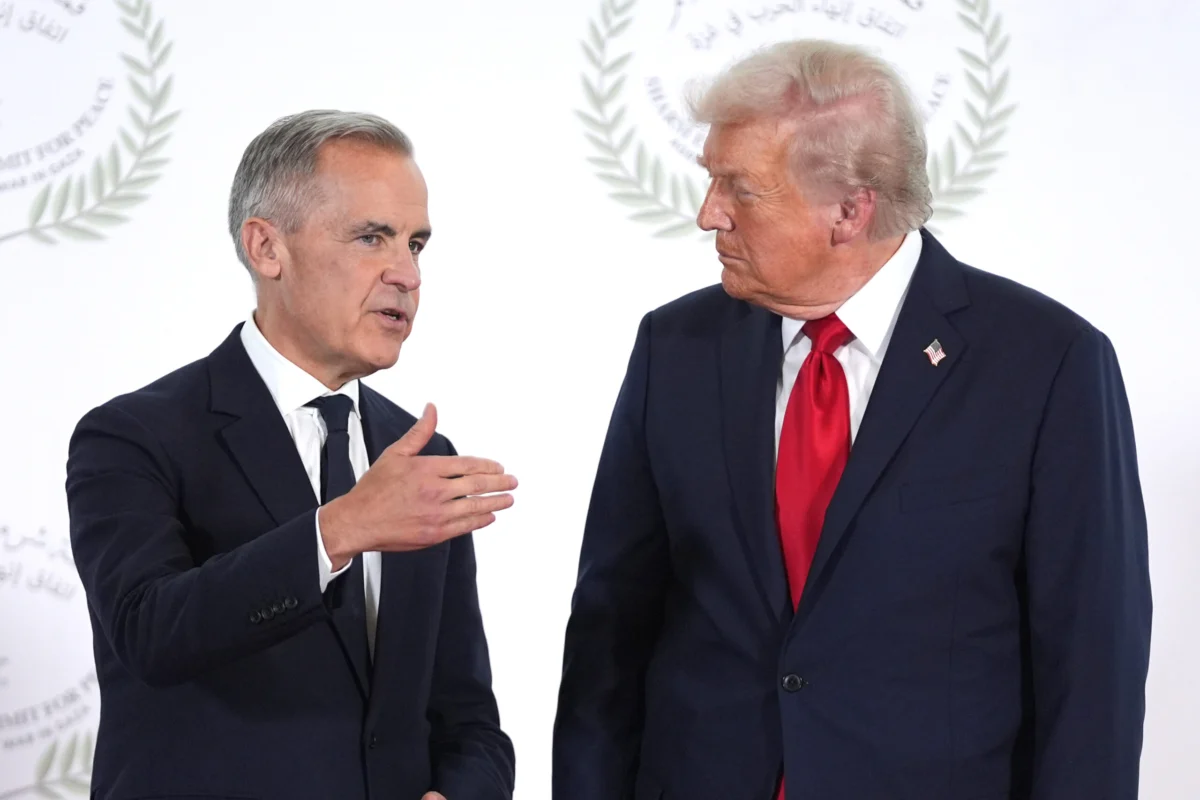
In response, Canadian Prime Minister Mark Carney unveiled a robust set of retaliatory measures on Tuesday. These measures target over 700 U.S. products, also valued at $20 billion. The Canadian tariffs are structured in tiers, with rates set at 15, 25, and a significant 50 percent, and are scheduled to be implemented on September 8.
Nationalism Surges Amidst Economic Warnings
While Canada’s firm stance has ignited a surge of nationalistic sentiment, with many citizens rallying behind the idea of standing up to U.S. trade policies, experts caution that this patriotic fervor may soon be overshadowed by the harsh realities of economic hardship. Vina Nadjibulla, co-founder and CEO of the Centre for Strategic Statecraft, a nonpartisan policy think tank in Canada, observed a palpable sense of patriotism in Ottawa. However, she expressed uncertainty about how long this sentiment will endure in the face of mounting economic losses.
The inherent vulnerability of the Canadian economy to U.S. trade penalties is a critical factor in these concerns. Canada’s economy, approximately one-tenth the size of its U.S. counterpart, relies heavily on exports to its southern neighbor, with roughly 70 percent of its goods and services destined for the American market. This significant trade dependence makes Canada particularly susceptible to disruptions caused by U.S. tariffs.
Provinces and Sectors Face Targeted Economic Blows
While the overall impact of the U.S. tariffs on Canada’s national economy might be contained – Oxford Economics estimates they will shave 0.3 percentage points off its Gross Domestic Product (GDP) next year – the damage is expected to be concentrated and severe in specific provinces and key industries. Manufacturers in Quebec, New Brunswick, and Ontario are poised to bear the brunt of these tariffs, as are exporters in British Columbia, all of whom have substantial sales to the U.S.
These regions are particularly vulnerable because they produce goods that are relatively easy for U.S. consumers and businesses to substitute with domestic alternatives. Items such as cement, paper, wood products, beverages, clothing, plastics, and electronics are high on this list of substitutable goods, making them prime targets for retaliatory tariffs.
Conversely, while Canada’s retaliatory tariffs are expected to have a more muted effect on the broader U.S. economy, the costs for individual American states and businesses heavily reliant on Canadian trade are projected to escalate significantly. Ashley Kalyn, an international trade consultant at Peacock Tariff Consulting in Toronto, unequivocally stated, "This absolutely is a trade war."
Job Losses Loom as Businesses Curtail Operations
Kalyn further elaborated on the tangible impacts being felt, stating that her firm has already received indications from clients planning to shut down factories and lay off workers if the tariffs remain in place. "That’s how real this is," she emphasized, predicting upwards of 100,000 job losses in Canada as a direct consequence of the trade dispute.
The escalating tensions have taken on an almost surreal quality this week, with President Trump announcing on Thursday that the U.S. federal government would henceforth refer to Lake Ontario as "Lake America." This symbolic gesture, intended as a protest against Canada, was met with derision from Canadian officials.
Prime Minister Mark Carney pointed out on social media that the name "Ontario" is not a colonial imposition but an Indigenous term with a history predating both Canadian Confederation and American independence. Manitoba Premier Wab Kinew dismissed the renaming as a "feeble effort," drawing parallels to a similar naming stunt Trump employed last year with the Gulf of Mexico in a dispute with Mexico. Kinew likened the move to a washed-up rock band playing old hits, suggesting it was not a sign of strong leadership.
Recession Fears Intensify as Trade Agreement Under Threat
Economists are increasingly concerned that a further deterioration of U.S.-Canada relations could jeopardize the United States-Mexico-Canada Agreement (USMCA), the successor to NAFTA. Tony Stillo, director of Canada Economics at Oxford Economics, warned in a note shared with the media that such a scenario would "push Canada’s economy into a recession and leave it on a permanently lower path."
The USMCA, designed to facilitate and protect trade among the three North American nations, currently shields the majority of Canadian exports from U.S. tariffs. This protection keeps the effective tariff rate on Canadian goods relatively low, estimated at an average of 5.1 percent globally. Even with the recently imposed tariffs, this effective rate is projected to rise to only 6.9 percent.
Despite the resilience shown by Canadian businesses, the prolonged nature of this trade war poses a significant threat. Matthew Holmes, executive vice president and chief of public policy at the Canadian Chamber of Commerce, expressed hope for a de-escalation, stating, "A war of attrition will help neither economy. But Canada is showing itself to be very resilient." He added that the goal of negotiators should be to return to the table for constructive dialogue rather than indefinite retaliation.
Automotive Sector Faces Significant Disruption
The automotive industry stands out as another area of profound concern. Nearly 18 months prior, President Trump had already imposed 25 percent tariffs on cars and car parts from Canada, with exemptions for components meeting USMCA conditions. Manufacturers and dealerships had largely absorbed these increased costs, helping to maintain relatively stable new vehicle prices.
However, Trump’s recent threats to double automobile tariffs to 50 percent, effective in 2027, are poised to severely disrupt the integrated cross-border automotive industry. Bernard Yaros, lead U.S. economist at Oxford Economics, indicated that the industry’s existing buffers are "wearing thin." The proposed 50 percent tariffs are expected to disproportionately harm Midwestern U.S. states like Michigan, Ohio, and Indiana, whose auto sectors are heavily reliant on Canadian-made components.
The timing of the proposed tariff hike is strategically significant, as it is slated to occur months after the U.S. midterm elections. Yaros suggested this timing could allow President Trump to be "less fettered" by domestic political considerations, potentially emboldening him to pursue more aggressive trade measures. This could, in turn, "set the stage for a more volatile tariff environment during the final two years of Trump’s second term," he noted.
Internal Political Divides Emerge Amidst Trade Tensions
Within Canada, President Trump’s aggressive trade tactics are also exacerbating internal political divisions. Ontario Premier Doug Ford has advocated for a strong, retaliatory approach, warning that "everything is on the table," including potentially cutting off electricity and critical mineral exports to the U.S.
However, other provinces have expressed reservations about adopting such scorched-earth tactics. Alberta and Saskatchewan, whose economies are heavily dependent on natural resources like oil and potash, have declined suggestions to implement export taxes on these commodities.
Experts like Nadjibulla emphasize that the global community is closely watching how Canada navigates its increasingly hostile relationship with its powerful southern neighbor. "Whether Canada is able to hold this line has implications for others as well," she stated. The key date of September 8, when Canada’s reciprocal tariffs are set to take effect, is being closely monitored as a potential turning point.
"It’s really hard to predict where this goes," Nadjibulla concluded. "The mood this week is about escalation." The coming weeks and months will reveal the true economic cost of this trade conflict and the long-term implications for both the United States and Canada.