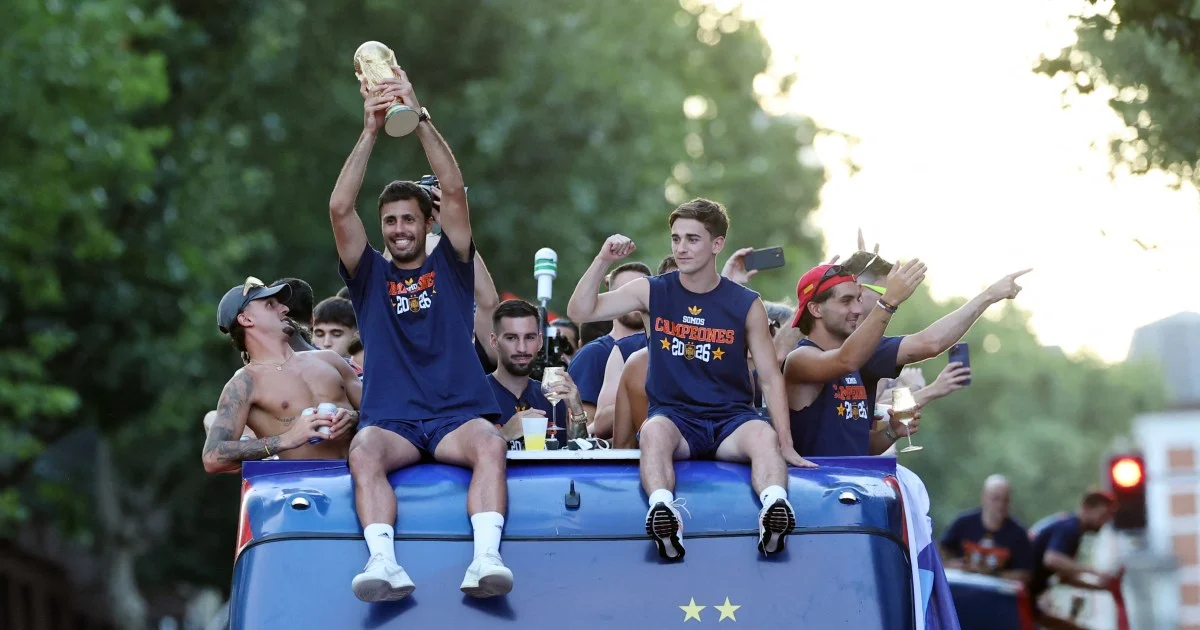
Spain’s victorious World Cup squad returned home Monday to an ecstatic reception, with an estimated 2 million fans lining the streets of Madrid in a jubilant celebration of their national team’s triumphant return. The team, fresh off their dramatic 1-0 victory over Argentina in the final held in New Jersey, United States, was met with overwhelming public adoration as they paraded through the historic heart of the Spanish capital. This homecoming marks the culmination of a historic tournament that has cemented Spain’s place at the pinnacle of international football.
The players and coaching staff, bearing the coveted World Cup trophy, were first welcomed by the nation’s royals and Prime Minister Pedro Sanchez. Sanchez lauded the team’s performance, stating, "Thank you to the coaches and players for the style of play, the effort, and the victory. We have truly enjoyed watching you play." The sentiments echoed the pride felt across the nation, as the team’s triumph resonated deeply with a populace eager for sporting glory.
A Sea of Red and Gold: The Grand Madrid Parade
Following the official reception, the triumphant squad boarded an open-top bus adorned with the slogan "Stars shine together" and emblazoned with images of the victorious footballers. This vibrant procession snaked through Madrid’s iconic avenues, originating near Moncloa Palace and culminating at the famed Cibeles Square. Along the route, players, many wearing "Somos Campeones" ("We Are Champions") shirts, engaged with the throngs of supporters, dancing and sharing in the collective euphoria.

Coach Luis de la Fuente, visibly moved, addressed the significance of the moment before the parade commenced. "It’s been an emotional and proud experience to represent a wonderful country with such passionate and devoted fans," he remarked. "We are filled with joy." His words captured the profound connection between the team and its supporters, a bond strengthened by this monumental achievement.
Cibeles Square: The Epicenter of Celebration
Cibeles Square, a traditional gathering place for Spanish sporting triumphs, was transformed into a pulsating hub of celebration. Authorities reported that approximately 120,000 people were present for the official ceremony at the square, though the overall estimated crowd for the parade reached an astonishing 1.8 million. Fans, some arriving as early as Monday morning, braved the summer heat, with temperatures reaching 95 degrees Fahrenheit (35 Celsius), armed with umbrellas and unwavering enthusiasm.
The atmosphere at Cibeles was electric, with prominent Spanish singers Aitana, Ana Mena, and Lola Índigo scheduled to entertain the jubilant masses. The square has long been synonymous with victory parades, notably for Real Madrid’s numerous title celebrations, adding another layer of historical significance to this national event.
A Historic Victory and a Nation United
Spain secured their second World Cup title on Sunday, with Ferran Torres scoring the decisive goal in extra time against Argentina. This victory is particularly significant as it marks Spain’s first World Cup triumph since their historic win in South Africa in 2010. The achievement is further amplified by the fact that the Spanish women’s team also triumphed in their World Cup in 2023. This dual championship makes Spain the first nation to simultaneously hold both the men’s and women’s World Cup titles, a remarkable feat in global footballing history.

The co-hosts of the 2026 tournament – U.S. President Donald Trump, Mexican President Claudia Sheinbaum, and Canadian Prime Minister Mark Carney – extended their congratulations to the Spanish team following their monumental win. The magnitude of the victory was immediately apparent as Madrid erupted in spontaneous celebrations immediately after the final whistle. Thousands of fans flooded the streets, bars, and restaurants, their passion evident in the sea of Spanish flags and team colors.
National Delirium and Early Celebrations
Major squares across the capital, including the Puerta del Sol, became focal points for the jubilant crowds. The air was filled with the sounds of singing, dancing, and the intermittent blare of car horns, punctuated by the vivid spectacle of flares. These nocturnal celebrations continued well into the early hours of Monday morning, with many fans opting for little sleep in their eagerness to revel in the national triumph.
"I’m very happy. I’ve slept three or four hours, but for the team, I’ll do whatever it takes," shared 19-year-old Victor Alvarez, embodying the dedication of the younger generation of fans experiencing this euphoria for the first time. For many, this victory represents their inaugural taste of the national team lifting the ultimate prize and the subsequent wave of national delirium.
"Honestly, it was very exciting. We preferred not to go to any bar or anything, to experience it at home, focused and very happy, very joyful," said Gema Rodero, a 59-year-old civil servant, describing a more intimate, yet equally heartfelt, celebration. These varied expressions of joy underscore the pervasive impact of the World Cup victory across all demographics.

A Shadow Amidst the Joy: A Tragic Incident
Amidst the widespread revelry, a tragic incident cast a somber shadow over the celebrations. Local authorities reported that a 13-year-old boy in Salamanca, located northwest of Madrid, died after a fountain he had climbed with friends during the celebrations collapsed. This unfortunate event served as a stark reminder of the potential dangers that can arise during large-scale public gatherings, even those fueled by immense joy and national pride.
The Legacy of the 2026 World Cup Victory
The triumph in the 2026 World Cup solidifies Spain’s status as a global footballing superpower. The team’s performance throughout the tournament was characterized by skill, resilience, and a captivating brand of football that resonated with fans worldwide. Their victory is not merely a sporting achievement but a cultural moment that has united the nation and provided a powerful symbol of collective pride and identity.
The successful hosting of the tournament by the United States, Mexico, and Canada also marks a significant milestone in international sports cooperation. The seamless execution of the event, culminating in a thrilling final, has been widely praised.
Looking Ahead: Sustaining the Momentum
The immediate future for the Spanish national team will involve a period of well-deserved rest and reflection before preparations begin for future tournaments. The success of the 2026 campaign, however, sets a high bar and creates immense anticipation for what lies ahead. The current generation of players has etched their names in football history, inspiring a new wave of talent and fueling the dreams of millions of young Spaniards.

The enduring image of the World Cup trophy being paraded through the streets of Madrid, surrounded by an ocean of ecstatic fans, will undoubtedly become an iconic representation of national unity and sporting excellence. The reverberations of this victory will be felt for years to come, shaping the future of Spanish football and inspiring a nation.