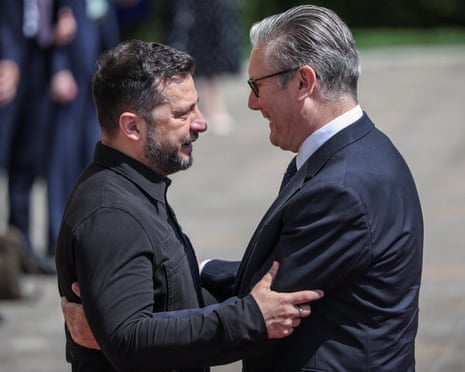
Ukrainian President Volodymyr Zelenskyy welcomed departing British Prime Minister Keir Starmer to Kyiv on Thursday, marking a final diplomatic milestone in a relationship that has defined the European response to Russian aggression. During the high-stakes meeting, Zelenskyy expressed deep gratitude for the "unwavering respect" shown by the United Kingdom to Ukrainian soldiers and the nation’s continued struggle for sovereignty. The visit, which serves as the final foreign trip of Starmer’s premiership, was highlighted by a significant new military aid package and the bestowing of Ukraine’s highest honors upon the British leader.
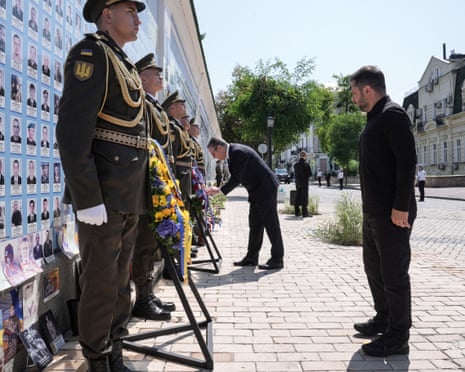
The two leaders began the day by paying tribute to the fallen at the Wall of Remembrance of the Fallen for Ukraine on Mykhailivska Square. As they laid wreaths against the backdrop of thousands of photographs of deceased servicemen and women, Starmer reaffirmed that the United Kingdom’s commitment to Kyiv would remain a cornerstone of British foreign policy long after his departure from 10 Downing Street. This final visit comes at a time of significant transition for both nations, as the UK prepares for a change in leadership and Ukraine navigates a complex internal government reshuffle.

Zelenskyy Highlights Unwavering Respect and the Order of Freedom
In a formal ceremony held prior to their joint press conference, President Zelenskyy awarded Prime Minister Starmer the Ukrainian Order of Freedom. This prestigious award is reserved for individuals who have made extraordinary contributions to the strengthening of Ukraine’s sovereignty and the defense of democratic values. By receiving this honor, Starmer joins his predecessors, Boris Johnson and Rishi Sunak, in an elite group of British leaders recognized for their pivotal roles in sustaining the Ukrainian defense effort.
"I thank Keir and the United Kingdom for their unwavering respect for our warriors," Zelenskyy said during the ceremony. He noted that the sacrifice made by Ukrainian troops is not merely for the preservation of their own borders but for the stability of all of Europe. Zelenskyy emphasized that the personal bond between the two leaders had facilitated a level of cooperation that exceeded traditional diplomatic norms, allowing for rapid decision-making during the war’s most critical moments.
Starmer responded with a poignant reflection on his legacy, stating that while he would soon "depart the stage," the British pulse for the Ukrainian cause would continue to beat. He noted that Ukrainian flags continue to fly above town halls and churches across the UK, a symbol of a public sentiment that he described as being "in our bones." The Prime Minister told Zelenskyy, "Your fight is our fight," a phrase that has become the mantra of the Anglo-Ukrainian strategic partnership.
A €300 Million Package for Air Superiority and Gripen Fighter Jets
Beyond the symbolic gestures, the visit was underpinned by a substantial new commitment to Ukraine’s long-term military capabilities. The UK government announced a €300 million ($326 million) funding package specifically designed to bolster Ukraine’s aerial defenses. The centerpiece of this initiative is a collaborative effort with Sweden to facilitate the delivery of 16 advanced Saab Gripen E fighter jets.
This funding is intended to ensure that Ukraine can field a fully operational squadron of these Swedish-made jets by 2029. The Gripen E is widely regarded as one of the most tech-savvy and cost-effective multirole fighters in the world, specifically designed to operate from short, austere runways—a feature that is critical for a Ukrainian Air Force currently operating under constant Russian missile threats.
The British government noted that the construction of these aircraft would support 5,000 highly skilled jobs across more than 50 UK-based companies that supply the global Gripen program. Starmer used the announcement to argue that supporting Ukraine is not a "drain" on European security but a "net contributor" to it. He argued that the Ukrainian military is now among the most battle-hardened and creative forces globally, and its integration into Western defense structures provides invaluable data and experience for modernizing the British Armed Forces.

Public Outrage and the Sacking of Mykhailo Fedorov
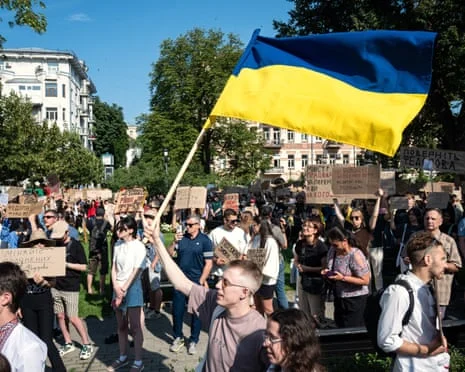
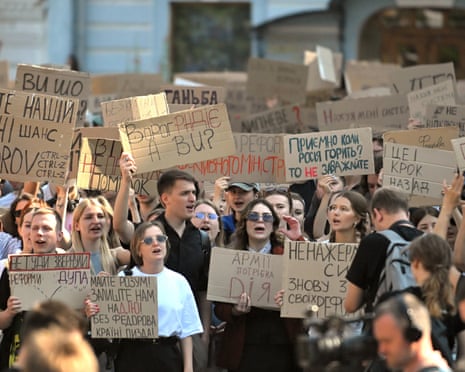
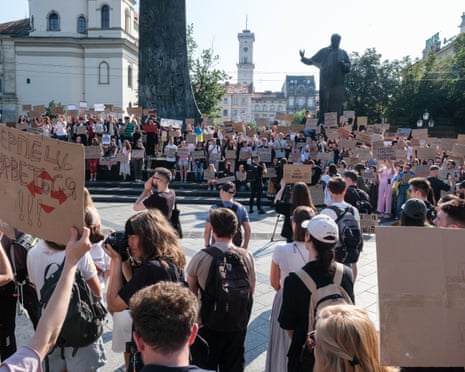
Despite the show of international unity, Starmer’s visit was partially overshadowed by domestic political turmoil within Ukraine. Just hours before the British Prime Minister arrived, President Zelenskyy made the controversial decision to dismiss the country’s popular Defense Minister, Mykhailo Fedorov. The move sparked rare wartime protests in the streets of Kyiv and Lviv, with thousands of citizens—primarily young activists—expressing bewilderment and fury over the removal of a leader they view as a champion of innovation and transparency.
Fedorov, 35, had overseen a dramatic improvement in Ukraine’s battlefield position during his six months in office. His tenure was marked by the successful implementation of long-range drone strikes against Russian oil refineries, which have caused nationwide fuel shortages within Russia and embarrassed the Kremlin. In a farewell message, Fedorov claimed he had radically improved the military procurement system, saving the state budget billions of dollars. He also revealed that on the day of his departure, Ukraine had successfully tested a new ballistic missile, signaling the nation’s entry into a "new league" of military capability.
The dismissal has been linked to a public and bitter dispute between Fedorov and the Commander-in-Chief of the Armed Forces, Oleksandr Syrskyi. Fedorov accused Syrskyi of blocking the Defense Ministry’s initiatives and prioritizing "Soviet-style" command structures over modern, tech-driven warfare. Zelenskyy, when questioned by reporters during the press conference with Starmer, attempted to strike a reassuring tone. He claimed that Fedorov would remain a part of his "team," despite the outgoing minister having already declined an offer to serve as a presidential advisor.
The Kremlin Responds to the Diplomatic Unwavering Respect
In Moscow, the Kremlin viewed the meeting between Starmer and Zelenskyy with characteristic dismissiveness. Kremlin spokesman Dmitry Peskov told reporters that the reshuffling of the Ukrainian government, including the naming of a new Prime Minister and Defense Minister, would "make no difference" to the trajectory of the conflict. Peskov asserted that unless Kyiv is willing to accept Russia’s terms for a peace settlement, the identity of the individuals in the Ukrainian cabinet is irrelevant to the Russian Federation.
Peskov also confirmed that there are currently "no immediate prospects" for resuming peace negotiations. While acknowledging that Turkey remains ready to facilitate talks, the Kremlin spokesman stated that Russia sees no signs of a shift in Kyiv’s position that would warrant a return to the negotiating table. This statement underscores the reality that the war remains in a state of grinding attrition, with both sides dug in for a long-term struggle.
European Economic Deadlock and Legal Rulings
The visit took place against a broader backdrop of European challenges. While Starmer and Zelenskyy projected a united front, the European Union is currently struggling to finalize its latest round of sanctions against the Kremlin. EU ambassadors have reached a deadlock over the 21st package of restrictive measures, which includes a proposed ban on ex-Russian combatants from entering the bloc and sanctions against Russian cod and pollock imports.
A primary point of contention remains the price cap on Russian oil. EU members have agreed to maintain the current cap of $44.10 a barrel until July 23, but if a permanent agreement is not reached soon, the cap will automatically rise. This would provide a significant revenue boost to Vladimir Putin’s war chest at a time when global oil prices are already volatile due to unrest in the Middle East.
Simultaneously, the European Court of Justice (ECJ) issued two landmark rulings that could have long-lasting effects on the bloc’s legal landscape. In Luxembourg, the court ruled that Google may be held legally liable for content on YouTube when that content is produced by a commercial partner. This decision followed a challenge to a €750,000 fine imposed by Italian authorities regarding online gambling advertisements. Furthermore, the ECJ ruled that a controversial Spanish amnesty law for Catalan separatists does not violate EU rules, a victory for Spain’s socialist-led government that had introduced the law to secure political stability.
The Future of the Anglo-Ukrainian Strategic Alliance
As Keir Starmer prepares to hand over the reins of the British government to his successor, Andy Burnham, the primary question remains whether the "unwavering respect" and support shown during his tenure will persist. Zelenskyy admitted to reporters that he is "of course afraid" of losing key allies as political landscapes shift in the West, citing both the upcoming change in the UK and the looming elections in France next year.
However, Starmer was firm in his belief that the strategic alliance he helped build is "totally unprecedented" and designed to last for the next 100 years. He argued that the British public’s understanding of the conflict is deep-seated and transcends partisan politics. The Prime Minister’s final visit served as a reminder that while individual leaders may depart the stage, the institutional and military ties forged between London and Kyiv have reached a level of integration that will be difficult for any future administration to dismantle.
The appointment of Sergii Koretskyi as Ukraine’s new Prime Minister further signals a shift toward prioritizing energy security as winter approaches. Koretskyi, the former CEO of state energy giant Naftogaz, is expected to focus on protecting the country’s power grid from Russian missile strikes. As Starmer departs Kyiv for the last time as Prime Minister, he leaves behind a Ukraine that is more heavily armed and internationally recognized than ever before, yet one that remains embroiled in a complex web of internal political tension and external military pressure.