Key measures of democratic health in the United States have plummeted to their lowest points in half a century, driven by a systematic erosion of the rule of law and the destabilizing influence of the Trump administration’s executive actions. According to the latest annual findings from the International Institute for Democracy and Electoral Assistance (International IDEA), the decline in the U.S. reflects a broader, more volatile global trend where fundamental institutions are increasingly under siege. The Stockholm-based intergovernmental organization warned that the deterioration of American democratic norms is no longer an isolated phenomenon but a central driver of a worldwide retreat from liberal governance.
The comprehensive data, which tracks democratic performance across 174 countries dating back to 1975, highlights a significant contraction in judicial independence, credible election processes, and freedom of expression. For the first time in five decades, the U.S. has seen its standing in these categories fall to levels not witnessed since the mid-1970s. This downturn coincides with an 11th consecutive year of global democratic decline, marking the longest continuous period of erosion since the think tank began its record-keeping.
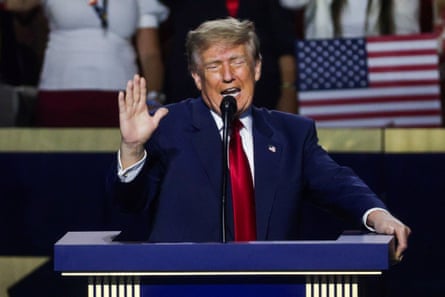
International IDEA’s analysis specifically identifies the "threats and actions" of the Trump administration as a primary catalyst for the domestic slump. Researchers noted that the rapid accumulation of executive power and its use to pursue personal objectives and political retaliation have fundamentally weakened the American institutional framework. These developments have not only affected domestic stability but have also strained longstanding international alliances and undermined the concept of multilateral cooperation.
US Democracy Indicators at 50-Year Lows
The decline of democracy indicators in the U.S. is characterized by a "visible deterioration" that began in earnest around 2019. While the United States was first added to the list of "backsliding" democracies in 2021, the 2025 data suggests that the trajectory has accelerated rather than stabilized. The report emphasizes that the U.S. executive branch has increasingly wielded its authority to bypass traditional checks and balances, creating a precedent that challenges the very foundations of the American constitutional republic.
A major factor in this decline is the rise of "election denialism," a phenomenon that the think tank describes as having originated within the highest levels of the U.S. government. The persistent dissemination of false claims regarding election integrity has fractured public trust in the democratic process. This lack of confidence has proven contagious, with similar movements emerging in various nations, effectively exporting American political instability to the rest of the world.
The impact on the judiciary has been equally profound. The report points to a measurable decrease in judicial independence, as the appointment of ideologically driven judges and the public disparagement of legal institutions have compromised the perceived neutrality of the courts. This shift has made it more difficult for the legal system to act as a corrective force against executive overreach, further depressing the overall democracy indicators in the U.S.

The Global Erosion of the Rule of Law
Beyond the borders of the United States, the global state of democracy is facing its most significant challenge in decades. International IDEA reported that access to justice, press freedom, and the right to peaceful assembly are at their lowest levels in at least 30 years. The rule of law was identified as the weakest dimension of democracy globally in 2025, with 71 countries—representing 41% of those assessed—ranking as low-performing in this critical area.
The deterioration of the rule of law is often the first step toward full-scale democratic collapse. When the legal frameworks that protect individual rights and ensure government accountability are dismantled, the path is cleared for authoritarianism. The data shows that 29 countries experienced a rapid downturn in rule-of-law metrics over the last year alone, suggesting that the erosion is gaining momentum on every continent.
Press freedom has also suffered a sharp decline, with journalists increasingly facing physical threats, legal harassment, and state-sponsored censorship. The report notes that the criminalization of dissent and the use of "foreign agent" laws have become common tools for governments looking to silence investigative reporting. This lack of transparency makes it easier for corruption to flourish and for leaders to consolidate power without public oversight.
Security Implications of Declining Democracy Indicators
One of the most alarming findings in the 2025 report is the direct correlation between the decline of democracy indicators in the U.S. and other nations and the rise of violent conflict. Kevin Casas-Zamora, the secretary general of International IDEA, emphasized that the erosion of democratic quality is a major security risk that is often overlooked by policymakers and the public.
Data from the Uppsala Conflict Data Program at Uppsala University supports this concern, revealing that 2025 saw the highest number of violent conflicts since 1946. This includes a spike in interstate conflicts, which had been relatively rare in the post-Cold War era. The research suggests that as democracies weaken, the internal and external constraints on aggressive state behavior disappear, making war a more likely outcome.
"The connection between the erosion of the quality of democracy and increasing conflict is not being made either in policymaking or in the public debate," Casas-Zamora stated. He argued that investing in the resilience of democratic institutions should be a cornerstone of any national security strategy. Without the stability provided by the rule of law and credible elections, the international order becomes more susceptible to volatility and large-scale violence.
Civic Space and the Legal Suppression of Dissent
As democracy indicators in the U.S. and abroad continue to slide, the space for civil society to operate is narrowing. The report highlights the increasing use of "strategic lawsuits against public participation," or SLAPPs, as a method to bankrupt and silence activists, community leaders, and non-governmental organizations. These legal maneuvers allow powerful interests to use the court system to suppress criticism, even in countries that traditionally protect free speech.
In addition to SLAPPs, many governments have enacted restrictive laws that categorize civil society groups as "foreign agents" if they receive any international funding. These laws are frequently used to delegitimize human rights organizations and cut them off from the resources they need to function. The criminalization of peaceful protest has also reached a fever pitch, with several nations passing legislation that treats civil disobedience as a form of terrorism or domestic extremism.
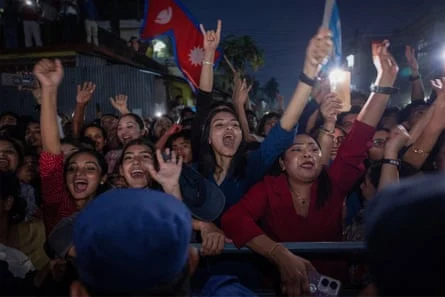
Despite these obstacles, popular movements have continued to challenge the status quo. In South Asia, youth-led protests in Bangladesh, Nepal, and Sri Lanka successfully unseated long-serving leaders who had become symbols of corruption and stagnation. However, International IDEA cautioned that unseating a leader is only the first step; creating deep-seated, meaningful reform within a short period remains an uphill battle in environments where institutions have been hollowed out.
Pockets of Resilience and Potential for Reversal
While the overall narrative is one of decline, the data does point to several areas of democratic resilience. In Australia, the government’s efforts to consult civil society on anti-racism strategies and children’s online privacy were cited as positive examples of inclusive governance. These actions demonstrate that even within established democracies, there are opportunities to strengthen the relationship between the state and its citizens.
In the Middle East, the overthrow of the Bashar al-Assad regime in Syria represented a seismic shift in a region long dominated by repressive dictatorships. While the long-term outcome for Syria remains uncertain, the collapse of such a longstanding autocracy serves as a reminder that even the most entrenched regimes are not permanent.
Casas-Zamora expressed a cautious optimism that the downward trend in democracy indicators in the U.S. and elsewhere can be reversed. He noted that the current global volatility, while dangerous, also creates "positive political openings" where citizens can push for institutional renewal. The key to this reversal, according to the report, lies in the public’s willingness to demand accountability and the international community’s commitment to upholding democratic norms.
The path forward for the United States will likely depend on its ability to restore faith in its electoral systems and re-establish the independence of its legal institutions. As the "patient zero" of certain democratic ailments, the U.S. holds a unique position; its recovery or further decline will undoubtedly set the tone for the global state of democracy in the decades to come. Strengthening the rule of law and protecting the executive branch from personal politicization remain the most urgent tasks for those seeking to stabilize the nation’s democratic standing.