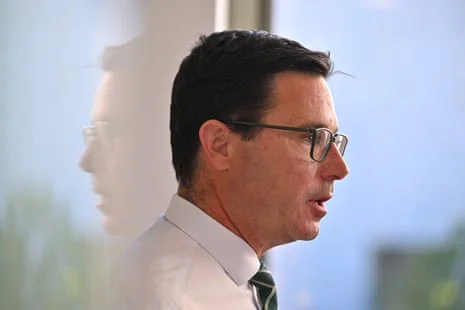
The Australian federal government is weighing urgent requests for military assistance from Gulf nations as regional tensions with Iran escalate, while simultaneously managing a severe flooding crisis in the Northern Territory that has displaced hundreds and threatened record-breaking river levels. Shadow Minister for Foreign Affairs Ted O’Brien stated Monday that the nation must "duly consider" providing defensive support to its allies in the Middle East, characterizing the current conflict as a pivotal moment where the United States and Israel are performing the "heavy lifting for the free world."
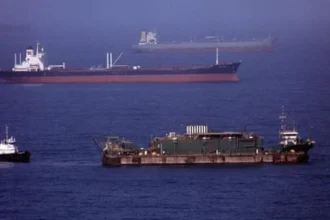
The geopolitical landscape shifted significantly over the weekend as Foreign Minister Penny Wong confirmed that the Labor government is reviewing options to assist Gulf states facing potential strikes from Iranian forces. While Wong emphasized that Australia would not commit to a ground war or the deployment of infantry, the prospect of naval or air-based defensive support remains on the table. This development comes as the Department of Foreign Affairs and Trade (DFAT) ordered the families of Australian officials to evacuate the United Arab Emirates, citing a rapidly deteriorating security environment across the region.

Geopolitical Tension and Potential Military Involvement in the Gulf
The debate over Australia’s role in the Middle East has intensified following a series of briefings between the government and the opposition. Ted O’Brien, speaking to national media, argued that any request for support from Gulf nations is a direct result of a "very rogue regime" in Tehran that has previously attempted to coordinate hostile activities on international soil. O’Brien noted that while providing defensive assistance would technically constitute participation in the conflict, the moral and strategic imperative to support democratic allies outweighs the risks of non-intervention.
The opposition’s stance reflects a broader concern within the Australian intelligence community regarding Iranian influence and the stability of global trade routes. By framing the conflict as a struggle for the "free world," the Coalition is signaling its support for a more robust military posture. However, the government remains cautious, with Minister Wong reiterating that any Australian involvement would be calculated to minimize the risk of a broader regional conflagration while fulfilling the nation’s obligations to its security partners.
The Opposition’s Stance on Iranian Regime Change
Nationals Leader David Littleproud has gone further than his Liberal counterparts, explicitly calling for a change in the Iranian leadership. Littleproud argued that the current regime is a "tyrant" that oppresses its own people and remains the primary driver of instability in the Middle East. He suggested that Australia possesses specific niche military capabilities—such as advanced surveillance and maritime patrol assets—that could significantly bolster the defense of Gulf nations without requiring a massive footprint of boots on the ground.
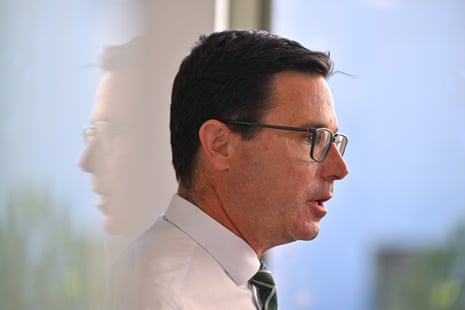
Littleproud emphasized the importance of bipartisanship in matters of national security, noting that the decision to send personnel into a conflict zone is among the most consequential a government can make. He called for the empowerment of the Iranian people to reclaim their country through their own determined mechanisms. This rhetoric marks a stern escalation in the political discourse surrounding Australia’s foreign policy, suggesting that the era of passive observation in Middle Eastern affairs may be coming to an end as the threat to global security becomes more acute.
Natural Disaster: Record Flooding in the Northern Territory
While the federal government looks abroad, emergency services at home are battling a catastrophic deluge in the Northern Territory. The town of Katherine and the surrounding Daly River region are currently submerged, with meteorologists warning that the flooding could persist for at least another week. The Katherine River reached a staggering height of 19.2 meters over the weekend, and although the waters have begun to recede slightly, a secondary trough is expected to bring more rainfall, potentially pushing the rivers toward record-breaking levels.
The Bureau of Meteorology (BOM) has maintained several high-level flood watches across the territory. Senior officer Jude Scott reported that the Daly River, which stood at 14.4 meters late Sunday, continues to rise. The geographical isolation of these communities makes the flooding particularly dangerous, as road access is completely severed, leaving residents dependent on aerial supply drops and helicopter evacuations.

Evacuations and Regional Weather Alerts
The scale of the disaster has forced a massive logistical operation to move residents to safety. Hundreds of people from the Nauiyu and Daly River communities have been airlifted by helicopter to Darwin, where they are currently being housed at the city’s showgrounds. Katherine Mayor Joanna Holden described the situation as "critical," noting that approximately 1,000 people have already been processed through evacuation centers in Darwin, Katherine, and Mataranka.
The impact on local infrastructure is profound. Several schools have been repurposed as emergency shelters, and supermarket shelves in the region have been stripped bare as supply chains fail. Furthermore, residents have been issued grim warnings regarding the local wildlife; emergency officials stated that "crocs are absolutely everywhere" in the floodwaters, posing a lethal threat to anyone attempting to navigate the submerged streets on foot or in small watercraft.
The weather system responsible for the NT crisis is also moving into Queensland. Moderate to heavy rainfall is forecast for northern, central, and southeastern parts of the state over the coming days. A broad atmospheric trough is drawing deep tropical moisture across the region, prompting flood watches for multiple river catchments. Queensland emergency services are currently on high alert, urging residents in low-lying areas to prepare for rapid inundation.

Infrastructure Milestones: The M12 Motorway and Western Sydney Airport
Amidst the foreign policy debates and natural disasters, New South Wales officials announced a major milestone for Sydney’s infrastructure. The M12 motorway, described by the government as the "driveway" to the new Western Sydney International Airport, is scheduled to open this Saturday. The 16-kilometer stretch of road represents a $2.1 billion joint investment between the federal and state governments and has been under construction for four years.
NSW Premier Chris Minns and Federal Transport Minister Catherine King are expected to formally open the road, which is designed to take approximately 25,000 vehicles a day off local thoroughfares. The project involved massive earthworks—equivalent to the volume of over 1,000 Olympic-sized swimming pools—and the planting of more than 18,500 trees to offset the environmental impact of the construction.
While the motorway will open to local traffic on March 14, the full connection to the M7 motorway at Cecil Hills will not be finalized until mid-year. This infrastructure is critical for the Western Sydney International Airport, which is slated to begin passenger flights in October. However, the project highlights a gap in public transport; the dedicated metro line linking the airport to the heavy rail network is not expected to be operational until late 2027. In the interim, the government has committed to providing a free bus service to ensure travelers can access the new facility.

Digital Regulation: Age Verification for Adult Content
A significant shift in Australia’s digital landscape also took effect this week as new age verification requirements for pornography websites became mandatory. Under the direction of eSafety Commissioner Julie Inman Grant, industry-designed codes now require sites hosting adult content, extreme violence, or self-harm material to have robust age assurance mechanisms in place.
This regulation marks the second phase of a rollout that began in December. The new rules cover a wide array of digital services, including social media platforms, storage providers, AI chatbots, and app stores. Technology companies and equipment manufacturers, such as phone and console developers, are now legally obligated to ensure that minors cannot easily access restricted material. The move has sparked debate over digital privacy, as many platforms may now require users to provide photo identification or undergo facial recognition scans to verify their age.
Domestic Politics and Local Crime Reports
In the political arena, the National Party has finalized its candidate for the upcoming Farrer byelection, triggered by the departure of former Liberal leader Sussan Ley. The Nationals have selected Brad Robertson, a former army colonel and local community advocate, to contest the seat on May 9. The move sets up a rare three-way contest between the Coalition partners, One Nation, and community independent Michelle Milthorpe.

Nationals Leader David Littleproud praised Robertson as a "local champion" whose military background makes him uniquely qualified to represent the regional electorate. The seat of Farrer has a long history of National Party representation, and the party views this byelection as an opportunity to reclaim territory from the Liberals. However, the contest has already been marred by controversy; One Nation candidate David Farley has come under fire for historical comments comparing former Prime Minister Julia Gillard to a "non-productive old cow," a remark that has drawn sharp condemnation from across the political spectrum.
On the local front, Sydney’s inner west was rocked by a violent incident on Sunday that resulted in a murder charge. New South Wales police reported that emergency services were called to a residence in Concord following a welfare check. Upon arrival, officers discovered a man with a fatal stab wound to the chest. A second man was arrested at the scene and has since been charged with murder. He was refused bail and is expected to appear in Burwood Local Court on Monday as detectives continue their investigation into the circumstances of the death.
As Federal Parliament prepares to return on Tuesday, the government faces a crowded agenda dominated by the dual pressures of international instability and domestic recovery. The decisions made regarding Gulf military support and the long-term rebuilding of flood-ravaged communities in the north will likely define the political narrative for the remainder of the quarter. Authorities continue to urge vigilance in the Northern Territory as the weather remains unpredictable and the threat from rising waters persists.