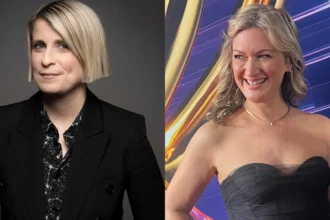
Veteran filmmaker Neil LaBute, a figure known for traversing critical acclaim and heated controversy over three decades, is set to premiere his latest project, the indie horror-comedy Murderous, at the Oldenburg Film Festival, where he will also be honored with a lifetime achievement award. The film, a contained dark comedy thriller, marks a deliberate return to LaBute’s low-budget, independent roots, featuring actress Gia Crovatin in a pivotal lead role she passionately pursued.
A Return to Indie Roots with ‘Murderous’
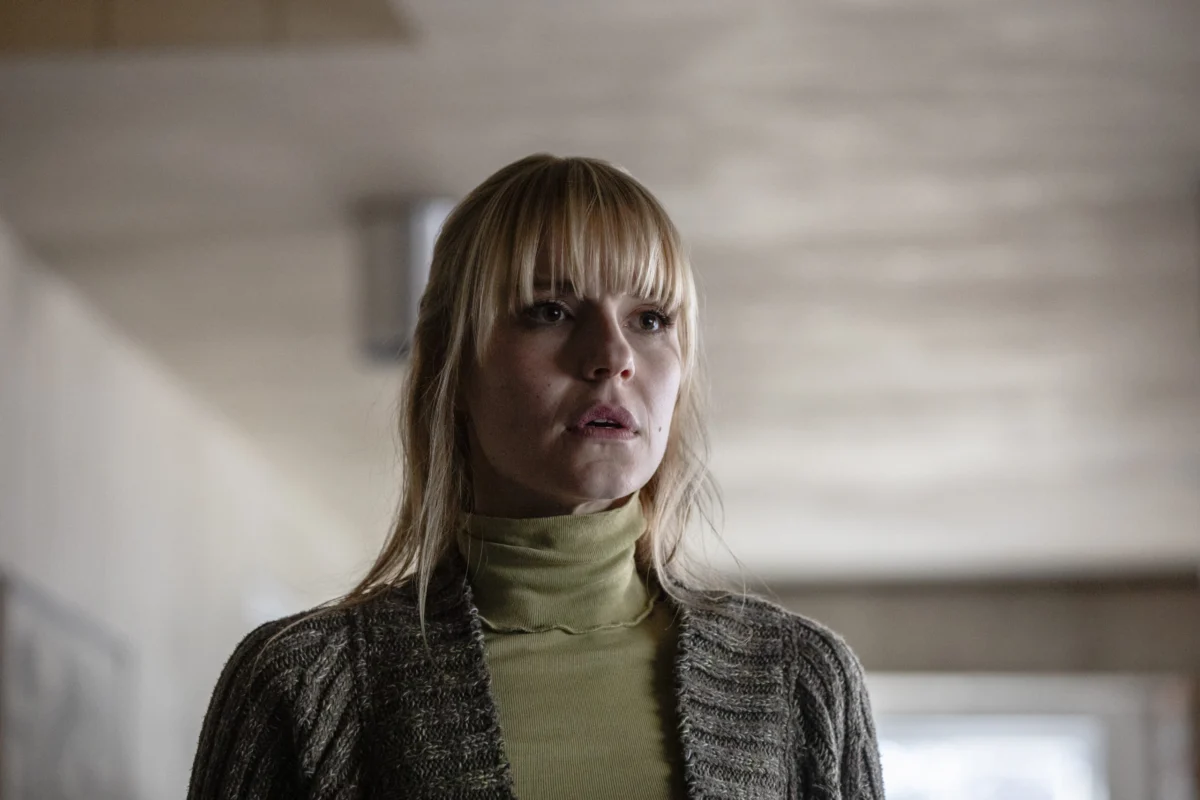
Murderous is described as a dark comedy thriller that deliberately evokes the early works of Alfred Hitchcock, focusing on psychological tension within a confined setting. The narrative centers on Marion, an ambitious up-and-coming screenwriter portrayed by Gia Crovatin, as she confronts a menacing ex-boyfriend and suspected stalker, played by Thomas Sadoski, who alleges she stole his creative ideas. Jordan Baker co-stars in the tightly wound drama.
LaBute, known for his theatrical background, expressed his enthusiasm for the controlled environment of low-budget filmmaking. "Who isn’t going to take that [Hitchcock] reference!" LaBute stated, acknowledging the celebrated master’s influence. He highlighted the appeal of a one-room, few-actor setup, noting that "if it’s done right, audiences will watch." The film is designed to initially position Marion as a victim, with the power dynamic shifting dramatically as she becomes cornered, heightening the suspense. This exploration of a "normal guy who starts pushing the wrong buttons" is a recurring theme in LaBute’s work across stage and screen.
The terror in Murderous is intentionally non-supernatural, tapping into the relatable, visceral fear of being stalked or witnessing a familiar individual turn dangerous. This grounded approach aims to create a horror film that "could happen to anyone," intensifying its psychological impact.
LaBute’s Evolving Career: From Acclaim to Controversy
Early Provocation and Mainstream Crossover
LaBute’s career launched into the film scene with the critically acclaimed indie features In the Company of Men (1997) and Your Friends & Neighbors (1998). These films garnered significant festival buzz, quickly establishing him as a fearless and provocative voice in contemporary drama. However, they also sparked considerable debate, with many critics labeling him a misogynist due to the often brutal and manipulative dialogue he penned for his male characters. This early notoriety, while polarizing, positioned him as a filmmaker unafraid to explore the darker facets of human nature and relationships.

He successfully parlayed this attention into mainstream success with the dark-comedy hit Nurse Betty (2000), starring Renée Zellweger, Morgan Freeman, and Chris Rock. The film demonstrated his ability to manage larger budgets and collaborate with A-list talent. Subsequent projects included the literary adaptation Possession, featuring Gwyneth Paltrow, and the critically praised The Shape of Things (2011), a cinematic rendition of his own acclaimed play starring Paul Rudd and Rachel Weisz.
The ‘Wicker Man’ Experience and Lessons Learned
LaBute’s high-profile attempt to remake the classic horror film The Wicker Man in 2006, however, proved to be a cautionary tale regarding major studio ventures. The film, which famously featured Nicolas Cage in a bee-tormented sequence that became a widespread internet meme, was mercilessly dissected by purist fans of the 1973 original. Reflecting on the experience, LaBute confessed, "If I realized then how precious The Wicker Man was to the world of horror, I might never stepped in that arena." This experience appears to have reinforced his preference for the creative control offered by independent filmmaking.
His latest feature, Murderous, represents a deliberate pivot back to the more intimate, controlled environment of his earlier independent projects. This shift mirrors his previous returns to indie sensibilities, such as the 2013 film Some Velvet Morning starring Stanley Tucci and Alice Eve, which also unfolded within a single house, and the DirectTV series Billy & Billie.
Gia Crovatin’s Deep Dive into ‘Murderous’
Actress Gia Crovatin, who shares a real-life partnership with LaBute, was instrumental in the genesis and production of Murderous. She recounts the film’s initial spark originating from a friend, a New York Times photographer, who introduced them to a hauntingly beautiful 18th-century mill-turned-house in Salt Point, New York. The location, with its constantly turning water wheel and inherent historical eeriness, immediately struck LaBute as a perfect cinematic backdrop.
Crovatin’s portrayal of Marion embodies a complex "final girl" archetype, one who actively forces herself into the role of a perpetrator, navigating a dramatic shift in power dynamics. This arc was particularly resonant for Crovatin, who openly discussed her personal journey to secure the lead role. After initially considering several well-known "scream queen" actresses, Crovatin, facing a period of artistic frustration following an unsuccessful audition for an HBO series, made an impassioned plea to LaBute. "Can we please just make this movie, can we just find a way?" she recalled asking, driven by a profound need to create.
Her determination to bring the project to fruition, even without a "super-famous person as the lead," resonated deeply with her character Marion’s drive. Crovatin articulated a shared hunger for success, stating, "I know very well what it’s like to be so hungry for something and to want to succeed no matter the cost. I think all of us as artists do." This personal investment undoubtedly infused her performance with authentic intensity.

The film’s production underscored the collaborative spirit of independent cinema. Shot over two one-week blocks — a mere ten days total, with minimal rehearsal — on a shoestring budget, Murderous bypassed eligibility for New York’s tax incentives due to its limited financing. Crovatin praised the "incredible" support from the Hudson Valley community, including the Film Commission, local crews, and friends who volunteered time and resources. LaBute likened the process to a "backyard barn-raising," emphasizing the collective effort that brought the project to life.
Deconstructing the Studio System and Artistic Freedom
Murderous not only showcases LaBute’s return to indie filmmaking but also incorporates a biting critique of the traditional studio system and its marketing mechanisms. LaBute candidly shared his firsthand experiences with the fragility of large-scale productions. He recounted the shock of witnessing a major film collapse due to a single funding withdrawal, despite having a star and a major studio attached. "You think: ‘wow, this is all built on smoke and mirrors’," he observed, articulating the frustration that fuels Marion’s character. He confessed he could understand Marion’s "anger" and "frustration" up to the point of violence.
Despite the challenges of funding independent projects, LaBute expressed optimism about the current landscape for film distribution. He described the digital age as a "Wild West," offering myriad avenues for filmmakers to reach audiences, from streaming platforms to YouTube. This accessibility, he believes, empowers creators and offers more opportunities for audiences to discover diverse cinematic content.
To navigate the fluctuating nature of the industry, LaBute employs a strategy of "spinning many plates," dividing his time between theater, television, and film. He highlighted his diverse directorial experience, from his own plays to other writers’ screenplays, and noted the recent acquisition of rights for his play This is How It Goes by Idris Elba for an Apple film adaptation. This adaptability allows him to maintain creative output regardless of the prevailing industry currents.
Addressing the ‘Misogynist’ Label and Divisive Art
Gia Crovatin offered a passionate defense of LaBute’s early work, particularly against the "misogynist" accusations that have historically shadowed his career. She revealed her long-standing admiration for his oeuvre, citing The Shape of Things as her "gateway drug" into his writing. Crovatin recounted an instance in college where she "had a head-to-head fight" with a professor, successfully arguing against the misogynist label. She lauded LaBute’s profound understanding of human psychology, emphasizing his ability to craft characters with deep feelings and articulate thoughts that resonate authentically.
LaBute himself addressed the enduring label, noting that critics often equate authors with their most reprehensible characters. "I’m never thought of as the deaf girl [in In the Company of Men], I’m always the worst guy who said the worst thing," he lamented, acknowledging the public’s tendency to project character traits onto the writer. He emphasized the importance of continuing to create, hoping that audiences and critics would eventually perceive the nuance in his narratives.

Both artists underscored the value of provocative and divisive art. Crovatin argued that theater serves as a "safe space to confront complicated ideas," praising LaBute’s belief that any subject, if handled skillfully and purposefully, belongs on stage. LaBute echoed this sentiment, asserting, "God bless divisiveness. I’d rather have that than get a ho hum reaction, to be forgotten 10 minutes later." He suggested that the worst critical reception is to be deemed forgettable, rather than sparking strong opinions, a perspective that resonates with his career-long commitment to challenging narratives.
Future Prospects for ‘Murderous’ and LaBute’s Legacy
Following its world premiere at the Oldenburg Film Festival, Murderous is slated for competition in Europe, with hopes for a domestic premiere soon thereafter. LaBute expressed his primary goals for the film’s future: for audiences to see it and for investors to recoup their contributions. The journey of independent films, he acknowledged, remains unpredictable in the evolving distribution landscape, whether it ultimately lands on a major streaming platform or secures a theatrical release.
Reflecting on his extensive career, LaBute shared a few minor regrets, including not pursuing American Beauty when it first crossed his desk and wishing his adaptation of Possession could have been a limited series to better explore its rich source material. He also mused about the common "mid-career itch" for male directors to tackle a western, a genre he has yet to explore. Despite these small reflections, he affirmed his overall fortune in being able to create work he genuinely loves.
Murderous stands as a testament to Neil LaBute’s enduring commitment to provocative storytelling and Gia Crovatin’s fierce dedication to her craft. This latest collaboration not only showcases their artistic synergy but also reaffirms the power of independent cinema to explore complex themes and deliver compelling narratives outside the confines of mainstream production.