Apple’s latest silicon powerhouse, the A20 Pro, has established a new performance ceiling for the smartphone industry following the release of comprehensive benchmark data for the iPhone 18 Pro and Pro Max. The results, finalized during the first wave of retail unit testing this September, confirm that Apple’s transition to a 2-nanometer (2nm) manufacturing process has yielded the most significant year-over-year performance leap in recent memory. While the iPhone 18 Pro serves as the primary vessel for this new hardware, the A20 Pro is also slated to power the company’s first foldable device, the iPhone Duo, marking a critical moment for Apple’s semiconductor division under the leadership of newly appointed CEO John Ternus.
The technical specifications of the A20 Pro represent a sophisticated evolution of the ARM-based architecture that Apple has refined over the last decade. The chip features a 6-core Central Processing Unit (CPU) comprised of two high-performance "super cores" designed for intensive computational loads and four efficiency cores optimized for background tasks and battery preservation. Complementing the CPU is a 7-core Graphics Processing Unit (GPU) equipped with dedicated Neural Accelerators and a dual 16-core Neural Engine. This hardware configuration is specifically engineered to handle the increasing demands of on-device artificial intelligence and high-fidelity mobile gaming.

Unprecedented Scores in iPhone A20 Pro Chip Benchmarks
In standardized synthetic testing using Geekbench 7, the industry-recognized metric for evaluating mobile and desktop processors, the iPhone 18 Pro recorded a single-core score of 3,959 and a multi-core score of 10,854. These figures represent a nearly 25 percent increase in raw processing power compared to the previous generation’s A19 Pro. The single-core performance remains a particular point of strength for Apple, as it dictates the responsiveness of the user interface and the speed at which individual applications launch and execute tasks.
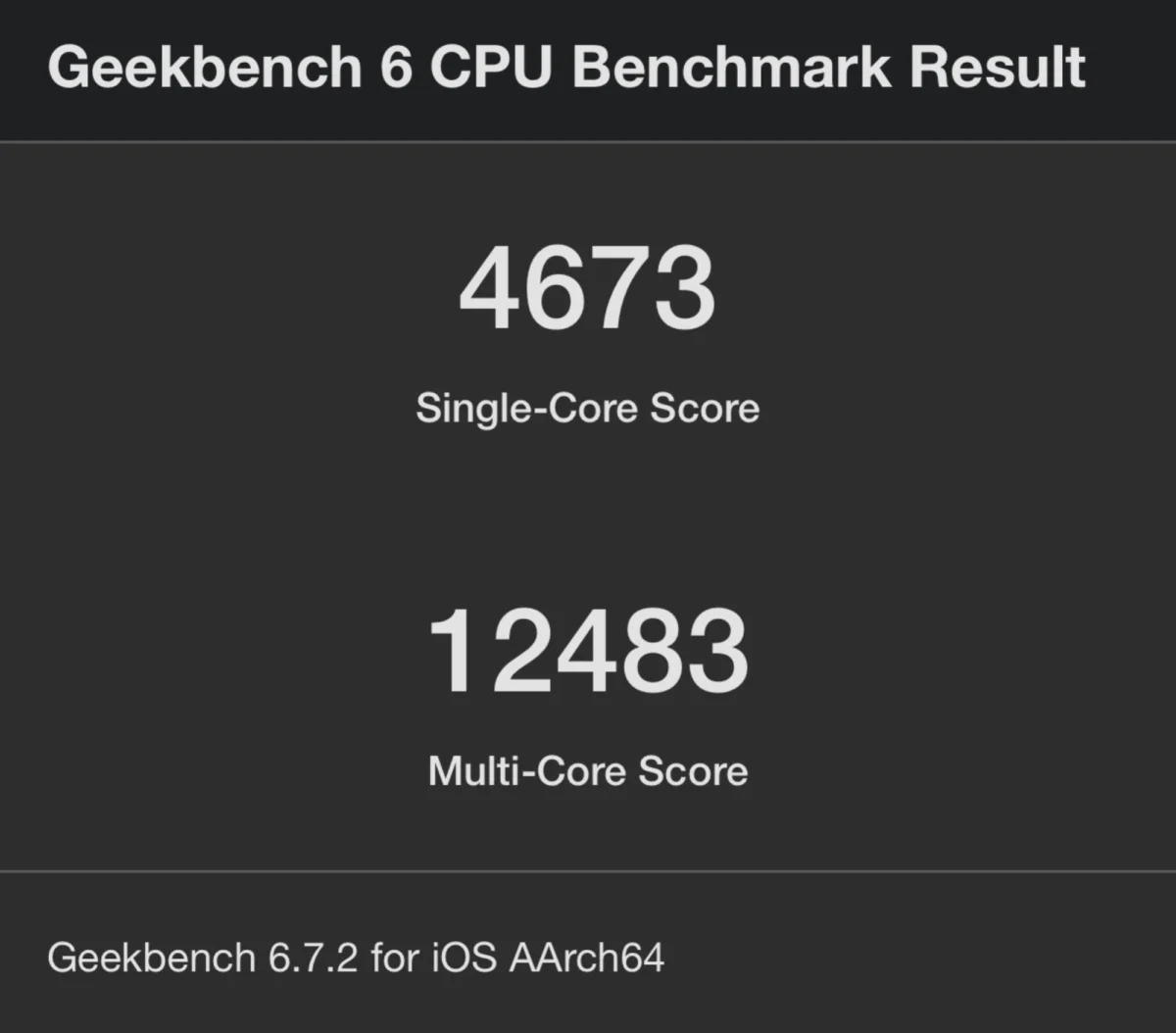
The graphical capabilities of the A20 Pro were equally dominant in testing. The Geekbench 7 GPU OpenCL benchmark returned a score of 61,194, a result that significantly outpaces contemporary rivals. To provide a broader historical context, testers also utilized Geekbench 6, where the iPhone 18 Pro achieved a single-core score of 4,673 and a multi-core score of 12,483. These metrics indicate that Apple has successfully mitigated the thermal throttling issues that occasionally hampered previous iterations, allowing the A20 Pro to maintain peak performance for longer durations.
The only hardware currently in the market that approaches these figures is the Qualcomm Snapdragon 8 Elite Gen 5, specifically the "for Galaxy" variant found in the Samsung Galaxy S26 Ultra. However, even with Qualcomm’s advancements in Nuvia-derived core architectures, Apple’s A20 Pro maintains a double-digit lead in both single-core efficiency and multi-core throughput. This gap highlights the advantage Apple retains by controlling the entire stack, from the silicon design to the iOS 20 operating system.

The Engineering Behind the 2nm Manufacturing Process
The primary driver behind the A20 Pro’s success is the move to a 2nm fabrication process. In the semiconductor industry, the shift to smaller process nodes allows engineers to pack more transistors into a smaller physical area. More transistors generally equate to more processing power and higher energy efficiency. By being the first to market with a 2nm chip, Apple has effectively reduced the power draw of the iPhone 18 Pro while simultaneously increasing its computational ceiling.
This transition was not without its challenges. The 2nm node requires extreme ultraviolet (EUV) lithography and a shift in transistor architecture, often moving toward Gate-All-Around (GAA) designs to prevent current leakage at such a microscopic scale. Industry analysts note that Apple’s ability to secure the lion’s share of 2nm production capacity from TSMC (Taiwan Semiconductor Manufacturing Company) has created a significant barrier to entry for other manufacturers. This "silicon moat" ensures that for the 2026-2027 product cycle, Apple remains the sole provider of this level of mobile computing density.
The A20 Pro’s efficiency cores are particularly noteworthy. While the "super cores" handle the headlines, the four efficiency cores have been re-architected to manage the complex "Apple Intelligence" suite that now permeates the operating system. By offloading AI-driven predictive text, image processing, and Siri’s contextual awareness to these cores, the A20 Pro ensures that the high-performance cores are available for gaming, video editing, and augmented reality applications.

Impact on the iPhone Duo and the Foldable Market
The A20 Pro is not limited to the traditional slab-style smartphone. It is the foundational component of the iPhone Duo, Apple’s highly anticipated entry into the foldable market. The demands of a foldable device are unique; they require the ability to drive a much larger internal display and manage complex multitasking environments where three or four apps may be active simultaneously.
The benchmark results suggest that the A20 Pro has the thermal headroom necessary to operate within the thinner, more constrained chassis of a foldable device. Early testing of the Duo indicates that the A20 Pro’s GPU is capable of maintaining high frame rates even when rendering across the expanded pixel count of the internal folding screen. This performance is critical for Apple as it seeks to position the Duo as a productivity tool that can bridge the gap between the iPhone and the iPad mini.
Corporate Strategy and the Leadership of John Ternus
The successful launch of the A20 Pro marks a pivotal achievement for John Ternus, who recently stepped into the role of CEO. Ternus, who previously served as Senior Vice President of Hardware Engineering, was a central figure in the transition of the Mac lineup to Apple Silicon. His promotion to the top executive position signaled Apple’s intent to remain a hardware-first company, with silicon development at the core of its business strategy.

Under Ternus, the focus has shifted toward deeper integration between the Neural Engine and the core CPU. The A20 Pro is the first chip designed from the ground up under this new leadership era, and its performance suggests a continued commitment to the "Apple Silicon" philosophy: maximizing performance per watt. Analysts suggest that the A20 Pro’s dominance will bolster investor confidence in Ternus’s ability to maintain Apple’s technological edge in the post-Tim Cook era.
Real-World Implications and Consumer Experience
While synthetic benchmarks provide a clear quantitative lead, the impact on the average consumer is more nuanced. For users upgrading from an iPhone 16 or 17, the speed increase may feel incremental in daily tasks such as web browsing or social media. However, for "power users" engaged in 8K video recording, 3D modeling, or AAA gaming, the A20 Pro represents a transformative shift.
The A20 Pro’s 7-core GPU supports hardware-accelerated ray tracing at a level previously reserved for dedicated gaming consoles. This allows the iPhone 18 Pro to run desktop-class games with realistic lighting and reflections. Furthermore, the dual 16-core Neural Engine enables near-instantaneous generative AI tasks, such as removing objects from video in real-time or translating complex technical documents without relying on cloud-based processing. This on-device approach to AI is a cornerstone of Apple’s privacy-first marketing strategy, as it minimizes the amount of data that must leave the device.

Competitive Landscape and Industry Reactions
The semiconductor industry has reacted to the A20 Pro benchmarks with a mix of admiration and urgency. Qualcomm and MediaTek have both announced accelerated timelines for their next-generation 2nm designs, though they are not expected to reach mass production until mid-2027. Meanwhile, Google’s Tensor G6 chip, slated for the Pixel 11, is reportedly focusing on specialized AI tasks rather than raw CPU throughput, further ceding the "performance king" title to Apple.
Industry observers note that the A20 Pro’s success may force a shift in how competitors market their devices. If the gap in raw power continues to widen, rivals may pivot toward niche features like specialized camera sensors or ultra-fast charging to differentiate themselves. However, as long as Apple maintains its lead in silicon, it remains the preferred platform for developers looking to push the boundaries of mobile software.
The Future of Apple Silicon Beyond the A20 Pro
The A20 Pro is likely the precursor to an "M6" series of chips for the iPad and Mac, following Apple’s established pattern of scaling its mobile architectures for larger form factors. The 2nm breakthroughs seen here will eventually find their way into the MacBook Pro and iMac, promising similar gains in professional workflows.

As the iPhone 18 Pro reaches more consumers, the long-term reliability and thermal stability of the A20 Pro will be closely monitored. Initial reports from early adopters suggest that the 2nm process has significantly reduced heat generation during intensive gaming sessions, a common complaint with previous 3nm designs. If these reports hold true, the A20 Pro will be remembered not just for its speed, but for its efficiency.
The A20 Pro chip has effectively redefined the expectations for a flagship smartphone in 2026. By combining the precision of the 2nm process with a sophisticated multi-core architecture, Apple has ensured that the iPhone 18 Pro and the upcoming iPhone Duo are equipped to handle the next generation of digital experiences. As the competition scrambles to close the gap, the A20 Pro stands as a testament to Apple’s enduring dominance in the field of mobile silicon.