Kemi Badenoch, a prominent figure in the Conservative Party, has unveiled a sweeping proposal to overhaul the United Kingdom’s welfare system by restricting access to the nation’s primary unemployment benefit for young adults. Under the plan, a significant number of jobless citizens under the age of 25 would be barred from claiming Universal Credit, the standard monthly payment designed to cover living costs for those on low incomes or out of work. The initiative, framed as a "tough love" approach to youth unemployment, marks a significant shift in Conservative social policy as the party prepares for its annual conference.
The proposal seeks to address the growing number of young people classified as NEET—those not in employment, education, or training. By replacing Universal Credit with a more restrictive "Get to Work Allowance," the plan aims to compel young adults into the workforce through immediate mandatory requirements. Officials within the party suggest that the current system has allowed many to become "consigned to a life on benefits," a trend they argue must be reversed to ensure the long-term health of the British economy.
The Mechanics of the Get to Work Allowance
Under the proposed guidelines, any individual between the ages of 18 and 24 who attempts to claim unemployment benefits would be subject to the new "Get to Work" framework. To qualify for the standard Universal Credit payments they currently receive, claimants would first have to prove they have a history of consistent employment. Specifically, the plan requires young people to demonstrate they have worked for a continuous period of at least six months, for a minimum of 16 hours per week, prior to their claim.
For those who cannot meet this work-history threshold, the standard Universal Credit allowance would be replaced by the "Get to Work Allowance." Unlike the existing system, where work-search requirements often involve a grace period or staggered implementation, this new allowance would impose conditions from the very first day of the claim. Participants would be assigned a dedicated "Get to Work Manager" whose primary responsibility is to oversee the claimant’s transition into a job, apprenticeship, or training program.
The conditions for maintaining the allowance are rigorous. Claimants could be required to attend their local job center daily, participate in community work schemes organized by local councils, or enroll in intensive "work readiness" courses. The Conservative Party’s news release also highlighted the inclusion of group sessions intended to develop communication skills and teamwork—traits that employers frequently report are lacking in young applicants.
Transitioning to the Subsistence Allowance
The most controversial aspect of the proposal involves the long-term consequences for those who fail to secure employment within half a year. If a participant remains out of work after six months on the Get to Work Allowance, they would automatically be transitioned to a secondary, lower-tier benefit known as the "Subsistence Allowance." This payment would be set at just 70% of the previous claim, representing a 30% reduction in financial support for the individual.
To further regulate how these funds are used, the Subsistence Allowance would be delivered via a "Back to Work" card. This pre-loaded payment method would include technological restrictions preventing the user from spending the money on alcohol, cigarettes, or gambling. Party leadership argues that this measure ensures taxpayer-funded welfare is utilized solely for essential needs while providing a sharp financial incentive for claimants to accept any available job offer.
Exemptions would be carved out for certain vulnerable groups. Young people who are unable to work due to documented health reasons or those with significant caring responsibilities would remain on the standard Universal Credit system. Additionally, the proposal includes a "safety net" for young adults who are estranged from their families and lack a traditional support system.
Badenoch Proposes Welfare Reform That Would Stop Many Jobless Under-25s Getting Universal Credit Amid Leadership Debate
The timing of this announcement is significant, as Kemi Badenoch is widely considered a frontrunner in the ongoing race to define the Conservative Party’s future identity. Speaking with the Spectator, Badenoch emphasized that the current welfare trajectory is unsustainable. "It’s unfair to the people who get up and go to work, having others earn more than them for not working," Badenoch stated. She described the current state of the system as being "out of control" and argued that the government must be the force that pushes people off the "treadmill" of benefit dependency.
The rhetoric surrounding the plan has drawn sharp reactions from political observers. Some commentators have described the strategy as "Mary Poppins with an umbrella gun," suggesting that while the stated goal is helpfulness, the underlying mechanisms are punitive. The Conservative Party, however, maintains that the primary objective is to solve the crisis of one million young people currently sitting outside the labor market and education system.

Evaluating the Role of Family Support
In a move that could fundamentally change how eligibility is calculated, the proposal suggests a review of how parental income affects benefit claims for young adults living at home. Currently, a young person’s eligibility for Universal Credit is based on their own individual assets and earnings. The new plan seeks to align welfare eligibility more closely with the student loan system, where financial support is often means-tested against the household income of the parents.
"We will look again at how parents’ earnings and savings are treated," the party stated, suggesting that young adults with wealthy parents may see their benefits reduced or eliminated if they continue to live in the family home. This shift places a "greater emphasis on family responsibility," moving away from the state as the primary provider for young adults who have not yet established a career.
Political Opposition and the Labour Response
The Labour Party has yet to issue a comprehensive rebuttal to the Badenoch proposal, partly because the current government is conducting its own inquiry into youth unemployment. Alan Milburn, a former cabinet minister, is leading a report on the NEET population that is expected to be published ahead of the next budget. While Milburn’s findings are expected to also advocate for increased conditions on benefits, political analysts suggest the Labour approach will likely favor "carrots" over "sticks"—offering more incentives and support services rather than the sharp financial penalties proposed by the Conservatives.
Meanwhile, Nigel Farage and the Reform UK party continue to pressure the Conservatives from the right. Farage has frequently criticized the "welfare culture" in Britain, and his upcoming rallies are expected to address whether the Conservative proposals go far enough or if they represent a belated attempt to reclaim territory lost to his movement.
Broader Social Pressures: Homelessness and Prison Overcrowding
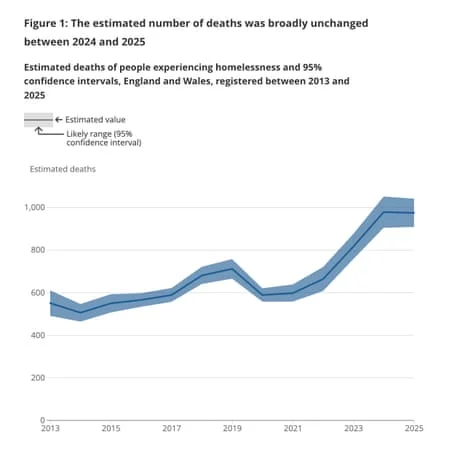
The debate over welfare reform comes at a time of heightened social anxiety in the United Kingdom. New data from the Office for National Statistics (ONS) revealed a grim milestone: an estimated 974 people experiencing homelessness died in England and Wales last year. This figure represents a 77% increase since 2013, highlighting the precarious nature of the UK’s housing and social safety nets. Critics of Badenoch’s proposal argue that cutting benefits for the under-25 demographic could inadvertently exacerbate the homelessness crisis, pushing more young people onto the streets.
Simultaneously, the UK government is grappling with a prison overcrowding crisis. Hundreds of inmates are scheduled for early release to alleviate pressure on the penal system, but probation officers have warned that many of these individuals will be released with no fixed address. The intersection of early prisoner releases, rising homelessness, and proposed benefit cuts for young people creates a complex set of challenges for policymakers.
Economic Implications of the Proposal
From an economic perspective, the Conservative plan is aimed at boosting the "participation rate"—the percentage of the population that is either working or actively seeking work. Since the COVID-19 pandemic, the UK has struggled with a rise in economic inactivity, which has constrained growth and contributed to labor shortages in sectors like hospitality, retail, and social care.
By forcing young people to engage with the labor market immediately, the party hopes to prevent the "scarring effect" of long-term youth unemployment, which can lead to lower lifetime earnings and a higher likelihood of future benefit dependency. However, economists warn that the "Get to Work Allowance" and the subsequent "Subsistence Allowance" could reduce consumer spending among young adults, potentially impacting local economies that rely on their patronage.
The party’s news release did not provide specific figures regarding the projected savings or the costs of hiring the thousands of new "Get to Work Managers" required to administer the scheme. Without these details, the fiscal impact of the policy remains a subject of intense debate among budget analysts and social advocacy groups.
The Path Forward for Welfare Reform
As the Conservative Party conference begins, the proposal is expected to be a central theme of the proceedings. It serves as a litmus test for the party’s appetite for radical reform and its willingness to embrace more paternalistic governance. While the plan offers a clear vision for reducing the welfare bill and tackling youth inactivity, its success depends on the availability of entry-level jobs and the capacity of the job center infrastructure to provide the promised intensive support.
The proposal has set the stage for a major ideological battle over the role of the state in the lives of its youngest citizens. Whether the "tough love" of the Get to Work Allowance will lead to a more productive workforce or a more impoverished youth population remains the central question for the British public. As the political landscape continues to shift, the fate of Universal Credit for the under-25s will likely remain a flashpoint in the national conversation for months to come.