The Specter of Civilizational Collapse
The notion that civilizations are inherently fragile and prone to collapse is not a new one. Throughout history, from the Bronze Age collapses to the fall of the Roman Empire, evidence abounds of societies that reached great heights only to crumble under their own weight or external pressures. These collapses are rarely attributed to a single cause but rather a complex interplay of internal weaknesses and external shocks.
Examining these historical precedents, experts point to common threads. Overpopulation, resource depletion, environmental degradation, and internal social stratification have frequently been identified as significant contributing factors. When a civilization’s demands exceed its capacity to sustain itself, the foundations begin to erode, making it vulnerable to collapse.
Historical Precedents: Lessons from the Past
The collapse of the Roman Empire, a civilization that shaped Western civilization for centuries, serves as a stark reminder of this vulnerability. Internal strife, economic instability, and relentless pressure from migrating tribes ultimately led to its fragmentation. Similarly, the Maya civilization, despite its advanced astronomical knowledge and complex societal structures, saw its urban centers gradually abandoned, a process attributed to prolonged drought and environmental mismanagement.
The Indus Valley Civilization, one of the world’s earliest urban cultures, also experienced a decline, with scholars suggesting a shift in monsoon patterns and changes in river courses played a crucial role in its eventual disappearance. These historical case studies offer invaluable, albeit often grim, insights into the forces that can undermine even the most robust societies. They highlight the precarious balance between societal advancement and ecological sustainability.
Contemporary Echoes: Modern Parallels to Ancient Downfalls
The discussions at Doha Debates illuminated striking parallels between historical patterns of collapse and the challenges facing the world today. Climate change, a rapidly escalating global crisis, mirrors the environmental pressures that plagued ancient civilizations. Rising sea levels, extreme weather events, and the depletion of vital resources threaten the stability of modern nations, raising concerns about long-term societal viability.
Furthermore, the growing chasm between the wealthy and the impoverished, both within and between nations, echoes the internal social stratification that weakened past empires. This widening inequality can fuel social unrest, erode trust in institutions, and create fertile ground for political instability. The interconnectedness of the modern world, while offering immense benefits, also amplifies the potential for cascading failures, where a crisis in one region can rapidly destabilize others.
The Role of Technology: A Double-Edged Sword
Technology, often hailed as humanity’s greatest tool for progress, was also a focal point of the debate regarding civilizational resilience. While technological advancements have undoubtedly propelled human development, they also present new vulnerabilities. The reliance on complex digital infrastructure, for instance, makes societies susceptible to cyberattacks and systemic failures.
The potential for misuse of advanced technologies, such as artificial intelligence and biotechnology, also raises ethical and existential questions. The panel explored whether humanity possesses the wisdom and foresight to manage these powerful tools responsibly, or if they, too, could become agents of decline. The historical record offers little comfort, as advancements in warfare and resource extraction have often contributed to societal destabilization in the past.
Navigating the Future: Pathways to Resilience
Despite the sobering historical narratives and contemporary anxieties, the Doha Debates offered a glimmer of hope by exploring pathways toward greater civilizational resilience. The consensus among the panelists was that actively learning from the past and fostering a proactive, adaptive approach is crucial. This involves a fundamental shift in our collective mindset and priorities.
Investing in sustainable practices, promoting equitable distribution of resources, and strengthening global cooperation were identified as paramount. Education plays a vital role, not only in imparting knowledge but also in cultivating critical thinking, empathy, and a sense of shared responsibility. Building robust and adaptable institutions that can respond effectively to unforeseen challenges is also key.
The Imperative of Global Cooperation
In an increasingly interconnected world, the concept of isolated national resilience is becoming obsolete. The threats facing civilizations today are inherently global, requiring unprecedented levels of international collaboration. Climate change, pandemics, and economic instability do not recognize borders.
The discussions emphasized that overcoming these challenges necessitates a departure from narrow self-interest and a commitment to collective action. Building a future where civilizations can thrive requires a shared vision and a willingness to work together across political, economic, and cultural divides. This is perhaps the most significant lesson from history: societies that failed to cooperate internally or externally were often the first to succumb.
The Human Factor: Agency and Choice
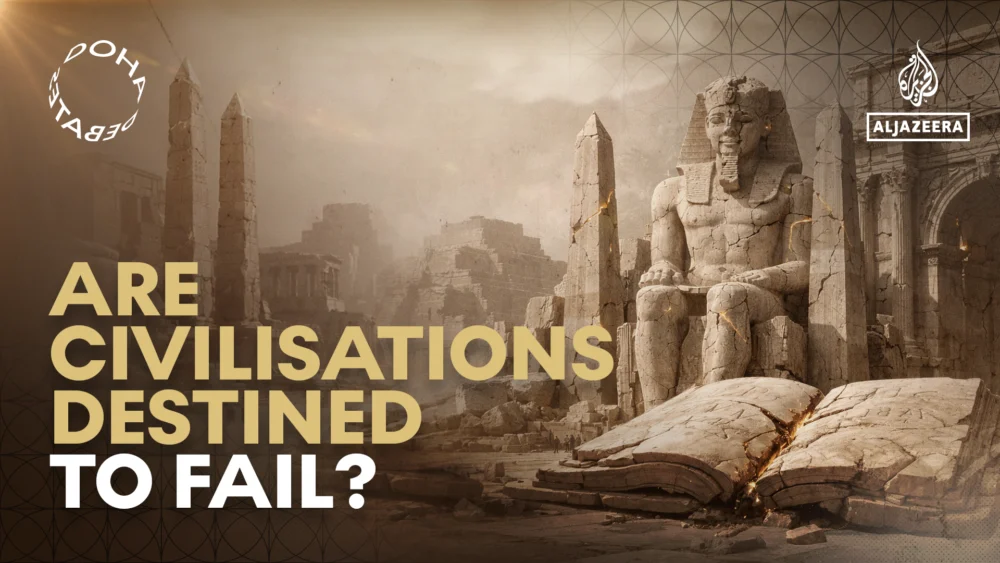
Ultimately, the question of whether civilizations are destined to fail hinges on the choices humanity makes. While historical forces are powerful, they are not entirely deterministic. The capacity for innovation, adaptation, and collective action offers a counterpoint to the narrative of inevitable decline.
The Doha Debates served as a powerful reminder that the future of human civilization is not a predetermined outcome but a dynamic process shaped by our decisions and actions today. The ongoing dialogue and the willingness to confront uncomfortable truths are themselves indicators of a civilization striving for self-preservation and a more sustainable future. The quest to understand and avoid the pitfalls of the past remains an urgent and ongoing endeavor.