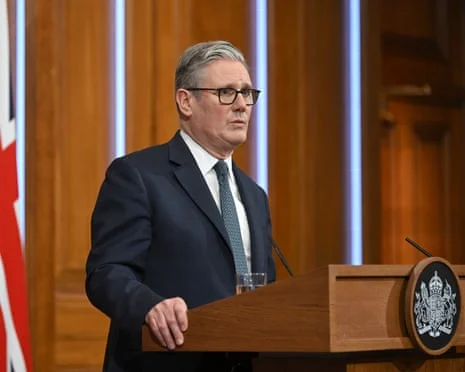
President Donald Trump asserted on Thursday that the United States must play a decisive role in the appointment of Iran’s next supreme leader, explicitly comparing the situation to recent leadership changes in Venezuela. In an interview with Axios, Trump dismissed the possibility of Mojtaba Khamenei succeeding his late father, Ali Khamenei, calling the younger Khamenei a "lightweight" and declaring his potential leadership "unacceptable" to American interests.
The president’s remarks come during a period of intense regional volatility following the assassination of Ali Khamenei during a joint U.S.-Israeli military operation last Saturday. Trump suggested that the selection process currently underway in Tehran is a "waste of time" unless the U.S. is a primary stakeholder in the decision. He noted that the goal is to prevent a cycle of conflict, stating that a leader who continues the previous regime’s policies would likely force the United States back into a state of war within five years.
The comparison to Venezuela refers to the recent transition of power in Caracas, where Delcy Rodriguez assumed leadership after U.S. forces captured President Nicolás Maduro in January. Trump indicated that the "Venezuela model" of intervention is his preferred blueprint for ensuring that the next head of the Iranian state is someone who will bring "harmony and peace" to the region rather than maintaining the status quo of the Islamic Republic.
Trump Rejects Mojtaba Khamenei as Potential Successor
While Mojtaba Khamenei is widely considered the frontrunner to succeed his father, Trump’s public rejection of his candidacy adds a new layer of complexity to the succession crisis. The president emphasized that the U.S. would not accept any figure who seeks to perpetuate the geopolitical strategies of the former supreme leader. He told reporters that while his administration previously had several preferred candidates in mind, "most of the people we had in mind are dead," a nod to the extensive nature of the recent military strikes against the Iranian leadership structure.
This stance on regime change appears to conflict with statements made by other high-ranking officials within the administration. On Wednesday, Defense Secretary Pete Hegseth insisted that the primary goal of the current military operation was not regime change, but rather the systematic destruction of Iran’s nuclear and military capabilities. This discrepancy in messaging has created a sense of uncertainty regarding the ultimate objective of the U.S. presence in the region.

Administration officials have spent the last several days pivoting their public-facing narrative to focus on the immediate threat posed by Iran’s weapons programs. However, Trump’s latest comments suggest that his personal focus remains on the total overhaul of the Iranian government. The president has suggested multiple times since the assault began that he has a specific vision for the country’s future leadership, though no names of potential American-backed successors have been released to the public.
Congressional Battles Over War Powers and DHS Funding
The conflict has triggered a legislative firestorm in Washington, as lawmakers grapple with the limits of executive power during wartime. On Wednesday, the U.S. Senate narrowly defeated a war powers resolution that would have required the president to seek congressional authorization before continuing military actions in Iran. The 47-53 vote largely followed party lines, with Senator Rand Paul of Kentucky being the lone Republican to support the measure, and Senator John Fetterman of Pennsylvania being the only Democrat to oppose it.
Fetterman’s break from his party was marked by a forceful defense of the military strikes. In a televised interview, the Pennsylvania senator argued that the elimination of the Iranian leadership was a "great development for the region" and prioritized "country over party." Fetterman went as far as to support the ongoing targeting of potential Iranian leaders, stating that the U.S. and Israel should "just keep killing them until they’re gone," or until a leader emerges who is willing to coexist peacefully.
The House of Representatives is expected to vote on a similar war powers resolution on Thursday. The outcome is anticipated to be close, serving as a critical barometer for the level of political support Trump enjoys as he continues to bypass Congress on matters of war. Top Democrats, including Gregory Meeks of the House Foreign Affairs Committee, have criticized the president’s actions, asserting that "Donald Trump is not a king" and must make a formal case to the American people for continued intervention.
Simultaneously, the war has become a focal point in the debate over domestic security funding. The Department of Homeland Security (DHS) has been shuttered for three weeks following a failure to pass an appropriations bill. Republicans are now using the threat of retaliatory terror attacks linked to the Iran conflict to pressure Democrats into passing a funding measure. House Speaker Mike Johnson stated that the military action in Iran makes it "urgent and crucial" to have a fully staffed and funded DHS.
Domestic Fallout: Gas Prices and Global Supply Chains
The economic consequences of the conflict are beginning to be felt by American consumers. According to the latest data from AAA, the average price of gasoline in the United States has surged to $3.25 per gallon, an 11-month high. This represents a 27-cent increase in just one week, directly coinciding with the start of the U.S.-Israeli strikes.
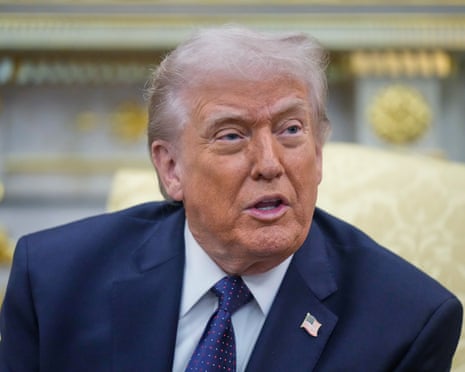
The spike is primarily attributed to disruptions in the Strait of Hormuz, a critical maritime choke point through which approximately 20% of the world’s crude oil passes. As the war enters its sixth day, shipping companies have reported significant delays and increased insurance premiums for vessels navigating the region. The White House has faced mounting questions regarding its strategy to stabilize energy markets as the conflict threatens to expand into a broader regional war.
In addition to economic pressures, the State Department is managing a massive evacuation effort. Spokesperson Dylan Johnson confirmed that nearly 20,000 American citizens have returned to the U.S. from the Middle East since the weekend. Thousands more remain stranded as major airlines cancel flights and regional airports scale back operations. The administration has faced criticism from some travelers who claim the State Department hotline provided little to no guidance during the initial hours of the military surge.
Public Health Crisis: The Measles Outbreak and CDC Response
Amidst the focus on international conflict, the Trump administration is also facing scrutiny for its handling of a domestic public health crisis. The number of measles cases in the United States has officially surpassed 1,000, with experts warning that the virus is continuing to accelerate. Public health advocates have accused the administration of failing to take necessary containment steps, citing a "relaxed attitude" toward vaccination and funding.
The controversy was heightened by comments from former CDC officials who suggested that the surge in measles cases was being treated as the "cost of doing business." While the Department of Health and Human Services has denied claims that measles has been deprioritized, critics argue that the administration’s messaging has caused "tremendous confusion." Some senior officials have reportedly advocated for "alternatives" to the measles vaccine, despite a consensus in the medical community regarding its safety and effectiveness.
The Strained ‘Special Relationship’ with the United Kingdom
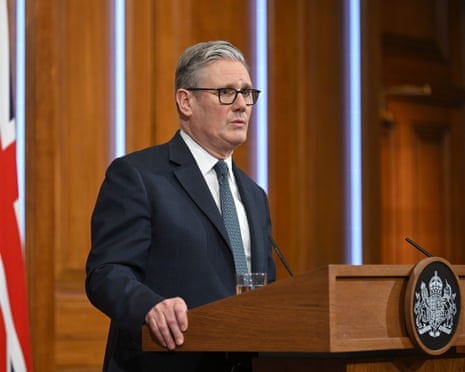
The international coalition supporting the U.S. actions has also shown signs of strain. British Prime Minister Keir Starmer held a press conference at Downing Street on Thursday to address the "special relationship" between the U.S. and the UK. This follows a public rebuke from Trump, who criticized Starmer for refusing to allow U.S. forces to use British military bases for strikes against Iran.
Trump reportedly told German Chancellor Friedrich Merz that Starmer was "no Churchill," a comment that has resonated throughout the British political establishment. Starmer defended his position, stating that while the relationship remains in operation, he must make decisions that are in the best interest of the United Kingdom. Despite the friction, the UK has announced it is sending more fighter jets to the region and has begun repatriation flights for its citizens.
Texas Runoff and the National Political Landscape
Domestic politics continue to churn alongside the international crisis. Trump announced on Truth Social that he intends to endorse a candidate in the competitive Texas Republican Senate runoff between incumbent John Cornyn and Attorney General Ken Paxton. Neither candidate secured the required 50% of the vote in Tuesday’s primary.
Trump’s involvement is expected to be decisive. He indicated that once he makes his choice, he will ask the other candidate to "immediately drop out of the race" to ensure party unity. The president emphasized the importance of the Texas seat in the Republican effort to reclaim the U.S. Senate, noting that no Democrat has won a statewide election in the Lone Star State since 1994.
As the administration manages these various fronts, the human cost of the conflict continues to mount. The Pentagon recently released the names of the final two of six U.S. service members killed in a drone strike in Kuwait: Chief Warrant Officer Robert Marzan and Maj. Jeffrey O’Brien. The White House confirmed that Trump plans to attend the dignified transfer of their remains, a somber reminder of the stakes involved in the rapidly evolving war with Iran.