Hulu is poised to expand the acclaimed The Handmaid’s Tale universe with the highly anticipated sequel series, The Testaments, set to premiere on April 8. This new narrative, diverging in its timeline from Margaret Atwood’s source novel, promises a fresh perspective on the dystopian Republic of Gilead through the eyes of a new generation and the evolving complexities of established characters. Showrunner Bruce Miller, who helmed the Emmy-winning The Handmaid’s Tale for six seasons, has indicated a deliberate move away from simply re-treading familiar ground, opting instead for a different entry point into the oppressive regime.
The Enduring Legacy of Gilead
Margaret Atwood’s 1985 novel, The Handmaid’s Tale, introduced readers to Gilead, a near-future theocratic state that emerged from the ruins of the United States, stripping women of their fundamental rights amidst a global fertility crisis. The novel’s chilling prescience and its exploration of patriarchal control, bodily autonomy, and resistance resonated deeply, becoming a literary touchstone. Its television adaptation, starring Elisabeth Moss as protagonist June Osborne, propelled the story into mainstream consciousness, earning critical acclaim and numerous awards, including multiple Emmys. The series’ vivid imagery, particularly the iconic red cloaks of the handmaids, became a powerful symbol of protest and a cultural emblem during periods of heightened political tension, especially concerning women’s reproductive rights in the U.S.
After nearly a decade chronicling June Osborne’s quiet revolution against her bleak life of servitude and her relentless fight to reunite with her daughter Hannah and husband Luke, Miller recognized the need for a fresh narrative thrust. Atwood herself provided the blueprint, publishing The Testaments in 2019, a literary sequel set 15 years after the original novel. While Atwood’s novel served as inspiration, the television adaptation of The Testaments will pick up just four years after The Handmaid’s Tale series finale, where June vowed to continue her underground fight with the Mayday resistance. This creative decision by Miller’s team aims to bridge the narrative gap more closely for the television audience, maintaining continuity with the emotional stakes left by the original series.
A New Chapter: Shifting Perspectives in The Testaments
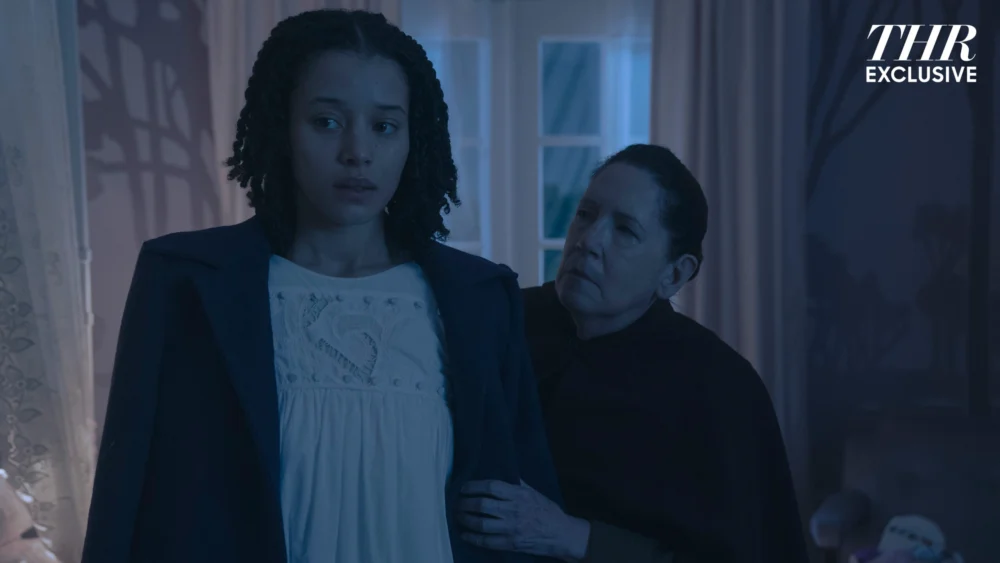
The new 10-episode series will shift its primary focus from the handmaids to their successors: young women being groomed for marriage to Gilead’s ruling Commanders within the preparatory academy overseen by Aunt Lydia. Ann Dowd reprises her Emmy-winning role as Aunt Lydia, a character whose evolution is central to The Testaments. Once a ruthless disciplinarian, Lydia is now portrayed as a double agent, working from within the halls of power to dismantle Gilead. This transformation was foreshadowed in the final season of The Handmaid’s Tale, where Lydia’s increasing disillusionment with the hypocrisy of the ruling elite and the horrific realities of her own complicity became apparent.

Speaking from the Toronto set last July, Miller confirmed to The Hollywood Reporter that his version of The Testaments focuses on a "compact bit of the story that takes place with the girls when they’re going through this process of finding husbands." This narrative choice allows for an intimate exploration of indoctrination and budding rebellion among the next generation. Dowd expressed her enthusiasm for continuing Lydia’s complex journey, highlighting her character’s internal struggle. "She’s wrestling with the realization that the Commanders were not who she thought they were, and their horrid, despicable behavior," Dowd noted, emphasizing Lydia’s strategic intelligence as she meticulously records evidence of the regime’s corruption. Flashbacks will further illuminate Lydia’s life before Gilead, providing crucial context for her radical shift in allegiances.
The Young Protagonists: Agnes and Daisy
The first season of The Testaments largely centers on Agnes MacKenzie, played by Chase Infiniti, who is revealed to be Hannah, June and Luke’s daughter. Agnes has grown up entirely within Gilead, making her "well-established, well-grounded in the world," as Infiniti described it. Her world is soon disrupted by the arrival of Daisy, portrayed by Lucy Halliday, a newcomer from Toronto with hidden motives for joining Aunt Lydia’s academy. Lydia, always calculating, orchestrates their pairing, seemingly aware of Agnes’s true lineage and intrigued by June’s "genetic influence." The immediate kinship that forms between Agnes and Daisy, despite the academy’s restrictive environment, is a central dynamic of the series. Miller described their bond as "remarkable," noting that it develops so smoothly that both girls feel a sense of unease.
Daisy serves as the audience’s entry point into the seemingly normal yet deeply oppressive world of Gilead for these young women. Halliday characterized Daisy as verbalizing "the thoughts every viewer has subconsciously but never says aloud" when watching The Handmaid’s Tale. Daisy’s arrival is driven by a profound mission: to dismantle Gilead, a force she holds responsible for decimating her life in Toronto, even from afar. What she does not anticipate, however, is forming genuine connections with the other girls, whom she initially perceived as "robots" devoid of individual dreams or emotions. This unexpected solidarity becomes a "wonderful byproduct" of her venture into Gilead, transforming her perspective on the regime and its inhabitants.
A “Beautiful Darkness” and Shifting Aesthetics
A notable departure from The Handmaid’s Tale lies in The Testaments‘ aesthetic. While the original series was known for its stark, often grim visual palette, the sequel embraces a "beautiful darkness," as Infiniti described it. This involves a more youthful, almost whimsical appearance that initially masks the cruel realities imposed upon these girls. The "rose-colored glasses" eventually come off, thrusting them into a future of servitude with little preparation. This stylistic choice underscores the theme of forced innocence and the gradual awakening to a brutal reality.
Color symbolism, a hallmark of The Handmaid’s Tale (most famously the handmaids’ red), continues to play a central role. Daisy, as a "Pearl Girl" (an Aunt-in-training), stands out in white. The majority of the other young women, eligible for marriage, are dressed in a new "plum" color. Miller explained the extensive discussions behind this choice, emphasizing the desire for a natural, rich hue that symbolizes ripeness and growth, contrasting with the synthetic and restrictive feel of other Gilead uniforms. This visual language subtly communicates the characters’ roles and the insidious nature of Gilead’s control.

Political Resonance and the Power of Youth
The arrival of The Testaments is particularly resonant in the current socio-political climate. The Handmaid’s Tale gained significant cultural traction during the Trump administration, becoming an anti-Trump resistance symbol. Now, The Testaments debuts amidst ongoing debates and assaults on women’s rights, particularly concerning bodily autonomy in the United States. This new expansion, focusing on the constraints imposed on the next generation, feels like an inevitable and timely response from the franchise to contemporary political landscapes.
Miller powerfully articulated the underlying theme of the series: "There’s nothing in the world as powerful as a 14-year-old girl." He draws parallels between the forbidden friendships among the handmaids and the new generation of girls in The Testaments. Despite being commanded to prioritize their future husbands, these young women inevitably forge deep bonds, putting each other first. "They will do anything for the best friends they’re not supposed to have," Miller observed, asserting that these alliances represent a potent force for change within Gilead. This emphasis on youthful solidarity and its revolutionary potential positions The Testaments not just as a continuation of a story, but as a renewed call for resistance and hope.
The first three episodes of The Testaments are scheduled for release on April 8, with subsequent episodes dropping weekly on Hulu, promising a deeper dive into the complexities and cracks within the Republic of Gilead.