Pixar’s latest animated feature, Hoppers, is poised to dominate the weekend box office, securing a commanding first-place finish with an estimated domestic opening of $40 million or more, marking a significant triumph for the storied studio, while Warner Bros.’ The Bride!, Maggie Gyllenhaal’s highly anticipated sophomore directorial effort, has dramatically underperformed, entering bomb territory with dismal critical and audience reception. The stark contrast in their theatrical debuts underscores the diverging fortunes within the current film industry, highlighting Pixar’s resurgence with original content and the challenging landscape for adult-oriented, high-budget productions that fail to connect with audiences. This weekend’s box office results present a clear win for Disney’s animation powerhouse and a notable setback for Warner Bros.’ strategy of backing bold, original cinematic visions.
Pixar’s Resurgence with ‘Hoppers’
Hoppers‘ projected $40 million-plus domestic launch represents the largest opening for any original Hollywood animated film since Pixar’s own Coco in 2017. This performance is a critical indicator of renewed strength for Pixar, which has faced a period of adjustment following the pandemic-era strategy of debuting several films directly on Disney+ or with truncated theatrical windows, a move that some industry observers believed diluted the brand’s theatrical impact. Films like Soul, Luca, and Turning Red found success on streaming, but Lightyear struggled significantly at the box office in 2022, and Elemental, despite a strong eventual showing, began with a soft opening in 2023. Hoppers‘ robust debut signals a return to form for the studio in the theatrical marketplace, reaffirming the enduring appeal of its unique storytelling and animation quality.
Globally, Hoppers is tracking towards an impressive worldwide start exceeding $85 million, a strong showing for both Pixar and its parent company, Disney. The film has garnered widespread critical acclaim, boasting a 94 percent "Fresh" rating on Rotten Tomatoes as of early Saturday morning. This positive critical consensus is mirrored by audience sentiment, with an identical 94 percent audience score on the same platform, an "A" CinemaScore, and a perfect five-out-of-five stars from PostTrak exit polls. These metrics collectively indicate strong word-of-mouth, which is crucial for animated films to maintain momentum throughout their theatrical run, especially during competitive summer months. Early access screenings had already hinted at this enthusiastic reception, with moviegoers consistently praising the film’s innovative premise and its blend of humor and heartfelt storytelling.
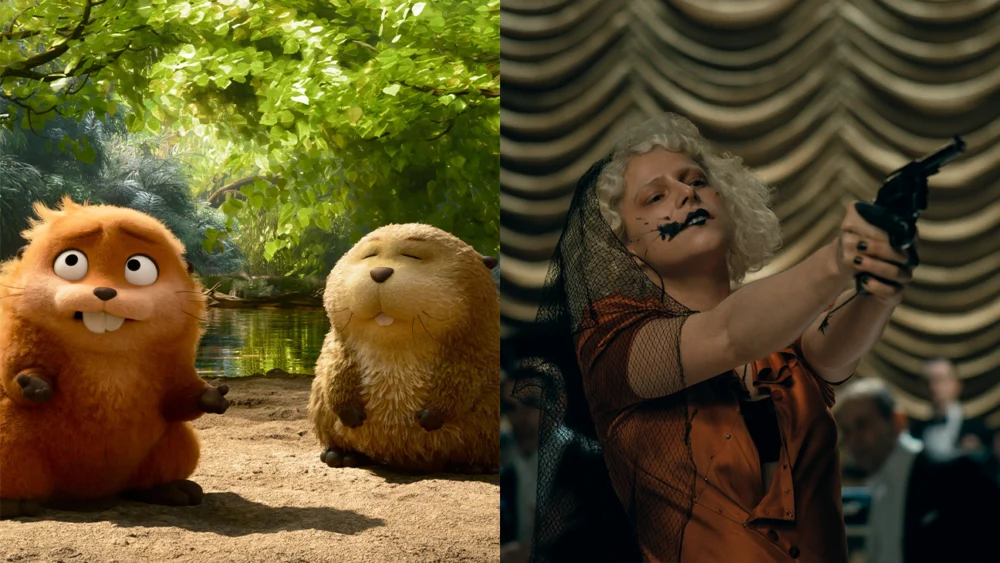
The film’s plot centers on Mabel, voiced by Piper Curda, an enthusiastic animal lover who discovers a groundbreaking technology. This innovation allows her to "hop" her consciousness into a remarkably lifelike robotic beaver, enabling direct communication with animals. What begins as an opportunity to understand the animal kingdom transforms into an epic adventure as Mabel uncovers profound mysteries far beyond her initial expectations. She quickly forms an unlikely alliance with a charismatic beaver named King George, voiced by Bobby Moynihan, who becomes her confidant and guide. Together, they must rally the entire animal kingdom to confront an imminent and substantial human-made threat: the smooth-talking local mayor, Jerry Generazzo, voiced by Jon Hamm. The ensemble voice cast is extensive and star-studded, featuring renowned talents such as Kathy Najimy, Dave Franco, the legendary Meryl Streep, Eduardo Franco, Aparna Nancherla, Tom Law, Sam Richardson, Melissa Villaseñor, Isiah Whitlock Jr., Steve Purcell, Ego Nwodim, Nichole Sakura, Karen Huie, and Vanessa Bayer, each contributing to the film’s vibrant and diverse character roster.
Daniel Chong directed Hoppers, with Nicole Paradis Grindle serving as producer. The original score, a key element in many Pixar productions, was composed by Mark Mothersbaugh, known for his distinctive musical style. On Friday, the film accumulated an impressive $13.4 million, a figure that includes revenues from preview screenings held earlier in the week. This strong opening day performance lays a solid foundation for a successful weekend and potentially a long, profitable run at the box office.
‘The Bride!’ Stumbles at the Box Office
In stark contrast to Pixar’s success, Maggie Gyllenhaal’s latest directorial endeavor, The Bride!, faced an immediate and severe backlash from both audiences and critics, resulting in a disappointing opening weekend. The R-rated gothic romance managed to earn a mere $3 million on Friday, including $1 million from preview screenings. This performance falls dramatically short of initial studio projections, which had optimistically forecasted an opening in the $16 million to $18 million range. Rival industry analysts are now projecting a grim total weekend take of as low as $7 million, potentially placing it in third position, behind even Scream 7, which itself is projected to see a significant 70 percent to 74 percent drop in its second weekend—a decline that, while steep, is not entirely unexpected for the horror genre.
This anemic box office showing marks an abrupt end to what had been a remarkable, year-long winning streak for Warner Bros. studio heads Michael De Luca and Pamela Abdy. The duo has cultivated a reputation for taking bold, original swings with their film slate, often championing unique and artistically driven projects. Their commitment to distinctive filmmaking has garnered critical acclaim, evidenced by their two films, Sinners and One Battle After Another, currently in the running for Best Picture at the upcoming March 16 Oscar ceremony. The Bride!’s critical and commercial failure, therefore, represents a significant setback for their otherwise successful tenure.
Audience sentiment for The Bride! is unequivocally negative, reflected in a "terrible" 71 percent audience score on Rotten Tomatoes. Critics were only slightly more forgiving, with a 60 percent score, barely crossing the threshold for "Fresh" but far from indicating widespread approval. Further compounding its woes, the film was slapped with a "C+" CinemaScore, a metric often considered a crucial indicator of a film’s word-of-mouth potential and theatrical longevity. For an $80 million production, a "C+" CinemaScore typically signals a steep decline in subsequent weekends and substantial financial losses for the studio.
The film, which draws inspiration from the classic 1935 Universal Monsters film The Bride of Frankenstein, had already made headlines earlier in the week. Director Maggie Gyllenhaal revealed on a podcast that Warner Bros. studio chiefs Pamela Abdy and Michael De Luca had requested the removal of some of the film’s more violent scenes. While Gyllenhaal publicly acknowledged Abdy’s "understanding" of her vision, the revelation sparked discussions about creative control versus commercial viability in major studio productions, potentially influencing early critical perceptions and audience expectations.
Starring Jessie Buckley and Christian Bale, The Bride! is Gyllenhaal’s second feature as a director. Her debut, the indie drama The Lost Daughter, was a critical darling, earning numerous awards and accolades, including Oscar nominations for Best Adapted Screenplay for Gyllenhaal, Best Actress for Olivia Colman, and Best Supporting Actress for Buckley. The success of her first film had set a high bar for The Bride!, making its current box office and critical reception particularly disappointing. Buckley herself is having a strong awards season, nominated for an Oscar this year for Best Actress for her performance in Hamnet, highlighting the individual talent involved in The Bride! despite its overall poor performance.
Broader Implications for the Film Industry
The divergent box office performances of Hoppers and The Bride! offer a microcosm of the contemporary film industry’s complexities. For Pixar, Hoppers‘ success reinforces the enduring appeal of high-quality, original animated content, particularly when backed by strong critical reviews and positive audience word-of-mouth. It suggests that despite shifts in consumption habits and the prevalence of established franchises, audiences are still eager to embrace new stories and characters on the big screen, especially those from a beloved studio known for its emotional depth and artistic integrity. This win is crucial for Disney as it continues to navigate the post-pandemic landscape, demonstrating the power of its animation division to drive theatrical attendance and generate significant revenue. It may also encourage Pixar to continue investing in original stories rather than relying solely on sequels or spin-offs, a strategy that has sometimes yielded mixed results.
Conversely, The Bride!’s struggles highlight the significant risks associated with mid-to-high budget original productions, particularly those targeting adult audiences with challenging themes or artistic sensibilities. An $80 million budget, coupled with a marketing spend that could easily push total costs well over $100 million, requires substantial box office returns to break even, let alone turn a profit. When a film fails to resonate critically or with its intended audience, as evidenced by The Bride!’s low CinemaScore and Rotten Tomatoes ratings, the financial consequences can be severe. This outcome may prompt Warner Bros. and other studios to re-evaluate their appetite for risk on such projects, potentially leading to a greater emphasis on established intellectual property or more modestly budgeted films for niche audiences. The controversy surrounding the creative process, particularly the reported studio requests for content changes, could also spark further debate within the industry about the delicate balance between artistic vision and studio oversight, especially in a climate where every theatrical release is under intense scrutiny.
The weekend’s box office report paints a clear picture: while family-friendly animation from a trusted brand like Pixar continues to be a safe bet for major theatrical success, the landscape for adult-oriented, original cinematic endeavors remains fraught with peril. Studios are increasingly facing an all-or-nothing scenario, where films either become breakout hits or significant flops, with fewer examples of moderate success in between. As the industry evolves, this weekend’s results will undoubtedly influence future greenlighting decisions, marketing strategies, and the ongoing debate about the types of films that can thrive in a highly competitive theatrical environment.