Iran’s leadership is projecting conflicting signals regarding recent retaliatory strikes against neighboring countries, leaving regional allies and international observers uncertain about Tehran’s strategic intentions amidst escalating tensions. While President Masoud Pezeshkian offered an apology to nations affected by Iran’s military actions, a powerful faction within the government, the Islamic Revolutionary Guard Corps (IRGC), quickly countered with a stern warning, asserting that attacks would continue if Iran’s adversaries, the United States and Israel, utilized regional territories for offensive operations. This divergence in statements highlights a complex internal dynamic within Iran’s foreign policy apparatus, particularly concerning its assertive posture in the Persian Gulf.
Shifting Statements Amidst Regional Strikes
The confusion surrounding Iran’s intentions stems from a series of contradictory pronouncements made over a weekend marked by reports of further Iranian strikes across the Gulf. On Saturday and Sunday, several nations, including Kuwait, Qatar, Saudi Arabia, and the United Arab Emirates, reported being targeted by Iranian actions. These incidents have amplified concerns about the potential for wider regional conflict.
Presidential Apology and a Conditional Halt
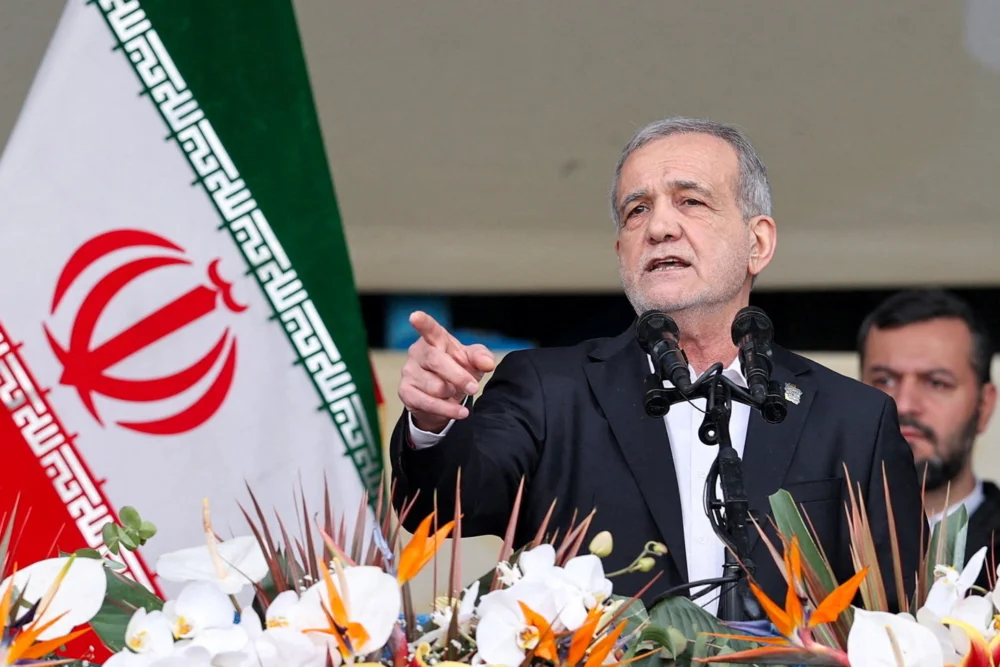
President Pezeshkian, in a recorded message, extended an apology to neighboring countries that had been subjected to Iran’s retaliatory strikes. He framed these actions as a response to an alleged military offensive by the United States and Israel against Iran. "I personally apologize to neighboring countries that were attacked by Iran," Pezeshkian stated, emphasizing that Iran’s armed forces were defending its territorial integrity.
Pezeshkian’s statement, however, was carefully worded, suggesting a conditional cessation of attacks. He pledged to halt strikes against neighboring countries "unless an attack on Iran originated from their soil." He further articulated a desire for good relations, referring to regional nations as "brothers" and expressing solidarity.
IRGC’s Unyielding Stance on Retaliation
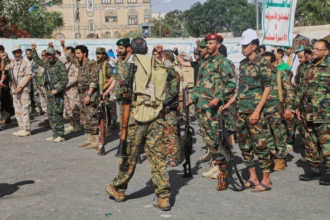
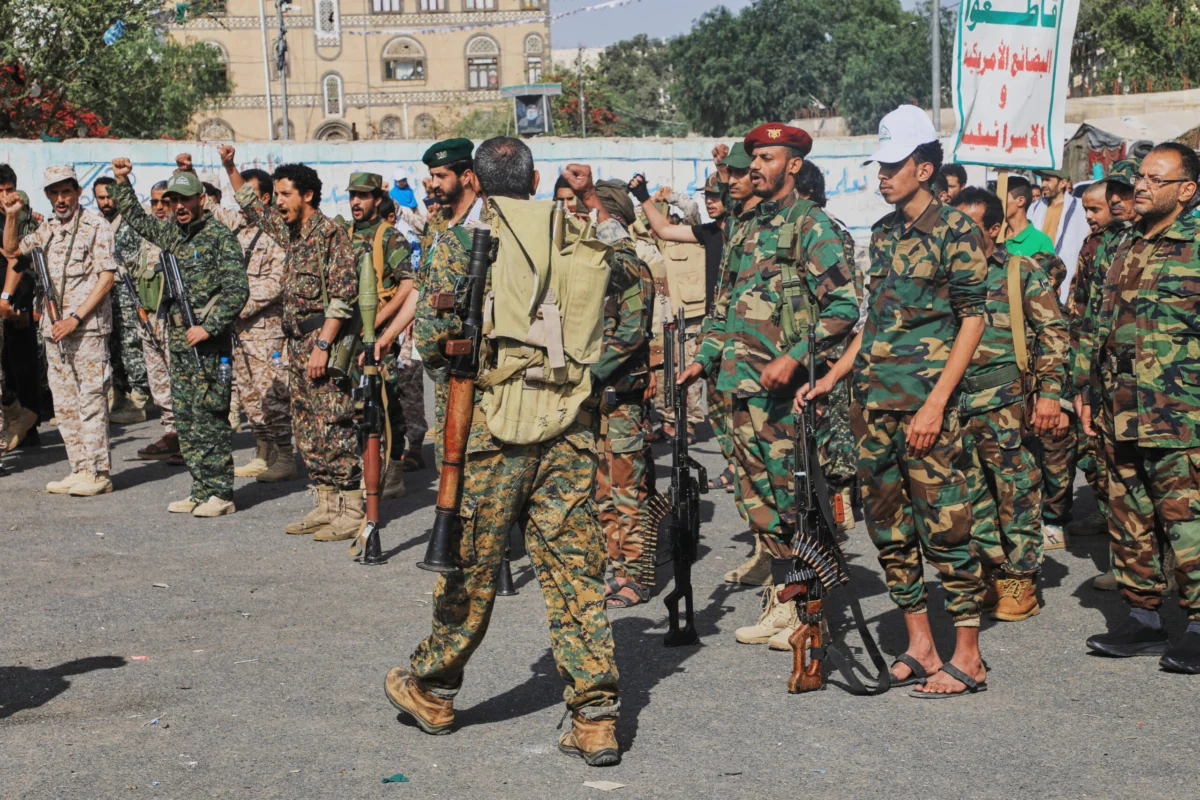
Almost immediately following President Pezeshkian’s conciliatory remarks, the IRGC issued a strong counter-statement. While the IRGC acknowledged respecting the sovereignty of neighboring countries and claimed no prior aggression, it issued a stark warning. The statement declared that if previous hostile actions persisted, all military bases and interests belonging to the United States and Israel in the region would be considered legitimate targets for "powerful and crushing strikes" by Iran’s armed forces.
This declaration from the IRGC, a powerful military and ideological force in Iran, underscored its significant influence on the country’s security and foreign policy decisions. The disparity between the president’s apology and the IRGC’s aggressive posturing immediately raised questions about who truly dictates Iran’s military actions in the region.
Clarifications and Assertions of Self-Defense
In subsequent clarifications, President Pezeshkian took to social media platform X to assert that Iran had not attacked its neighbors but rather had "targeted US military bases, facilities, and installations in the region." This attempt to reframe the narrative sought to distance Iran from direct aggression against its Arab neighbors, attributing its actions to responses against American and Israeli assets.
Adding to the chorus of assertive voices, Ali Larijani, the secretary of Iran’s Supreme National Security Council, echoed the IRGC’s sentiment. Larijani stated that Iran’s policy of responding to attacks originating from regional bases was a matter of "right and standing policy." He placed the onus on regional countries to prevent the U.S. from using their territories against Iran, warning that failure to do so would compel Iran to take matters into its own hands.
Interpreting the Mixed Signals: A Power Struggle?
The contradictory messages have led to significant confusion regarding Iran’s strategic objectives and its commitment to regional stability. Analysts suggest that the divergence reflects an internal power struggle between the more moderate, diplomatic wing represented by the president and the hardline, security-focused faction embodied by the IRGC.
According to Resul Serdar, a correspondent for Al Jazeera, civilian politicians in Iran, including the president, often have limited influence on strategic matters like foreign and security policy, which are predominantly controlled by the Supreme Leader’s office and the IRGC. This dynamic suggests that while the president may express a desire for de-escalation or apology, the IRGC’s pronouncements carry more weight in shaping actual military operations.
President Pezeshkian later characterized the misinterpretation of his earlier remarks as the work of "the enemy that seeks to sow division." He reiterated Iran’s desire for good relations with its neighbors but maintained that the country would respond forcefully to any attacks originating from their territories, stressing that this response did not signify a dispute with those nations themselves.
The Iranian Ministry of Foreign Affairs issued its own statement, emphasizing that Iran’s "defensive operations against US military bases and installations in the region should by no means be construed as enmity or hostility towards the countries of the region." This official clarification aimed to reassure regional states that Iran’s actions were targeted and not indicative of broader animosity.
Khalid al-Jaber, executive director of the Middle East Council on Global Affairs in Doha, noted the series of "contradictory" messages, stating, "We don’t know which one is true. We don’t think now, in war, that Iran is going to stop attacking some infrastructure in the Gulf." He cited the attack on a water desalination plant in Bahrain as evidence of ongoing Iranian actions. Al-Jaber also expressed concern over the lack of clear interlocutors in Iran, stating, "Since the attack on Ayatollah Khamenei, it seems like there is no institute or a person or leadership we can talk to, or we can make a deal with, to try to understand what their perspective is, what their point of view is."
Focus on Specific Grievances: Azerbaijan and Turkey
Some analysts interpret President Pezeshkian’s subsequent clarifications about his remarks being "misconstrued" as being directed not at the immediate Gulf neighbors, but rather at countries like Azerbaijan and Turkey. This interpretation suggests a strategic calculation by Tehran to manage specific bilateral sensitivities.
Azerbaijan has been seeking an apology from Iran following a drone attack on its autonomous Nakhchivan exclave, an incident Tehran has denied responsibility for. Given the significant Azeri population within Iran, a perceived attack on Azerbaijan could potentially trigger internal repercussions.
Similarly, Turkey, a NATO member, reported a ballistic missile fired from Iran towards its airspace, which was intercepted. Iran’s armed forces have also denied any such missile launch. These incidents indicate that Iran’s actions and subsequent communications may also be calibrated to address specific concerns with these particular regional players, beyond the broader Gulf context.
Ali Vaez, director of the Iran project at the International Crisis Group, commented on Pezeshkian’s occasional "off-key remarks," attributing them to limited political experience in high-stakes situations. However, Vaez underscored that in wartime, such rhetorical missteps by civilian officials are secondary. "The only voice that truly matters is the IRGC’s," he concluded.
Gulf States Under Pressure and Cautious Response
The ongoing strikes have placed significant pressure on Gulf Cooperation Council (GCC) member states. On Sunday, Bahrain reported material damage to a water desalination plant from an Iranian drone attack, highlighting the critical infrastructure targeted. These plants are vital for supplying fresh water to the region’s population, and their disruption carries significant humanitarian implications.
Kuwait reported casualties among Ministry of Interior personnel and damage to its international airport and social security office due to attacks on Saturday. Saudi Arabia announced the foiling of an attack on its diplomatic quarter and the downing of several drones.
The GCC, comprising Bahrain, Kuwait, Oman, Qatar, Saudi Arabia, and the UAE, condemned Iran’s "dangerous acts of aggression" against Bahrain and Kuwait, warning of threats to regional security and stability. Despite intercepting most Iranian projectiles, Gulf states have so far refrained from launching retaliatory strikes against Iran.
Vaez suggests that while Gulf states possess the capacity for retaliation, such actions could escalate the conflict further, potentially provoking more aggressive responses from Iran. He also pointed out the political complexities for Gulf states, noting that "siding with Israel to bomb another Muslim state would also entail political consequences for the Gulf states."
U.S. Reaction and Iran’s Counter-Narrative
The conflicting messages from Tehran have also drawn reactions from international players, including the United States. Following President Pezeshkian’s initial apology, U.S. President Donald Trump characterized Iran as having "surrendered to its neighbors," labeling it "THE LOSER OF THE MIDDLE EAST."
However, Iranian observers, such as Hamidreza Gholamzadeh, director of the Iranian think tank Diplo House, dismissed Trump’s interpretation as "totally false." Gholamzadeh reiterated Iran’s core demand: that its neighbors cease cooperation with the U.S. and Israel and deny them the use of their territories for attacks against Iran, describing this as a "normal" and "legal" request. This framing positions Iran’s actions not as aggression, but as a defensive measure taken in response to perceived threats. The ongoing exchange of statements and actions underscores the volatile geopolitical landscape of the Persian Gulf, with Iran’s internal political dynamics playing a crucial role in shaping regional security.