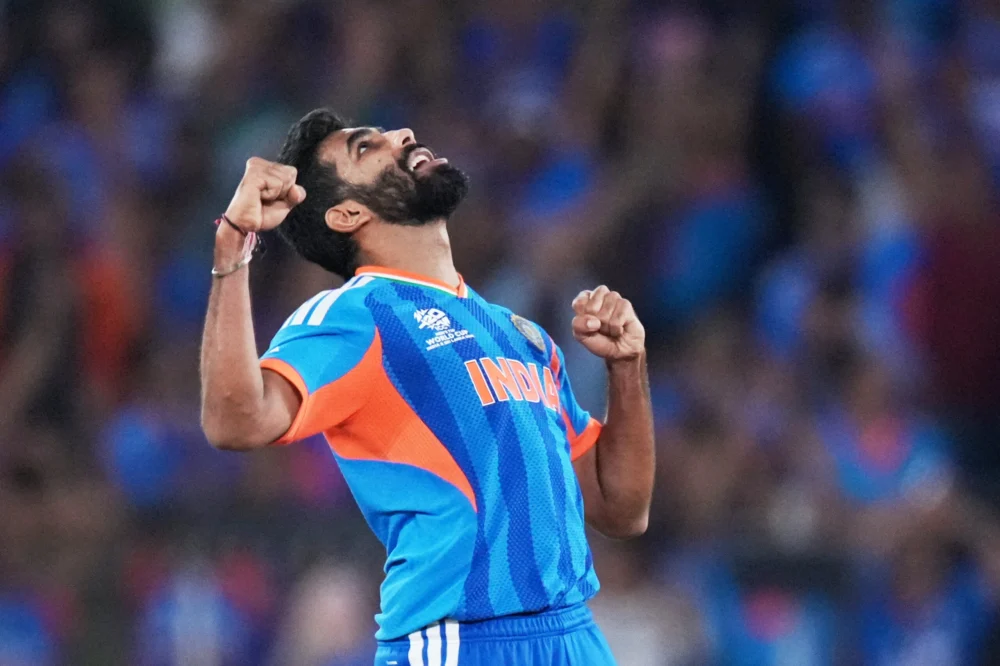
India etched their name in cricket history Sunday, becoming the first nation to win the T20 World Cup on home soil by defeating New Zealand by a commanding 96 runs in a pulsating final at the Narendra Modi Stadium in Ahmedabad. The victory, before a capacity crowd of 90,000, marks India’s third T20 World Cup title, a record in the sport’s shortest international format.
The triumph offered sweet redemption for the Indian squad, captained by Suryakumar Yadav. Two years prior, at the same iconic venue, the Indian team had fallen agonizingly short in the 50-over World Cup final, suffering their sole loss of that tournament. The sting of that defeat, which left legions of fans heartbroken, was decisively erased by this dominant performance.
A Batting Masterclass Sets the Stage
New Zealand captain Mitchell Santner won the toss and opted to bowl first, a decision that quickly backfired as India’s explosive batting lineup unleashed a formidable assault. The foundation for India’s imposing total was laid by an exceptional opening partnership, with Sanju Samson and Abhishek Sharma exhibiting audacious strokeplay.
Samson, carrying his prolific form from the semi-finals, set the tone by launching a six off the fifth ball he faced. Sharma, who had found his rhythm late in the tournament, matched Samson’s aggression, peppering the boundary with fours. The pair dismantled New Zealand’s pace attack, reaching a rapid 50-run stand within the fourth over. Their dominance continued, amassing 65 runs between overs four and six, leaving the Blackcaps searching for answers.
Sharma, in particular, was a revelation. After a somewhat subdued group stage, he exploded onto the scene with an electrifying 18-ball fifty, a blistering innings punctuated by three sixes and six fours. His fearless hitting put immense pressure on the New Zealand bowlers, who struggled to contain the relentless scoring rate.
Samson and Sharma’s Fireworks Ignite Ahmedabad
The Ahmedabad pitch, prepared with the final in mind, proved a batting paradise, and Samson and Sharma exploited it to the fullest. Sharma’s aggressive approach saw him reach his half-century in just 18 deliveries, a testament to his aggressive intent and newfound confidence. His fiery knock of 52 off 21 balls, featuring six boundaries and three sixes, showcased his potential as a destructive T20 opener.
Though Rachin Ravindra eventually broke the formidable partnership, trapping Sharma leg before wicket for 52, the momentum remained firmly with India. Ishan Kishan, stepping in at number three, ensured there was no let-up in the scoring, immediately finding the boundary twice in the same over. Kishan himself went on to score a swift 54 off just 25 balls, further solidifying India’s commanding position.
Sanju Samson continued his onslaught, reaching his own half-century in a mere 33 balls. He then targeted the returning Lockie Ferguson with brutal efficiency, smashing three sixes and a four in a single over to take the pacer out of the attack. This aggressive phase propelled India towards a potentially record-breaking total.

India Sets a New Benchmark in T20 World Cup Finals
India’s batting prowess was on full display as they reached the 200-run mark in just the 15th over, setting their sights on a score that could approach 300. The home side’s batting depth and aggressive intent meant they were well-positioned to post the highest total ever recorded in a T20 World Cup final.
However, New Zealand managed a brief resurgence through Jimmy Neesham, who took three crucial wickets in a single over. This spell saw the dismissals of Samson, Kishan, and captain Suryakumar Yadav, with only a single run scored between them. This mini-collapse, coupled with the wicket of Hardik Pandya for 18, temporarily slowed India’s scoring.
Despite the late setbacks, Shivam Dube provided a thunderous finish to India’s innings, unleashing a 24-run onslaught in the final over. This crucial late surge ensured India posted a colossal 255 for 5 in their allotted 20 overs, a total that set a new record for the highest score in a T20 World Cup final. The previous record stood at 230, set by Australia against Sri Lanka in 2014.
Bumrah’s Brilliance Douses New Zealand’s Hopes
Chasing a daunting 256 for victory, New Zealand’s formidable batting lineup faced an uphill battle from the outset. Their chase was immediately hampered by the loss of three wickets within the powerplay, leaving them precariously placed at 47 for 3 after six overs.
The early collapse was significantly influenced by the exceptional bowling of Jasprit Bumrah, who delivered a masterclass in death bowling and early breakthroughs. Bumrah, India’s premier fast bowler, extinguished any lingering New Zealand optimism with a stunning spell that saw him claim figures of 4 wickets for just 15 runs in his four overs.
Bumrah’s spell included the crucial dismissal of Rachin Ravindra for a mere single run. While Ravindra’s wicket was attributed to Bumrah, it was a spectacular diving catch by Ishan Kishan in the deep that truly sealed the dismissal, showcasing the exceptional fielding standards set by the Indian team.
A Wicket-Taking Clinic Seals the Title
The New Zealand middle order struggled to gain traction against the disciplined Indian attack. Vice-captain Axar Patel played a vital supporting role with the ball, taking three wickets for 27 runs in his three overs. Patel’s crucial breakthroughs included the dismissals of New Zealand’s dangerous opener Finn Allen for 9 and Glenn Phillips for 5, further derailing the chase.
Tim Seifert attempted to inject some urgency into the scoring against India’s spinners, but his dismissal by Varun Chakravarthy in the ninth over dealt another significant blow to New Zealand’s aspirations. Captain Mitchell Santner and Daryl Mitchell forged a 52-run partnership, offering a glimmer of hope, but Patel struck again to remove Mitchell for New Zealand’s sixth wicket in the 13th over.
The relentless pressure from the Indian bowlers ensured a steady stream of wickets, consolidating their dominance and paving the way for a historic victory. The final nail in New Zealand’s coffin came when Abhishek Sharma, bowling his part-time left-arm spin, accounted for Jacob Duffy, confirming India’s record-breaking third T20 World Cup triumph.

Historic Achievement and Individual Accolades
Jasprit Bumrah’s match-winning performance earned him the Player of the Final award, a fitting recognition for his match-altering spell. Sanju Samson was deservedly named the Player of the Tournament for his consistent and explosive batting throughout the competition, culminating in his match-defining knock in the final.
India’s victory is not just a testament to their superior performance on the day but also to their consistent dominance in the T20 World Cup. They become the first team to successfully defend the T20 World Cup title, solidifying their status as a powerhouse in the format.
New Zealand, in their second T20 World Cup final appearance, once again fell short of lifting the coveted trophy. Their campaign, while commendable, ended in disappointment, adding to their previous final defeat in 2021.
Wider Implications and Public Impact
The T20 World Cup title win holds immense significance for Indian cricket and its passionate fanbase. Hosting and winning the tournament amplifies the triumph, creating a unifying moment for the nation. The victory is expected to further fuel the already immense popularity of cricket in India, inspiring a new generation of players and fans.
The record-breaking total posted by India underscores the evolving nature of T20 cricket, where aggressive batting and high scores are becoming the norm. The performance of young stars like Abhishek Sharma also signals a bright future for the Indian team, showcasing the emergence of new talent capable of performing under immense pressure.
For New Zealand, the loss marks another near-miss in a major ICC tournament. While their consistent presence in finals is a testament to their strength, the inability to cross the final hurdle in both the 50-over and T20 World Cups will be a source of frustration for the team and their supporters. The implications for their team dynamics and future strategy will likely be a topic of discussion in the coming months.
The success of the T20 World Cup, particularly the electrifying final, highlights the global appeal and commercial viability of the T20 format. The event generated significant interest, viewership, and revenue, reinforcing its position as a major sporting spectacle on the international calendar. The Ahmedabad stadium, the world’s largest cricket ground, provided a fittingly grand stage for such a historic occasion, amplifying the roar of the home crowd and the magnitude of India’s achievement.