Colin Anderson has earned the coveted Camera Operator of the Year in Film award for his exceptional work on the cinematic epic One Battle After Another, marking another significant accolade for the acclaimed Paul Thomas Anderson production. The Society of Camera Operators (SOC) announced Anderson’s triumph during a livestreamed ceremony held Saturday night, recognizing his pivotal role in crafting the film’s striking visual narrative, which ranged from tense armed border areas to high-octane desert highway chases. This latest honor solidifies One Battle After Another’s impressive run through the awards season, particularly within technical categories, underscoring the film’s widespread recognition for its intricate craftsmanship and ambitious scope.
Recognizing Excellence in Cinematography
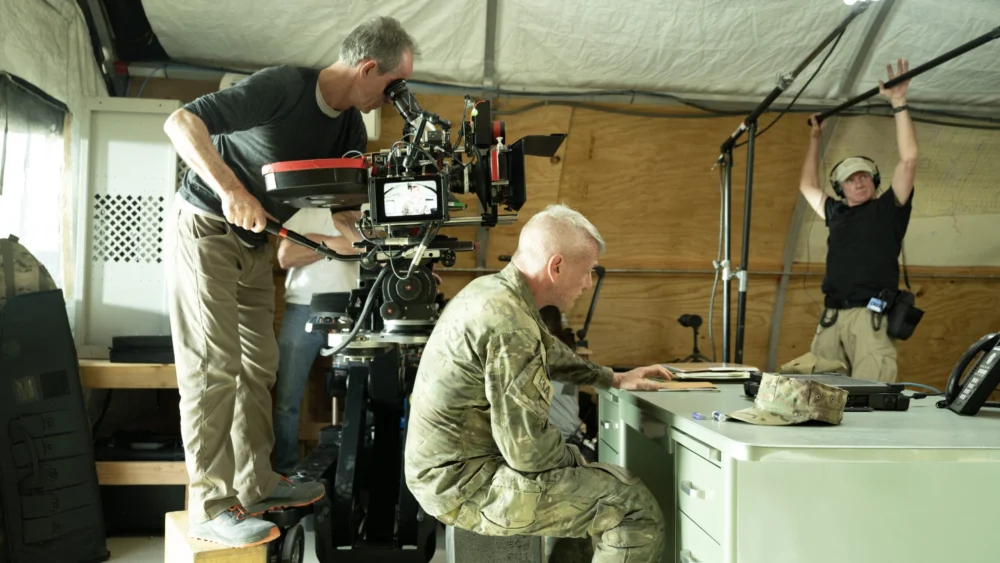
The SOC awards stand as a testament to the crucial, often unsung, contributions of camera operators to the art of filmmaking and television production. These professionals are the direct link between a director’s vision and the final image captured on screen, meticulously positioning and maintaining equipment to translate artistic intent into compelling visual storytelling. Matthew Moriarty, president of the Society of Camera Operators, succinctly described their role as "the connective tissue between vision and audience," highlighting the profound impact their precision and artistry have on the viewer’s experience. Their expertise is paramount in shaping the visual language, framing, and movement that define a production’s aesthetic and emotional resonance.
The victory for One Battle After Another follows a series of high-profile technical recognitions for the film. It has previously garnered praise and awards from the American Cinema Editors (ACE), the Art Directors Guild (ADG), and the British Society of Cinematographers (BSC), all prestigious organizations that honor the specialized crafts essential to movie magic. The film’s consistent success across these guilds points to a cohesive and outstanding effort across multiple departments, with the camera work of Colin Anderson being a central pillar of its visual integrity. The industry now keenly awaits the decision from the American Society of Cinematographers (ASC), scheduled to be announced Sunday, which could further cement the film’s dominance in the realm of visual achievement.
The Artistry Behind ‘One Battle After Another’
Colin Anderson’s work on One Battle After Another is a masterclass in adapting visual techniques to serve a sprawling narrative. The film, directed by Paul Thomas Anderson, is characterized by its grand tableaux and dynamic shifts in environment, demanding a camera operator capable of navigating vastly different visual landscapes. From the claustrophobic tension of armed border zones to the expansive, kinetic energy of desert highway pursuits, Anderson’s camera work provided the backbone for the film’s ambitious scope. His ability to capture both intimate character moments and vast, sweeping panoramas with equal precision and artistic flair distinguished One Battle After Another as a landmark cinematic achievement.
Anderson is no stranger to working on large-scale productions or collaborating with acclaimed directors. His extensive resume includes iconic science fiction franchises, having contributed to both Star Trek and Star Wars films, showcasing his versatility across genres and visual styles. His professional relationship with Paul Thomas Anderson is particularly notable, with past collaborations including critically celebrated works such as There Will Be Blood, The Master, Inherent Vice, and Phantom Thread. These films are renowned for their distinct visual identities and complex character studies, demanding a camera operator who can deeply understand and execute a director’s specific aesthetic vision. Anderson’s long-standing partnership with the director underscores a shared artistic language and a profound trust in his technical and creative abilities. This year, Anderson even found himself in the unusual position of being nominated against himself at the SOC awards for his work on Marty Supreme, a testament to his prolific output and consistent excellence. His profound impact on the industry was previously acknowledged six years ago when the Society of Camera Operators presented him with a lifetime achievement prize, recognizing a career defined by innovation, dedication, and unparalleled skill.
Mastering the ‘Oner’ in Television
On the television side of the SOC awards, Mark Goellnicht claimed the Camera Operator of the Year prize for his extraordinary work on "The Oner," a standout episode from Apple TV+’s critically acclaimed series The Studio. This particular episode was an ambitious undertaking, designed as a one-take, hour-long "chaos extravaganza." Such a feat, colloquially known as a "oner," presents immense technical and logistical challenges, requiring flawless choreography between actors, set design, lighting, and, most critically, the camera operator. Goellnicht’s ability to execute this continuous shot, capturing Sarah Polley’s character attempting to direct a movie while Seth Rogen’s character endeavors to oversee it, demanded an exceptional level of precision, stamina, and intuitive timing.
The "oner" is a filmmaking technique that, when successfully executed, can immerse an audience deeply into the narrative, creating a sense of real-time unfolding events and heightened tension. It eliminates traditional cuts, placing an enormous burden on the camera operator to maintain focus, framing, and smooth movement across complex sets and character interactions for an extended period. Goellnicht’s success in this high-stakes environment underscores his veteran status and profound understanding of camera dynamics. His impressive credits include visually spectacular films like Mad Max: Fury Road and The Great Gatsby, both known for their ambitious cinematography and demanding visual sequences. These past projects demonstrate his proven capability to deliver stunning visuals under challenging conditions, making his triumph for "The Oner" a fitting recognition of his mastery.
The Evolving Role of the Camera Operator
The role of a camera operator is fundamentally collaborative, working in lockstep with cinematographers, directors, and the entire production crew. They are responsible for the physical operation of the camera, translating the director of photography’s vision into tangible shots. This involves not only technical proficiency with complex equipment but also an acute artistic sensibility regarding composition, framing, movement, and capturing the emotional nuances of a scene. In an industry increasingly reliant on sophisticated technology, the operator’s ability to adapt to new camera systems, stabilization rigs, and digital workflows is paramount. Their contribution is crucial in establishing the visual tone and rhythm of a film or television series, guiding the audience’s eye, and amplifying the narrative impact.
The technical prowess demonstrated by operators like Anderson and Goellnicht highlights the blend of artistry and engineering required for the craft. Whether it’s navigating the vast, often unpredictable, landscapes of an epic film like One Battle After Another or meticulously choreographing a complex, single-take sequence for a television episode, their work directly shapes how stories are perceived and experienced by audiences globally. These awards not only celebrate individual achievement but also underscore the collective effort and specialized skills that define high-quality film and television production.
Navigating Industry Shifts and AI
Matthew Moriarty’s statements at the awards ceremony also provided a reflective perspective on the broader challenges confronting the entertainment industry. He acknowledged that "The past several years have presented extraordinary challenges for our industry," a sentiment that resonates deeply within the Hollywood community. While not explicitly detailed, this reference implicitly addresses a range of significant upheavals, including the profound impact of the COVID-19 pandemic on production, the disruptive shifts in content consumption driven by streaming platforms, and notably, the burgeoning influence and potential disruption posed by artificial intelligence (AI).
The rise of AI in creative fields has sparked considerable debate and concern, particularly among technical craftspeople. The fear that AI-driven tools could automate or significantly alter roles traditionally performed by human operators has created an undercurrent of anxiety throughout the industry. Moriarty’s subsequent assertion that "our work has remained bold, inventive, and deeply human" serves as a powerful counter-narrative to these anxieties. It champions the irreplaceable human element—the intuition, empathy, and creative problem-solving—that defines the work of camera operators and other artists. This perspective emphasizes that while technology evolves, the core of visual storytelling remains rooted in human experience and interpretation.
A Legacy of Visual Storytelling
The resilience and adaptability of the camera community, as highlighted by Moriarty, were further tested by the recent widespread labor disputes in Hollywood. The strikes by the Writers Guild of America (WGA) and the Screen Actors Guild – American Federation of Television and Radio Artists (SAG-AFTRA) significantly impacted production schedules and livelihoods across the industry. Yet, even amidst these profound challenges, the commitment to craft and innovation has endured. The recognition of talents like Colin Anderson and Mark Goellnicht is a testament to the fact that exceptional human skill continues to be the bedrock of compelling visual media, even as the industry grapples with technological advancements and economic pressures.
The awards celebrate not just a single shot or a specific film but an ongoing legacy of visual storytelling that continually pushes boundaries. The intricate dance between the camera, the performers, and the environment, orchestrated by skilled operators, allows audiences to suspend disbelief and fully immerse themselves in fictional worlds. As the industry continues to evolve, facing new technologies like AI and shifting production paradigms, the fundamental human artistry demonstrated by these award winners underscores the enduring value of their craft. Their work on projects like One Battle After Another and The Studio reminds us that at the heart of every great visual narrative is a dedicated artist meticulously shaping what we see, ensuring that the connection between vision and audience remains deeply human and profoundly impactful.