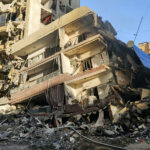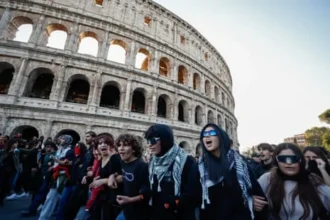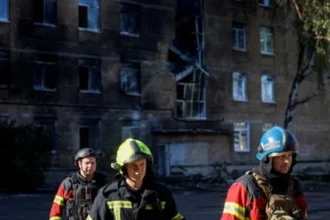
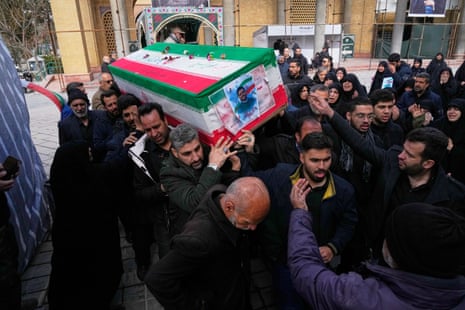
The Iranian government on Monday officially named Mojtaba Khamenei to succeed his slain father, Ayatollah Ali Khamenei, as the nation’s new supreme leader, a move that signals a hardening of the regime’s stance as the regional conflict enters its tenth day. The appointment by the Assembly of Experts comes amid a staggering escalation in the Middle East crisis, characterized by a wave of U.S.-Israeli airstrikes on Iranian infrastructure and a retaliatory drone campaign that has sent global oil prices surging past $100 a barrel for the first time since 2022. As Tehran attempts to project stability through this hereditary succession, the global economy is reeling from the dual threat of supply disruptions and the potential for a broader, protracted war.

Mojtaba Khamenei, 56, assumes the mantle of ultimate authority in Iran without ever having held an elected office or a formal senior government position. A cleric who has spent decades operating within the shadows of his father’s office, the younger Khamenei is widely regarded as a hardline figure with deep ties to the Islamic Revolutionary Guard Corps (IRGC) and the nation’s security apparatus. His selection by the 88-member Assembly of Experts was framed as a necessity for "national unity," yet it has already drawn sharp condemnation from Washington. President Donald Trump, speaking to reporters, characterized the appointment as "unacceptable" and warned that any new leader in Tehran would require U.S. "approval" to survive the current onslaught.
The Rise of Mojtaba Khamenei as Iran’s New Supreme Leader
The decision to elevate Mojtaba Khamenei marks a historic shift in the Islamic Republic’s power structure, effectively transitioning the theocracy toward a dynastic model. Born in 1969 in Mashhad, Mojtaba was raised in the crucible of the 1979 Revolution. While he studied theology in the prestigious seminaries of Qom and reportedly served in the final stages of the Iran-Iraq War, his true power base was built within the "Beit-e Rahbari," the Supreme Leader’s official residence. From there, he managed access to his father and cultivated a loyal following among conservative clerics and the IRGC’s top brass.

Critics and reformist figures have long associated Mojtaba with the state’s most repressive measures, most notably the security crackdown following the disputed 2009 presidential elections. His appointment suggests that the Iranian leadership has no intention of seeking a diplomatic off-ramp. Instead, by choosing a figure deeply embedded in the military-clerical complex, Tehran appears to be doubling down on its "Axis of Resistance" strategy. This comes even as Israel warns that it will continue to target the Iranian leadership, regardless of who holds the title of Supreme Leader.
Oil Prices Surpass $100 Amid Supply Crisis and Refinery Attacks
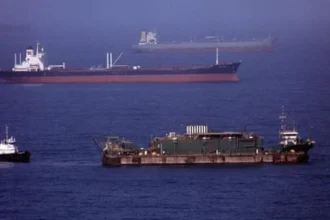
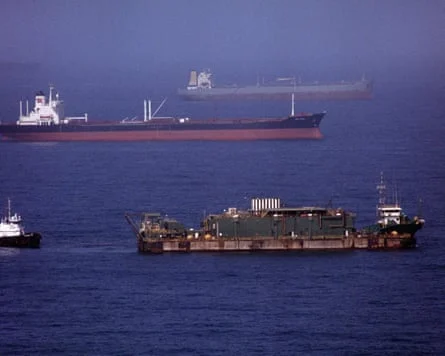
The geopolitical instability has triggered a violent reaction in global energy markets, with the price of crude oil soaring past the $100-a-barrel threshold. The spike is driven by the effective closure of the Strait of Hormuz and a series of successful strikes against energy infrastructure across the Persian Gulf. In Bahrain, the state-owned Bapco Energies declared force majeure on its operations Monday following a devastating Iranian drone attack on the country’s only oil refinery. Witnesses reported thick plumes of black smoke rising from the Sitra island facility, where at least 32 people, including children, were injured in the overnight raid.

The energy crisis is not limited to Bahrain. Qatar, one of the world’s largest liquefied natural gas producers, has also declared force majeure on exports, freeing it from contractual obligations as it grapples with regional volatility. In Saudi Arabia, the defense ministry confirmed it intercepted two drones targeting the Shaybah oil field in the kingdom’s southeast. The cumulative effect of these disruptions has wiped an estimated 20 million barrels of oil per day from the global market, sparking fears of a "stagflation" event—a period of stagnant economic growth coupled with high inflation—that could destabilize the global recovery.
G7 Mobilizes as Middle East Crisis Impacts Global Markets
In response to the escalating energy threat, G7 finance ministers are preparing for an emergency meeting coordinated by the International Energy Agency (IEA). According to reports from the Financial Times, the ministers will discuss a coordinated release of emergency oil reserves to mitigate the price shock. However, market analysts remain skeptical that such a release will be sufficient if the "tanker war" in the Strait of Hormuz persists. The Australian share market provided a grim preview of the potential fallout, plunging 4% in a single session and wiping out approximately $130 billion in value as investors fled to safe-haven assets.
President Trump has sought to downplay the economic risks, asserting on social media that the current high prices are a "very small price to pay" for the destruction of Iran’s nuclear capabilities. He predicted that prices would "drop rapidly" once the military objectives are achieved. Despite this optimism, nations across Asia and the Pacific are already implementing drastic conservation measures. South Korea has announced a cap on domestic fuel prices for the first time in nearly 30 years, while Bangladesh has ordered the closure of all universities to conserve electricity.
Human Rights Watch Accuses Israel of Unlawful Munitions Use
As the air war intensifies, international observers are raising alarms over the conduct of hostilities. Human Rights Watch (HRW) issued a report on Monday accusing the Israel Defense Forces (IDF) of unlawfully using white phosphorus munitions in the Lebanese town of Yohmor. HRW researchers verified seven images showing airburst phosphorus deployed over residential areas on March 3. While white phosphorus is not classified as a chemical weapon under international law when used as a smokescreen, its use in civilian settings is a violation of Protocol III of the Convention on Certain Conventional Weapons due to the horrific chemical burns and respiratory damage it inflicts.
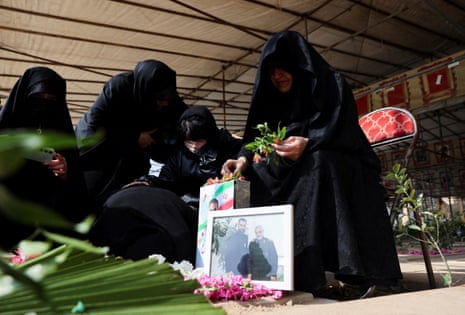
The IDF has not yet provided a specific response to the Yohmor allegations, though it has previously denied similar claims regarding operations in Gaza and southern Lebanon. The humanitarian situation in Lebanon continues to deteriorate, with the health ministry reporting that at least 394 people have been killed by Israeli airstrikes in the past week alone. In Beirut’s southern suburbs, the IDF issued fresh evacuation orders on Monday, stating it intended to "forcefully" target Al-Qard al-Hassan, a financial institution linked to Hezbollah that serves hundreds of thousands of Lebanese civilians.
Military Escalation: Helicopter Raids and Proxy Strikes
The conflict has expanded into a multi-front war involving sophisticated commando operations and long-range missile exchanges. Hezbollah reported on Monday that it was engaged in "fierce clashes" with Israeli special forces who conducted a helicopter landing in eastern Lebanon near the town of Nabi Sheet. This marks the second such raid in days; a previous operation aimed at recovering the remains of Ron Arad, an Israeli pilot missing since 1986, resulted in significant casualties but failed its primary objective. Hezbollah officials claimed to have downed an Israeli helicopter during the latest confrontation, though this has not been confirmed by the IDF.
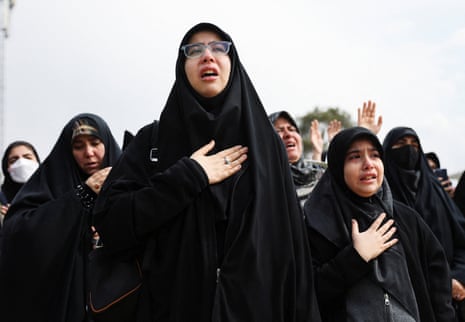
Beyond Lebanon, the "Axis of Resistance" has launched a series of coordinated strikes targeting U.S. and allied interests. In Iraq, a U.S. diplomatic facility near Baghdad International Airport was targeted by missiles, though most were reportedly intercepted. In Kuwait, air defenses were activated to counter incoming drones and missiles, while Saudi Arabia reported interceptions over its northern Jawf region. The human toll of the war is mounting on all sides; the U.S. military confirmed the death of a seventh service member from wounds sustained during Iran’s initial counterattack, while Iran’s UN ambassador claimed that over 1,300 Iranian civilians have been killed in the ongoing aerial bombardment.
Diplomatic Deadlock and the Road Ahead
The diplomatic landscape remains frozen, with President Trump indicating that the decision on when to end the war would be a "mutual" one made alongside Israeli Prime Minister Benjamin Netanyahu. Envoys Jared Kushner and Steve Witkoff are expected to arrive in Israel on Tuesday for high-level consultations on the next phase of the campaign. The U.S. administration appears committed to a policy of "maximum pressure" taken to its military conclusion, even as the Vatican and other international bodies warn of a "tragedy of enormous proportions" fueled by a regional climate of hatred and fear.
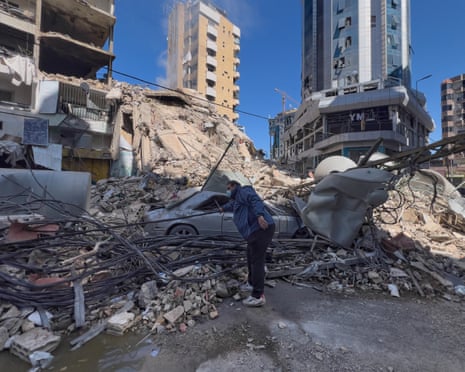
In the midst of this geopolitical storm, smaller human dramas are unfolding. The Iranian women’s football team remains stranded on Australia’s Gold Coast following their elimination from the Women’s Asian Cup. Labeled "wartime traitors" by state-linked media in Tehran for their perceived lack of patriotic fervor during the national anthem, the players face a "torrid choice" between returning to a regime that may imprison them or seeking asylum in a foreign land, effectively severing ties with their families. Their plight serves as a microcosm of the broader Middle East crisis, where the decisions of supreme leaders and global powers continue to reshape the lives of millions.