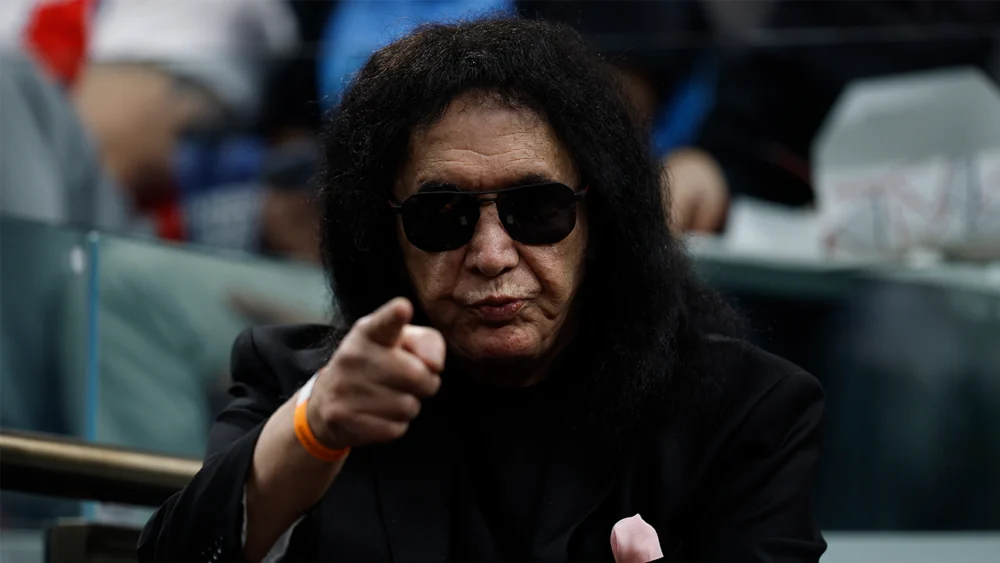
Veteran rock icon Gene Simmons, frontman for the legendary band KISS, has publicly expressed profound fatigue with the political opinions offered by celebrities, asserting that entertainers should "shut the f*** up" and concentrate on their craft. His pointed remarks ignite a long-standing debate within the entertainment industry and among the public regarding the appropriate role of public figures in political discourse.
Simmons’ forceful comments emerged during a recent interaction with TMZ, where he was questioned about the increasing trend of stars openly criticizing political figures, particularly former President Donald Trump. The conversation specifically touched upon actor Ben Stiller, who had recently voiced displeasure after the White House utilized a clip from his 2008 film, Tropic Thunder, in a video widely perceived as Iran war propaganda. Simmons’ response was unequivocal, blending initial sarcasm with a direct and expletive-laced demand for celebrity silence.
"Everybody in the world should listen to what actors and comedians say, because they’re so qualified," Simmons began, his tone dripping with irony. He then adopted a more serious demeanor, declaring, "Basically, shut the f up. Do your art and shut up. Nobody’s interested in their opinions. That includes me, who I vote for, who I like. Who the f do you think you are?" This stark pronouncement underscores a sentiment shared by a segment of the public that believes celebrities, despite their immense platforms, lack the necessary expertise or relatable experience to weigh in on complex political matters.
The Perceived Disconnect: Mansions and Rolls-Royces
Simmons elaborated on his reasoning, highlighting a perceived disconnect between the opulent lifestyles of entertainers and the daily realities of most Americans. "People in America work hard for their living, and they don’t want to be lectured to by people who live in mansions and drive Rolls-Royces," the musician stated. This argument taps into a populist critique often leveled against Hollywood elites, suggesting that their affluence insulates them from the struggles that inform political decisions for the average citizen. He concluded his thoughts on the matter by reiterating his core message: "It’s time for everybody in the entertainment industry to shut their piehole and just do your art. Nobody cares what you think. I don’t."
The KISS co-founder did not shy away from naming specific individuals, pointing directly to actor Mark Ruffalo, known for his consistent and vocal political activism and his strong disapproval of Donald Trump. Simmons challenged the premise of Ruffalo’s political engagement, asking rhetorically, "What would Mark [Ruffalo] think about politics?" before immediately dismissing the relevance of such an inquiry with a terse, "I don’t care." This direct targeting of prominent activists like Ruffalo illustrates the depth of Simmons’ frustration with the pervasive political commentary from entertainment figures.
A Long History of Celebrity Involvement in Politics
The debate over celebrity political engagement is far from new. Throughout history, public figures have leveraged their fame to influence public opinion and advocate for various causes. From the Hollywood anti-Nazi activism of the 1930s and the McCarthy-era blacklists that saw artists targeted for their political leanings, to the civil rights movement and the Vietnam War protests, celebrities have frequently stepped into the political arena. In more recent decades, figures like George Clooney, Leonardo DiCaprio, and Oprah Winfrey have championed environmental causes, human rights, and political candidates, becoming integral, if sometimes controversial, voices in national and international dialogues.
This long tradition underscores the inherent tension between an artist’s right to free speech and the public’s expectation of entertainment over activism. For many, celebrities serve as influential cultural arbiters, and their willingness to speak out on social and political issues is seen as a civic duty, a means to amplify marginalized voices or draw attention to critical matters. Conversely, a significant portion of the audience, as articulated by Simmons, prefers their entertainers to remain apolitical, viewing their roles as providing escapism and artistic enjoyment rather than political guidance.
Awards Season as a Political Platform
Simmons’ comments arrive amidst a backdrop of heightened political expression during the 2026 awards season, where numerous stars have utilized their acceptance speeches and red-carpet interviews to criticize the Trump administration and its policies. This trend has become a recurring feature of major ceremonies, transforming events like the Grammys, Oscars, and Golden Globes into de facto platforms for social and political commentary, often to mixed public reception.
One notable instance occurred at the 2026 Grammy Awards, where pop sensation Billie Eilish, while accepting a prestigious award alongside her brother Finneas O’Connell, used her moment in the spotlight to condemn Immigration and Customs Enforcement (ICE). Her remarks sparked immediate debate, drawing both praise and criticism. Among those who publicly questioned Eilish’s foray into politics were Senator Ted Cruz and Shark Tank personality Kevin O’Leary, both of whom argued that entertainers should steer clear of such contentious issues.
Interestingly, this incident provided a direct link to Simmons’ specific targets. Mark Ruffalo, the very actor Simmons singled out, emerged as a vocal defender of Eilish. Ruffalo publicly rebuked O’Leary, telling him to "STFU" (shut the f*** up), effectively mirroring Simmons’ own blunt language but in defense of celebrity activism rather than against it. This exchange highlights the deep divisions not only between celebrities and segments of the public but also within the entertainment industry itself regarding the appropriateness and effectiveness of political outspokenness.
Gene Simmons’ Own Evolving Political Stance
Simmons’ demand for celebrities to remain silent on politics gains additional layers of complexity when viewed through the lens of his own past political statements. While he now advocates for a "silent approach" to political views from his peers, the KISS member has previously shared what could be described as mixed or evolving opinions regarding Donald Trump.
In a 2022 appearance on Bill Maher’s Club Random podcast, Simmons disclosed that he "was happy" when The Celebrity Apprentice host was first elected president in 2016. This initial positive sentiment indicated a degree of alignment or at least optimism about Trump’s entry into the Oval Office. However, his views appeared to shift over time. During the same podcast, Simmons expressed criticism regarding the heightened political polarization that he attributed to Trump’s presidency. He noted a transformation in his perception, stating, "The person that I saw first coming into power is not the person I saw within a year or two of that." This suggests a disillusionment with the direction of national politics under Trump’s leadership, indicating that his own political assessments have not been static.
More recently, in 2025, Simmons publicly expressed gratitude to the former president after KISS was recognized at the Kennedy Center Honors, conveying that the iconic rock band was "deeply honored" by the distinction. These varied public comments—from initial approval, to later criticism of polarization, and then expressions of gratitude—underscore a nuanced and perhaps evolving personal political journey for Simmons. This trajectory contrasts sharply with his current absolute demand for other celebrities to maintain political silence, prompting questions about the consistency of his philosophy on celebrity political engagement.
Broader Implications for Public Discourse and the Entertainment Industry
The debate ignited by Simmons’ comments extends far beyond the confines of Hollywood, touching upon fundamental questions about freedom of speech, the influence of public figures, and the nature of public discourse in a highly polarized society. In an era saturated with information and opinion, the role of celebrities as cultural and political commentators remains a contentious issue.
On one hand, many argue that celebrities, as citizens, possess the same fundamental right to express their political beliefs as anyone else. Their visibility merely amplifies these rights, potentially bringing crucial issues to a broader audience. Proponents of celebrity activism often highlight the power of their platforms to mobilize voters, raise awareness for humanitarian causes, and challenge prevailing narratives. They might contend that artists, by their very nature, are often societal observers and critics, making political commentary a natural extension of their artistic expression.
On the other hand, Simmons’ perspective resonates with those who feel that celebrity opinions are often superficial, ill-informed, or simply unwelcome. This segment of the public may view celebrity political endorsements as distracting, self-serving, or even counterproductive, alienating fans who hold differing views. The argument that celebrities should "stick to their lane" reflects a desire for a clear separation between entertainment and political advocacy, particularly from figures whose primary function is to entertain.
The Echo Chamber Effect and Cultural Divides
The proliferation of social media and the 24/7 news cycle have further amplified these debates, creating echo chambers where like-minded individuals reinforce their views, and dissent can quickly escalate into vitriol. When celebrities engage in political discourse, their comments are instantly disseminated, dissected, and debated across vast digital landscapes, often contributing to deeper cultural and political divides. Simmons’ remarks, for instance, are likely to be celebrated by those who share his frustration and condemned by those who champion celebrity activism.
This ongoing tension reflects a broader cultural struggle within the United States, where the lines between entertainment, news, and political ideology have become increasingly blurred. For the entertainment industry, the challenge lies in navigating this complex landscape, balancing artistic expression with public perception, and deciding whether to lean into or pull back from political engagement.
The Enduring Debate
Gene Simmons’ blunt admonition for celebrities to "shut the f*** up" about politics is not merely a passing comment but a potent articulation of a deeply held sentiment that continues to fuel public and industry debate. While Simmons himself has demonstrated an evolving relationship with political commentary, his current stance provides a sharp counterpoint to the prevailing trend of celebrity activism.
As long as public figures command massive audiences and political issues remain divisive, the question of whether celebrities should use their platforms for political advocacy will persist. Simmons’ intervention serves as a powerful reminder of the enduring tension between the right to free expression and the expectations placed upon those who live in the public eye, ensuring that this particular discussion remains a fixture in the national dialogue.