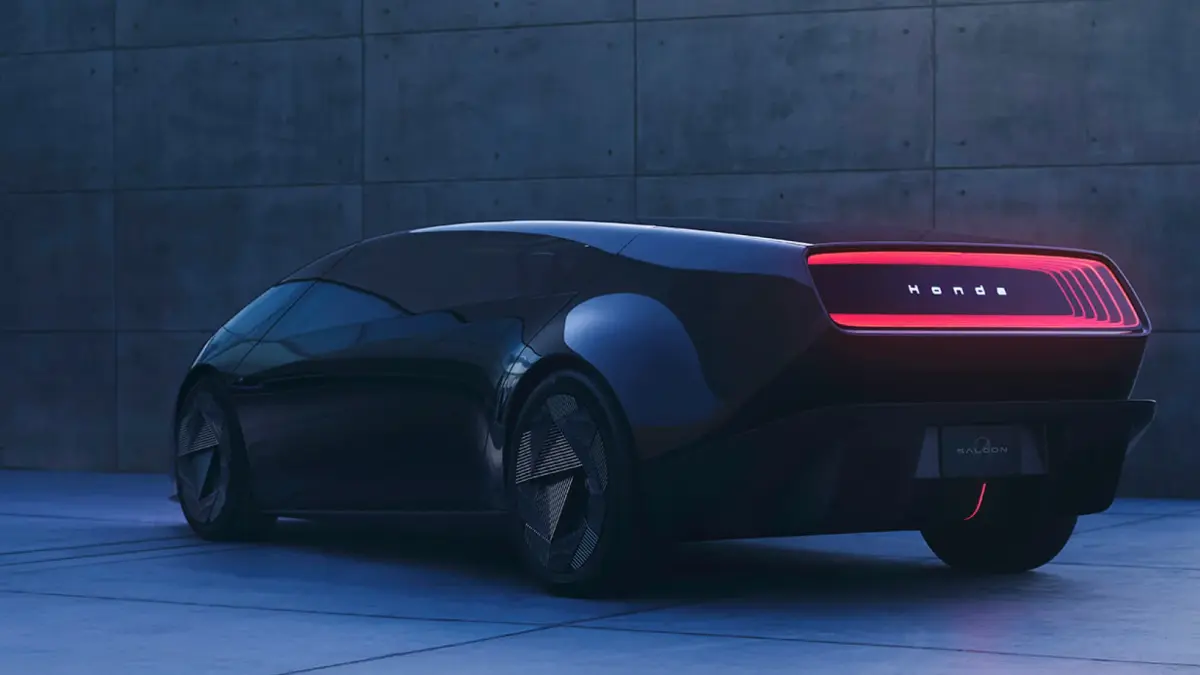
Honda Motor Co. announced Thursday the immediate cancellation of its flagship "0 Series" electric vehicle initiative, a decision that includes the termination of the highly anticipated Saloon and SUV models originally slated for a 2026 release. The Japanese automaker confirmed it will also scrap plans for the all-electric Acura RSX as part of a massive corporate restructuring that will result in a $15.7 billion write-off. This strategic retreat marks one of the most significant pullbacks by a major legacy manufacturer in the global transition toward electrification, signaling a period of profound uncertainty for the automotive industry.
The decision reflects a stark reassessment of the global market, where cooling consumer demand for battery-electric vehicles (BEVs) and intensifying competition from software-centric Chinese manufacturers have upended long-term projections. Honda executives cited a "significantly declining" demand for EVs in key markets as the primary driver for the move. By halting the development of the Honda 0 Series electric cars, the company aims to stem further financial hemorrhaging and reallocate resources toward its more profitable hybrid-electric lineup.
The Rise and Fall of the Honda 0 Series Electric Cars
The Honda 0 Series was first introduced to the public with significant fanfare at the Consumer Electronics Show (CES) in 2024. The initiative was positioned as a "second founding" for the company, representing a clean-sheet approach to vehicle design that prioritized efficiency, thinness, and lightness. Honda showcased two radical concept vehicles: the Saloon, a wedge-shaped flagship with a futuristic neon-rimmed grille, and the Space-Hub, a boxy SUV designed to serve as a mobile living room.
At CES 2025, Honda doubled down on this vision, presenting refined versions of the Honda 0 Series electric cars and promising that the Saloon would hit North American roads by 2026. The series was intended to debut a new "H" logo and a proprietary e-axle system that would allow for lower floor heights and increased interior space. The cancellation of these projects leaves a significant void in Honda’s future product roadmap, particularly as the brand had marketed the 0 Series as its primary weapon against Tesla and emerging Chinese rivals.
The $15.7 billion restructuring cost represents a monumental financial hit for the Tokyo-based automaker. This figure encompasses the write-down of research and development assets, the cancellation of supplier contracts, and the reconfiguration of manufacturing facilities that were being prepared for the 0 Series production. While the upfront cost is staggering, Honda leadership maintains that continuing with the current trajectory would have led to even greater losses as market conditions deteriorated.
Market Realities and the "EV Winter"
The cancellation of the Honda 0 Series electric cars is the latest evidence of what industry analysts are calling an "EV winter." For several years, legacy automakers rushed to announce aggressive electrification targets, spurred by regulatory mandates and the meteoric rise of Tesla’s stock price. However, the reality of the 2024-2025 market has proven far more difficult than anticipated. High interest rates, premium price tags, and lingering concerns over charging infrastructure have caused many mainstream buyers to reconsider internal combustion or hybrid alternatives.
Honda’s statement specifically noted that the "current business environment" no longer supports the aggressive rollout of high-end electric models. While early adopters have largely been served, the transition to the mass market has hit a plateau. This trend is not unique to Honda; Ford, General Motors, and Mercedes-Benz have all recently scaled back their EV production targets or delayed the launch of new battery-powered models in favor of expanding their hybrid offerings.
The Challenge of Software-Defined Vehicles
One of the most revealing aspects of Honda’s announcement was its candid assessment of the competitive landscape in China. The company admitted that it has struggled to keep pace with the rapid technological evolution seen in that market. In China, consumer preferences have shifted away from traditional hardware metrics, such as horsepower and fuel efficiency, toward software-based features and "Software-Defined Vehicle" (SDV) architecture.
Newer EV manufacturers, particularly those based in China like BYD, Xiaomi, and Li Auto, have leveraged shorter product development cycles to integrate advanced driver-assistance systems (ADAS) and sophisticated in-cabin entertainment. Honda acknowledged that it was unable to deliver products that offered "value for money" comparable to these newer, tech-focused competitors. The Honda 0 Series electric cars were meant to bridge this gap, but the company now realizes that the pace of innovation required to compete in the SDV space is faster than its traditional corporate structure could support.
This admission serves as a warning to European and American legacy manufacturers. The competitive advantage long held by established brands—manufacturing scale and engine reliability—is becoming less relevant in an era where the vehicle’s operating system is the primary selling point. Honda’s inability to balance the resources needed for this software revolution while maintaining its traditional business has forced this drastic retreat.
Geopolitical Headwinds and the "Trump Factor"
Beyond market demand and technological hurdles, Honda explicitly identified shifting geopolitical realities as a catalyst for its decision. The company cited the potential impact of tariffs and trade policies under the Trump administration as a significant risk factor. The prospect of increased duties on imported components and potential changes to the Inflation Reduction Act (IRA) tax credits has created a volatile environment for long-term capital investments.
The Honda 0 Series electric cars were designed with a global supply chain in mind, and the threat of a trade war or localized manufacturing mandates has made the financial math of the 0 Series untenable. For a company like Honda, which relies heavily on the North American market, the uncertainty surrounding federal EV subsidies and emission standards makes a $15.7 billion gamble on a new electric platform too risky to sustain.
Impact on the Future of Acura and Specialized Projects
The collateral damage of this decision extends to Honda’s luxury division, Acura. The cancellation of the electric Acura RSX is a major blow to the brand’s efforts to reinvent itself for a younger, tech-savvy demographic. The RSX nameplate holds significant nostalgic value for enthusiasts, and its revival as an EV was intended to be a cornerstone of Acura’s "Precision Crafted Performance" marketing campaign.
Furthermore, secondary projects associated with the 0 Series appear to be in jeopardy. At recent trade shows, Honda had teased innovative lifestyle products, including a solar-powered camper trailer and integrated mobile power solutions designed to work in tandem with the 0 Series ecosystem. With the vehicle platform itself now defunct, these peripheral projects are unlikely to see a commercial release.
A Pivot Back to Hybrids
As Honda steps back from the Honda 0 Series electric cars, it is doubling down on its hybrid-electric vehicle (HEV) strategy. This move mirrors the approach taken by Toyota, which has long argued that a diverse mix of powertrains is more sustainable than an immediate leap to full electrification. Honda’s current hybrid models, such as the CR-V and Accord hybrids, have seen strong sales performance, providing a much-needed cushion as the company navigates its restructuring.
The company stated it will now monitor the "balance between profitability and market trends" before committing to any future all-electric platforms. This "wait and see" approach suggests that Honda will not exit the EV space entirely but will instead wait for battery costs to fall further and for the charging infrastructure to mature before attempting another major product launch.
Economic and Industrial Consequences
The $15.7 billion restructuring will have ripple effects throughout the automotive supply chain. Dozens of tier-one suppliers that had been contracted to provide specialized components for the 0 Series now face the loss of projected revenue. Additionally, the move may impact employment at various R&D centers and manufacturing plants that were being retooled for EV production.
In the broader context of the global economy, Honda’s retreat is a signal of the immense difficulty involved in the energy transition. The capital requirements for developing next-generation electric platforms are staggering, and even a company with Honda’s resources is not immune to the financial pressures of a shifting market. This decision may embolden other manufacturers to further delay their own EV transitions, potentially slowing the overall pace of decarbonization in the transport sector.
The Long-Term Outlook for Honda Electrification
While the Honda 0 Series electric cars are no longer part of the company’s immediate future, Honda maintains that it remains committed to its long-term goal of carbon neutrality. However, the path to that goal has become significantly more complex. The company’s joint venture with Sony, known as Sony Honda Mobility, is still developing the Afeela EV, though it remains to be seen how the cancellation of the 0 Series will affect the shared technology and manufacturing resources between those two entities.
For now, Honda will focus on refining its internal combustion engines for hybrid applications and exploring alternative fuels. The company’s decision to prioritize "profitability over market share" marks a conservative turn for an automaker that has historically been known for its engineering boldness.
The cancellation of the Honda 0 Series electric cars serves as a sobering reminder that the transition to electric mobility is not a linear progression. It is a volatile process shaped by consumer behavior, geopolitical shifts, and the relentless pace of technological change. As Honda writes off nearly $16 billion, the rest of the automotive world is watching closely, reassessing whether their own billion-dollar bets on an electric future will pay off or end in a similar strategic retreat.