Copenhagen, Denmark – Swedish filmmaker Nathan Grossman, known for his work on I Am Greta, is set to premiere his latest documentary, Amazomania, at the 23rd CPH:DOX festival. The film critically reexamines a 1996 expedition into the Brazilian Amazon rainforest that resulted in the first recorded contact with the previously uncontacted Korubo tribe, delving into the complex ethical and moral dimensions of such encounters through the lens of the "white man’s gaze."
Grossman’s new work is poised to ignite discussions on colonial legacies and media representation by turning the camera inward, scrutinizing the filmmaking process itself. Amazomania offers a dual narrative, revisiting historical footage while also capturing contemporary interactions, highlighting a profound shift in how indigenous communities assert control over their own stories and images. The documentary will make its world premiere in the main competition of the Copenhagen International Documentary Film Festival on Monday, March 16.
A Deep Dive into the 1996 Expedition
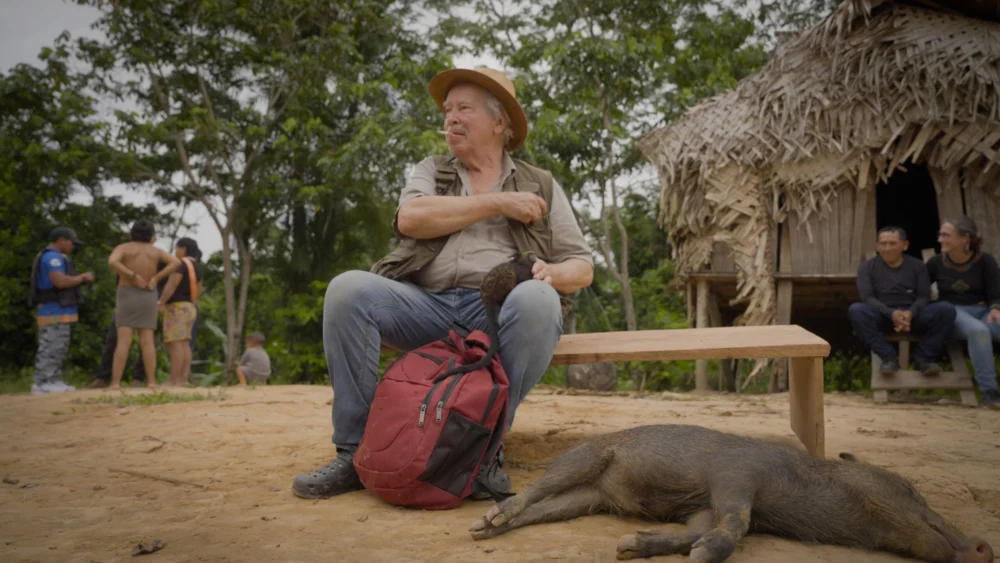
The genesis of Amazomania lies in a hazardous 1996 expedition to the Javari Valley in the Amazon, a remote region of Brazil. This journey was orchestrated by a Brazilian civil servant and Swedish journalist Erling Söderström with the explicit aim of making contact with the Korubo tribe, an indigenous group renowned for their voluntary isolation from external societies. The initial encounter was extensively filmed, producing footage that was widely heralded as a sensational glimpse into a long-hidden world, captivating audiences with its rarity and perceived adventure.
At the time, such footage was often framed as groundbreaking anthropology or daring exploration, feeding a Western fascination with "discovery" and the exotic. The immediate aftermath saw the material distributed, contributing to a narrative that largely overlooked the potential implications and ethical dilemmas inherent in initiating contact with an isolated community. This historical footage forms the critical first act of Grossman’s documentary, setting the stage for its subsequent reevaluation.

The Reawakening of a Story
Decades after the initial contact, the original footage resurfaced, prompting Grossman to embark on his own investigative journey. During the COVID-19 pandemic, a colleague informed Grossman about the existence of Söderström’s extensive archive. Grossman discovered between 60 and 70 hours of material, much of it undigitized and in a delicate state, providing a comprehensive, raw look at the 1996 event.
The director’s meticulous process of digitizing and reviewing this vast collection revealed a narrative starkly different from the adventure documentary that had previously emerged in the early 2000s. Grossman observed friction within the original footage and recognized the opportunity to craft a new film that challenged the initial celebratory tone. This endeavor necessitated a return to the Amazon, where Söderström retraced his steps to meet with the Korubo tribe once more, nearly 30 years later.
The Korubo Perspective and Shifting Narratives
Söderström’s return trip, however, did not unfold as anticipated. What became clear was a significant misunderstanding rooted in the initial contact and its portrayal. The Korubo tribe, now more integrated into broader indigenous rights movements, demanded compensation for the unauthorized use of their images and insisted on the inherent right to narrate their own history. This marked a pivotal moment, shifting the focus from external observation to internal agency.
Grossman actively sought the Korubo community’s perspective during the production of Amazomania. He engaged with anthropologists and directly consulted with members of the tribe, understanding their historical experiences and their present-day views on media representation. The director learned that the Korubo had experienced "a very big disappointment" with Western media and, notably, with the camera itself, which they initially perceived as a weapon due to its unfamiliar, industrial nature. This revelation underpins a central theme of the documentary: the power dynamics embedded in visual media and the potential for misinterpretation in cross-cultural encounters.
Unpacking the "White Man’s Gaze"
The documentary’s title, Amazomania, is presented by Grossman as a new noun encapsulating a pervasive Western fascination with the Amazon and its indigenous peoples, often filtered through a lens of adventure and exoticism. The film directly confronts the "white man’s gaze," a concept referring to the way indigenous cultures are often depicted from a Eurocentric perspective, perpetuating colonial power structures and stereotypes. Grossman’s work aims to deconstruct this gaze, prompting audiences to critically examine their own consumption of such narratives.

Amazomania is not designed as an anthropological study of the Korubo tribe per se. Instead, it uses the specific case of the 1996 contact to broadly critique Western media practices and the historical implications of "discovery." By placing the audience within this critique, the film encourages introspection, allowing viewers to recognize their own complicity in the cultural fascination that often commodifies indigenous experiences.
Reparations and Immaterial Rights
A significant aspect of Amazomania is its exploration of reparations, extending the concept beyond material artifacts to encompass immaterial rights. The film raises critical questions about journalistic ethics and the ownership of cultural narratives. Grossman posits that while reparations have been a major topic in the museum world concerning stolen artifacts, the discussion should expand to include intellectual and cultural property, particularly when it pertains to indigenous communities.
The Korubo’s demand for compensation signifies a broader movement towards indigenous sovereignty over their own stories and images. This push challenges traditional media models where external filmmakers and journalists often profit from narratives about marginalized communities without equitable benefit or control for the subjects themselves. Amazomania positions itself as a catalyst for a reevaluation of these practices within the journalistic and documentary film industries.
A New Paradigm for Indigenous Representation
In a significant move, members of the Korubo community were brought on as executive producers for Amazomania. This involvement signifies a crucial shift in documentary filmmaking, moving towards greater collaboration and indigenous control. Grossman worked closely with tribal representatives of varying ages and genders on the final edit of the film in late 2025, ensuring their input and arguments were accurately represented. This unprecedented level of engagement aims to establish a new paradigm for ethical storytelling.
The director expressed hope that, in the future, indigenous communities like the Korubo will not only serve as executive producers but will also gain full rights to historical footage and the capacity to produce their own films. This vision underscores a commitment to empowering indigenous voices and fostering self-representation, moving away from extractive practices towards genuine partnership and cultural respect.

Lessons for Future Contact
Grossman emphasizes the ongoing relevance of Amazomania in a world where voluntary isolation is often mistakenly believed to be a thing of the past. There are still over 200 uncontacted groups globally, and with accelerating climate change and environmental pressures, the likelihood of future contact events is increasing. The film serves as a vital resource for media professionals and the wider public to critically consider the most ethical and responsible approaches to such sensitive interactions.
The meticulous rules now established by the Korubo community for engagement with journalists and tourists are presented as a direct consequence of their 1996 experience. Amazomania advocates for a proactive, reflective stance within media, encouraging the development of best practices that prioritize the dignity, rights, and self-determination of isolated indigenous populations.
The Lasting Echo of Amazomania
As Amazomania prepares for its international debut, its impact is anticipated to extend beyond the film festival circuit. Early audience reactions indicate that the film successfully draws viewers into the adventure before challenging their perceptions, making them active participants in the critique of Western fascination. This visceral approach, facilitated by the skilled editing of Jordana Berg, transforms academic concepts into relatable human experiences.
The documentary stands as a testament to the power of re-examination and the ongoing necessity of decolonizing narratives. Grossman hopes that Amazomania will inspire future generations of filmmakers and journalists to adopt even more advanced and equitable practices. The film serves as a powerful reminder that the stories of indigenous peoples are their own to tell, and that true understanding requires listening with respect, rather than merely observing through a distant, often biased, lens.