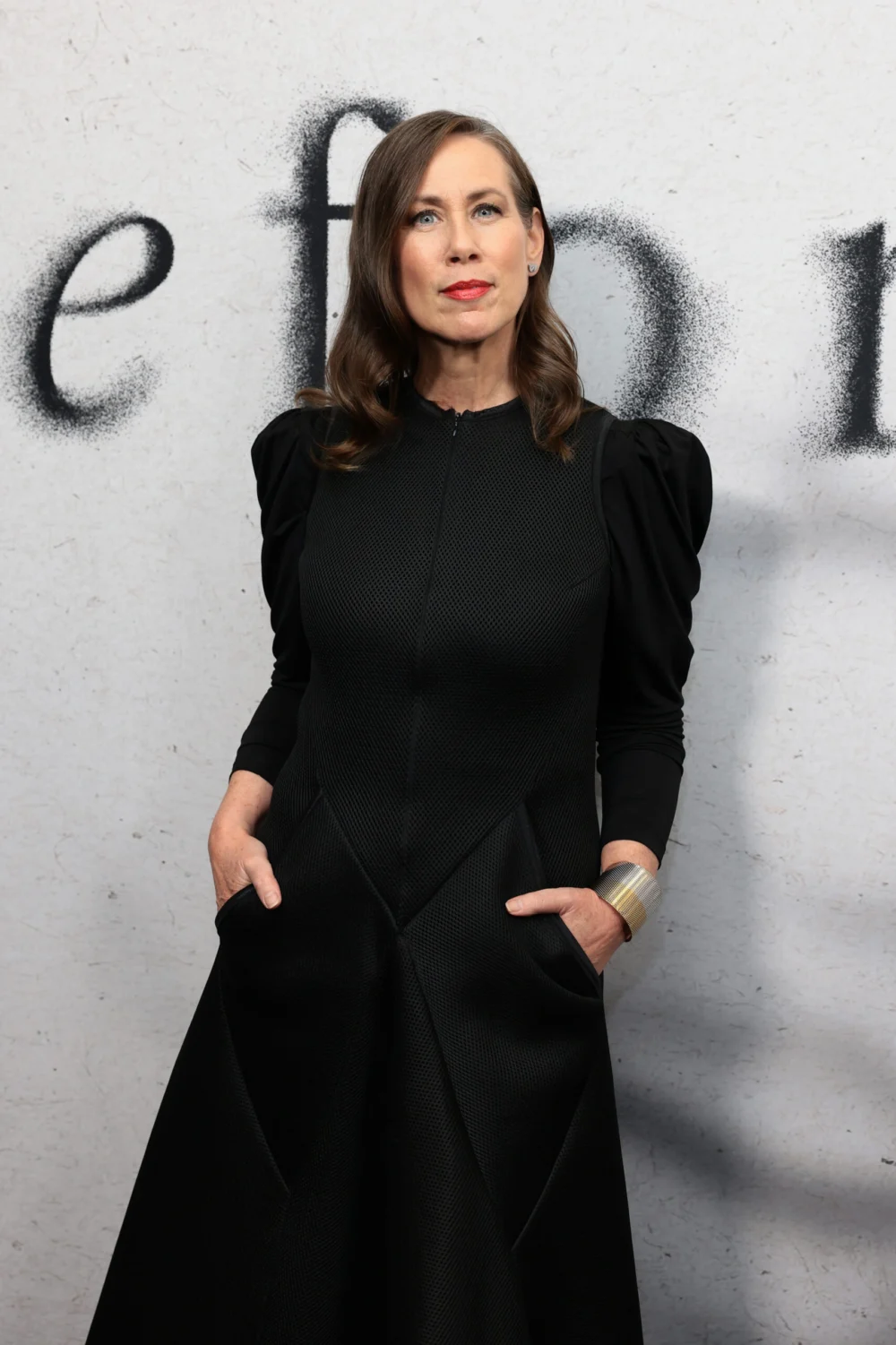
Actress Miriam Shor, known for her roles in prestige television and the Marvel Cinematic Universe, is challenging the pervasive culture of non-disclosure agreements (NDAs) with her directorial debut documentary, My NDA. The film, set to premiere at this year’s SXSW film festival, directly confronts the legal instruments designed to enforce silence, a concept Shor describes with irony: "Of course, the first rule of NDAs is don’t talk about NDAs." Her project, however, aims to do precisely that, exposing the human cost and often insidious nature of these legally binding contracts.
The Pervasive Nature of Non-Disclosure Agreements
Non-disclosure agreements, commonly known as NDAs, are legally binding contracts that compel parties to keep specific information confidential. For a seasoned performer like Shor, signing NDAs has long been a routine part of her professional life. Whether safeguarding plot details for a superhero blockbuster or protecting trade secrets for a high-profile series such as Apple TV+’s Pluribus, these agreements are an industry standard in entertainment. Shor readily admits to the necessity of such contracts in certain contexts, stating, "You don’t want me to talk about the latest superhero movie? I’m like, ‘You got it!’"
However, a personal encounter with an NDA several years ago profoundly shifted Shor’s perspective. She had initially believed that the widespread scrutiny brought by the MeToo movement had diminished the prevalence and power of NDAs, especially those used to silence victims of harassment or assault. The movement famously saw numerous women defy signed agreements to disclose their experiences of abuse, often in professional settings. This personal NDA, however, made Shor question not only her own understanding but also the broader public awareness of these ubiquitous legal documents.
From Personal Experience to Public Inquiry
The agreement Shor signed was distinct from the typical professional confidentiality clauses she was accustomed to. "I had to sign [the NDA] and it silenced me from talking about my personal life," Shor revealed. While she emphasizes that the circumstances leading to its signing were not as severe or traumatic as those faced by the participants in her film, the act of being legally compelled to silence about her private affairs proved deeply unsettling. It was the principle of the matter, she explains, "the fact that people are telling me I can’t talk," that sparked her alarm, rather than the specific details she was prevented from sharing. Despite her strong feelings, Shor has chosen not to breach that particular NDA herself.
This personal experience ignited a relentless curiosity in Shor, sending her down what she describes as a "rabbit hole" of investigation. She engaged with lawyers, journalists, and individuals who had both signed and broken NDAs, becoming "a dog with a bone" in her pursuit of understanding. Although Shor had prior directing experience, having helmed episodes of her long-running television series Younger, she had never ventured into feature filmmaking, let alone the complexities of a documentary feature. Recognizing the need for an experienced collaborator, she partnered with Juliane Dressner.
Their initial meeting in a New York City park in the spring of 2021, amidst the early stages of the COVID-19 pandemic, revealed Dressner’s initial skepticism. Dressner, an Emmy-nominated documentary filmmaker known for Personal Statement, typically avoided projects heavy on legal jargon or reliant solely on "talking head" interviews. However, after further research and consultation with employment attorney Vince White, both directors realized there was a compelling narrative to uncover. Dressner noted, "We realized that there’s another way — a much harder way — to tell this story." This "harder way" involved adopting a first-person perspective, following individuals who faced the difficult decision of breaking their NDAs, tracking their journey and the inherent risks involved.
Unmasking the Human Cost of Silencing
The wave of high-profile reporting that followed the MeToo movement and continued into the 2020s, driven by individuals like Harvey Weinstein’s accusers and Facebook whistleblowers, primarily focused on the underlying reasons for NDAs: harmful business practices, settlements for wrongdoing, and corporate cover-ups. These stories graced the pages of prominent publications such as The New York Times, The New Yorker, The Wall Street Journal, and Business Insider.
However, Shor and Dressner identified a crucial, often under-reported aspect: "the human cost of being silenced." My NDA deliberately shifts the focus from why NDAs are signed to the profound emotional and psychological toll exacted by being legally gagged. The documentary delves into the internal conflict individuals face as they weigh their personal morals and desire for truth against the constant threat of retaliatory lawsuits and severe financial penalties. It spotlights how NDAs are not merely legal instruments but can be weaponized to suppress voices and prevent accountability.

The film centers on three compelling subjects from diverse industries who embark on the arduous journey of potentially breaking their non-disclosure agreements. Ashley Kostial signed an NDA with her employer, software giant SAP, after she was raped by a colleague during a work trip. Ifeoma Ozoma, a former Pinterest employee, became a whistleblower after speaking out against racial discrimination within the tech company. Lachlan Cartwright, a former journalist for the National Enquirer, bravely came forward to expose the magazine’s "catch-and-kill" tactics, allegedly employed at the behest of powerful figures, including former President Donald Trump. Their stories illuminate the varied and often devastating contexts in which NDAs are deployed.
Navigating Legal Risks and Anonymity
Over several years, Shor and Dressner, alongside producer Elizabeth Woodward of Willa, meticulously documented their subjects’ journeys. This included observing them as they spoke to journalists, both anonymously and on the record, consulted with legal counsel, and advocated for legislative reforms against NDA abuses. The filmmaking process itself underscored the inherent risks involved in challenging these agreements.
The documentary initially featured more subjects, but some ultimately chose to withdraw during production, deciding against breaking their NDAs due to the potential repercussions. Shor acknowledged this delicate reality: "We had to be aware that, when we filmed, they might not end up being in the movie if it was going to put them at risk." This fluid nature of participation highlights the immense pressure and fear faced by individuals bound by such contracts.
In a poignant example of these challenges, one subject faced legal action in the midst of the film’s production. Dressner explained, "There’s currently a lawsuit. It’s ongoing and she felt that she could no longer add more potential damage as she’s fighting the lawsuit." Despite this, the woman expressed a strong desire to remain part of the documentary in some capacity. The directors innovatively anonymized her as "Jane," altering her voice and employing rotoscoping to obscure her face and body. The resulting on-screen effect is intentionally spectral, transforming "Jane" into a powerful symbol—a ghostly representation of the countless individuals silenced and stifled by NDAs.
The Universal Reach of NDAs
The overarching goal for Shor and Dressner with My NDA, which is actively seeking distribution out of SXSW, is to significantly heighten public awareness regarding the pervasive threat and potential for abuse inherent in non-disclosure agreements. Shor emphasized the need to broaden the conversation beyond specific contexts. "People want to categorize NDAs as a woman’s problem often, because of the MeToo movement. Or they just want to make it someone else’s problem," she stated. "The reality is it’s quite universal."
The directors point out that boilerplate NDA language has insidiously permeated a wide array of seemingly innocuous legal agreements, extending far beyond their traditional corporate or settlement applications. They cited residential leases as one surprising example where such clauses are increasingly found. This expansion demonstrates how the principle of compelled silence is becoming more deeply embedded in everyday life, often without public scrutiny or understanding.
A telling anecdote from the production illustrates this point perfectly. When Dressner needed her subjects and interviewees to sign releases to be filmed for My NDA, she received a standard template. "We get the template, and it’s got an NDA in it," she recalled. Shor quickly interjected, "Which we obviously removed!" This ironic discovery within their own filmmaking process underscored the very ubiquity and almost unconscious integration of NDAs they sought to expose.
Seeking Distribution and Driving Change
As My NDA makes its debut at SXSW, it carries the weight of powerful personal narratives and a crucial public message. The film’s quest for distribution is not merely about reaching audiences but about igniting a broader societal dialogue on transparency, accountability, and the fundamental right to speak freely. By illuminating the emotional toll and legal complexities faced by those bound by NDAs, Shor and Dressner aim to empower individuals and push for legislative changes that can curtail the weaponization of these agreements.
The documentary serves as a potent reminder that the right to speak, to share one’s truth, and to expose wrongdoing is a cornerstone of a just society. My NDA seeks to dismantle the walls of silence built by these legal contracts, encouraging a more critical examination of their purpose and impact, and ultimately advocating for a future where transparency triumphs over enforced secrecy.