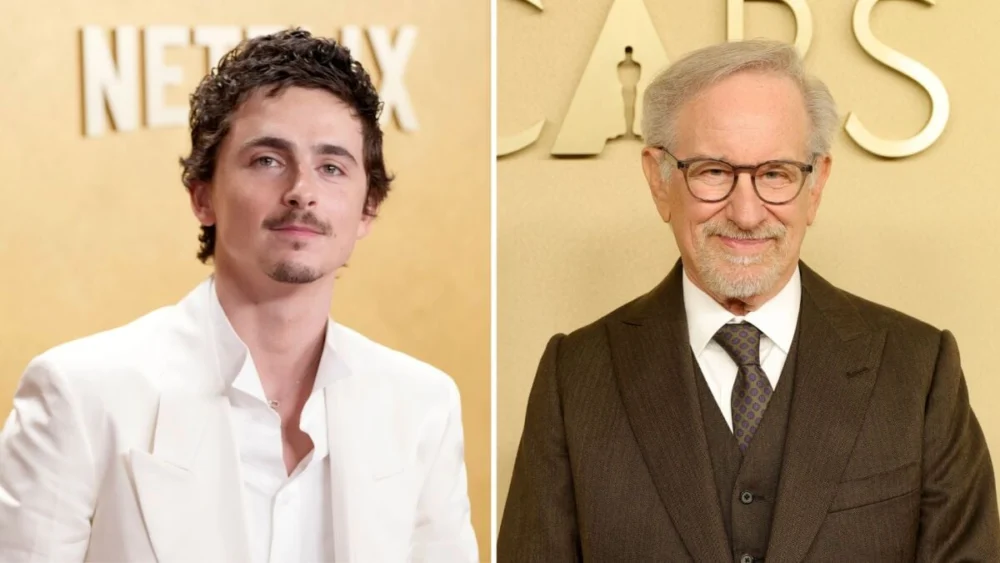
During a live recording of "The Big Picture" podcast at the South by Southwest (SXSW) festival on March 13, legendary filmmaker Steven Spielberg offered a ringing endorsement of traditional performing arts, a move many observers interpreted as a direct counterpoint to recent controversial statements by actor Timothée Chalamet. Speaking to a capacity crowd alongside host Sean Fennessey, Spielberg emphasized the enduring necessity of the communal arts experience, explicitly naming ballet and opera as essential pillars of the cultural landscape.
The director’s comments arrived at a time when the entertainment industry is grappling with shifting audience habits and the perceived decline of "high art" in the face of digital dominance. Spielberg, who was at the festival to discuss the evolution of cinema and the importance of the theatrical experience, took a moment to broaden the scope of his argument beyond the silver screen.
"It happens in movies. It happens in concerts. It happens in ballet and opera!" Spielberg declared, prompting an immediate wave of cheers and applause from the audience. The statement was viewed by many as a calculated defense of disciplines that have recently come under fire from younger voices within the Hollywood elite.
Steven Spielberg Praises Ballet and Opera at SXSW
The specific context of Spielberg’s remarks centered on what he described as the "uniquely communal experience" of the arts. He articulated a philosophy that has defined much of his late-career advocacy for movie theaters: the idea that gathering with strangers in a dark room to witness a story is a transformative human necessity.
"The real experience comes when we can influence a community to congregate in a strange, dark place," Spielberg told Fennessey during the SXSW session. He argued that this phenomenon is not exclusive to film but is shared by any medium that requires physical presence and shared focus.
Spielberg noted that when a story ends, whether it is told through a lens, a libretto, or a choreographed sequence, the audience emerges "united" in a way that home viewing cannot replicate. This defense of traditional institutions served as a sharp contrast to the rhetoric that has dominated social media discourse for several weeks.
The Roots of the Timothée Chalamet Backlash
The controversy Spielberg appeared to be addressing began in February during a high-profile town hall event hosted by Variety and CNN. While promoting his upcoming film "Marty Supreme" alongside Matthew McConaughey, Timothée Chalamet spoke about the difficulties of maintaining the relevance of movie theaters in a fragmented entertainment market.
During the discussion, Chalamet made a joke that many felt dismissed the value of classical performing arts. "I don’t want to be working in ballet or opera, or things where it’s like, ‘Hey, keep this thing alive,’ even though it’s like, no one cares about this anymore," Chalamet said.
Though the actor quickly added, "All respect to the ballet and opera people out there," the damage was largely done. The clip of his remarks went viral, sparking a heated debate about whether certain art forms are indeed "dying" or if they are simply being undervalued by a new generation of performers and consumers.
Performing Arts Community Responds to Dismissive Rhetoric
The reaction from the professional dance and music communities was swift and pointed. Leading figures in the arts world argued that Chalamet’s assessment was factually incorrect and culturally insensitive to the thousands of professionals who sustain these industries.
Tiler Peck, a principal dancer with the New York City Ballet, took to Instagram to challenge the notion that "no one cares" about ballet. She highlighted the rigorous dedication of dancers, musicians, and stage crews, emphasizing that these institutions often perform to sold-out houses despite the lack of mainstream blockbuster marketing.
Misty Copeland, one of the most recognizable figures in modern ballet, also weighed in on the controversy. In an interview following the town hall, Copeland noted that while opera and ballet may not occupy the same space in the pop-culture zeitgeist as a Marvel film, their longevity is a testament to their intrinsic value.
"There’s a reason that the opera and ballet have been around for over 400 years," Copeland stated. She argued that these forms offer a level of discipline and historical continuity that is often missing from contemporary entertainment.
The Communal Power of the Performing Arts
Spielberg’s intervention at SXSW shifted the focus from a debate over popularity to a debate over the human experience. By grouping ballet and opera with cinema and concerts, Spielberg leveled the playing field, suggesting that the "dark room" experience is the common thread that binds all great art.
Industry analysts suggest that Spielberg’s comments were intended to remind the public that the survival of one art form is often tied to the survival of others. As movie theaters struggle to compete with streaming services, they share a common struggle with opera houses and ballet companies: the need to convince a distracted public that some things are worth experiencing in person.
The director’s use of the word "united" was particularly resonant. In a fragmented social landscape, Spielberg suggested that the arts provide one of the few remaining venues where people of diverse backgrounds can share a singular, focused emotional journey.
Steven Spielberg Praises Ballet and Opera at SXSW Amid Industry Shifts
The timing of the SXSW keynote was significant, as the festival itself is a melting pot of technology, film, and music. By choosing this platform to defend the "oldest performing arts institutions," Spielberg effectively bridged the gap between the heritage of the past and the technology of the future.
The audience reaction—described by attendees as "eruptive"—indicated a strong appetite for a defense of the arts. For many in attendance, Spielberg’s words felt like a "gentle correction" to the more cynical view expressed by Chalamet.
This is not the first time Spielberg has acted as a guardian of traditional media. He has been a vocal proponent of preserving the theatrical window for films and has often spoken about the "magic" of the projection room. His extension of this protection to ballet and opera suggests a broader concern for the health of the "high arts" in the 21st century.
Cultural Impact and the Future of Classical Institutions
The "Chalamet saga," as it has been dubbed by social media, highlights a growing divide in how different generations perceive cultural value. While Chalamet’s comments may have reflected a pragmatic view of market trends, they touched a nerve regarding the perceived elitism or obsolescence of classical arts.
However, data from various performing arts organizations suggests that the "death" of these forms may be greatly exaggerated. Many companies have seen a surge in younger ticket buyers following the pandemic, driven by a desire for "unplugged" and "authentic" experiences.
The controversy has also forced a conversation about how these institutions market themselves. Some critics argue that the classical arts must do more to engage with contemporary audiences, while others, like Spielberg, argue that the intrinsic value of the work is enough if the communal experience is preserved.
Conclusion and Industry Trajectory
As the dust settles on the SXSW conversation, the dialogue between Hollywood and the classical arts continues to evolve. Steven Spielberg’s public praise of ballet and opera serves as a reminder that even the most successful figures in modern media draw inspiration from the foundational arts.
The backlash against Timothée Chalamet appears to have served as a catalyst for a broader appreciation of the performing arts. Rather than signaling the end of an era, the discourse has reaffirmed the commitment of many artists to preserving the "strange, dark places" where communities gather to be moved by a story.
Whether this moment leads to a tangible increase in support for ballet and opera remains to be seen. However, having the world’s most famous director stand in their corner provides these centuries-old institutions with a significant boost in the ongoing battle for cultural relevance. For now, the "unity" Spielberg described remains the goal for an industry navigating a rapidly changing world.