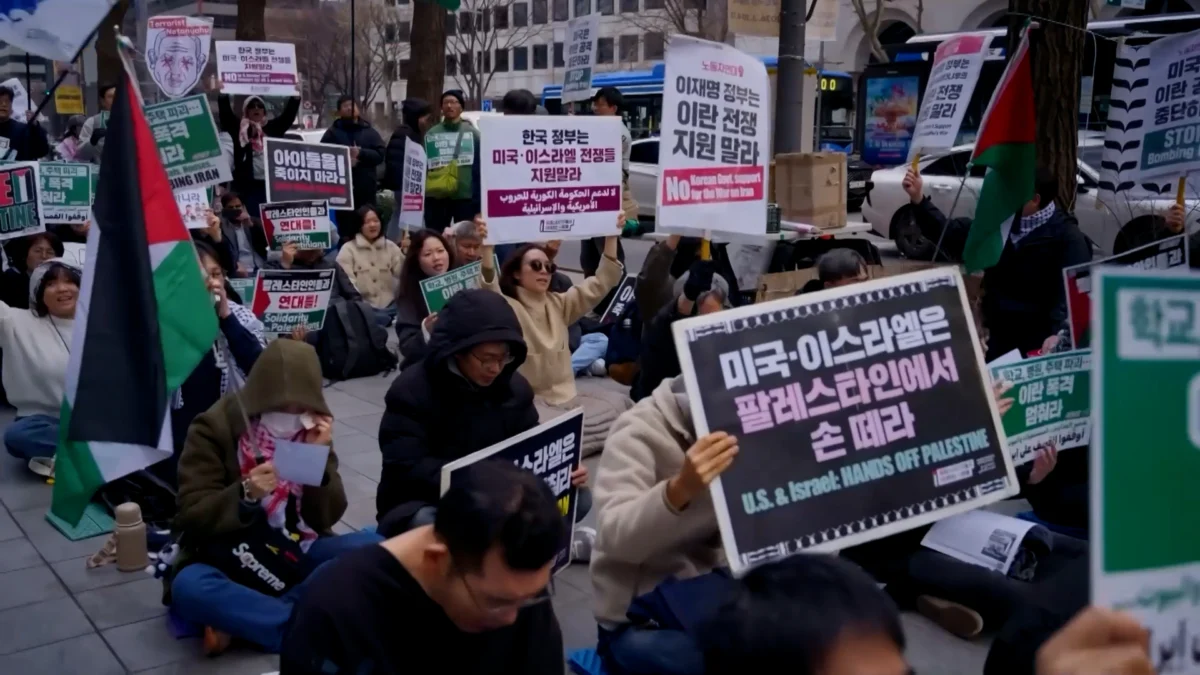
Seoul, South Korea – Hundreds of peace activists and demonstrators converged in central Seoul on Saturday, marking the third week of escalating conflict by voicing strong opposition to the US-Israeli strikes on Iran. The protest, held under overcast skies, drew a diverse crowd united by a shared concern over the intensifying military actions and their potential ramifications for regional and global stability.
Mounting International Condemnation Echoes in Seoul
The demonstration in Seoul mirrored similar outcries occurring in major cities across the globe, reflecting a growing international sentiment against the ongoing military operations. Organizers of the Seoul rally emphasized their solidarity with the Iranian people and condemned what they described as a disproportionate and destabilizing use of force. Their chants and banners called for an immediate cessation of hostilities and a diplomatic resolution to the protracted tensions.
The core of the protest revolved around a central message of peace and a call for de-escalation. Participants carried signs emblazoned with slogans such as "Stop the Strikes, Start the Dialogue" and "No War on Iran." Many held aloft images symbolizing peace, alongside flags of various nations, underscoring the global nature of their concern. The atmosphere, while passionate, remained largely peaceful, with organizers working closely with local authorities to ensure public safety.
The Genesis of the US-Israeli Strikes
The US-Israeli strikes on Iran, which commenced several weeks ago, represent a significant escalation in a long-standing geopolitical standoff. While the precise triggers and specific targets of these operations have been subject to varying reports and official statements, the general consensus points to a series of actions taken in response to alleged Iranian provocations and perceived threats to regional security. These provocations have been cited by US and Israeli officials as including advanced missile development, support for proxy groups operating in neighboring countries, and alleged cyber warfare activities.
For years, the international community has navigated a complex web of sanctions, diplomatic negotiations, and covert actions aimed at curbing Iran’s nuclear ambitions and its regional influence. The recent military engagement marks a departure from these more indirect approaches, signaling a willingness by the US and Israel to employ direct military force. This shift has been met with apprehension by many nations, who fear a wider conflict that could engulf the Middle East and beyond.
Escalation and International Reactions
The initial US-Israeli strikes were met with swift condemnation from a number of countries, including some traditional US allies who expressed concerns about the lack of broad international consensus and the potential for unintended consequences. The United Nations Security Council convened emergency sessions to discuss the situation, though divisions among member states prevented a unified stance. Russia and China, in particular, have been vocal critics, calling for restraint and adherence to international law.
Iran, in response to the strikes, has vehemently denied many of the allegations leveled against it and has vowed to defend its sovereignty. The nation’s leadership has characterized the attacks as acts of aggression and has indicated readiness to respond decisively. This rhetoric has further heightened tensions and fueled fears of a retaliatory escalation that could draw in other regional powers.
Protesters’ Demands and Global Parallels
The demonstrators in Seoul articulated a clear set of demands. Foremost among them was an immediate halt to all military actions against Iran. They called for a renewed commitment to diplomatic channels and multilateral negotiations as the only viable path to resolving the underlying issues. The protesters also highlighted the humanitarian cost of conflict, emphasizing the potential for civilian casualties and the displacement of populations.
This sentiment is not unique to Seoul. Across the globe, similar protests have been organized by anti-war groups, human rights organizations, and concerned citizens. From Washington D.C. to London, and from Tokyo to Cairo, the message of peace and a call for diplomacy have resonated widely. These global demonstrations serve as a powerful reminder of the deep-seated desire for peace and the widespread opposition to military interventions that threaten global security.
The Broader Geopolitical Landscape
The US-Israeli strikes on Iran are occurring against a backdrop of significant geopolitical flux. The region has been a tinderbox for decades, with numerous proxy conflicts and underlying sectarian tensions contributing to instability. The involvement of major global powers, including the United States, Russia, and China, further complicates the situation, raising the specter of a wider international confrontation.
Analysts suggest that the strikes may be aimed at disrupting Iran’s military capabilities and deterring future actions. However, there is also concern that such actions could provoke a more aggressive response from Iran, potentially leading to a protracted and devastating conflict. The economic implications are also significant, with potential disruptions to global energy markets and trade routes.
Impact on International Relations and Diplomacy
The current military engagement has strained diplomatic relations between the US and several key international players. The unilateral nature of the strikes, from the perspective of critics, has undermined established international norms and institutions. This could have long-term consequences for global governance and the effectiveness of collective security mechanisms.
Furthermore, the strikes have cast a shadow over ongoing efforts to address other pressing global issues, such as climate change and pandemics. The diversion of resources and political attention to military conflicts can hinder progress on these vital fronts, exacerbating existing challenges.
The Human Element: A Call for Peace
For the protesters in Seoul, the abstract geopolitical considerations translate into a very real concern for human lives. They emphasized that war is never a solution and that the cycle of violence only perpetuates suffering. Their presence in the streets was a testament to their belief in the power of collective action and their unwavering commitment to advocating for a more peaceful world.
The demonstrators urged their own government, as well as the international community, to exert diplomatic pressure on all parties involved to de-escalate the situation. They called for increased humanitarian aid to any affected populations and for a focus on long-term solutions that address the root causes of conflict.
Looking Ahead: The Path to De-escalation
As the conflict enters its third week, the international community faces a critical juncture. The protests in Seoul and elsewhere underscore the urgent need for a concerted diplomatic effort to prevent further escalation. The coming days and weeks will be crucial in determining whether the world can steer away from a wider conflagration and towards a path of dialogue and peaceful resolution.
The demonstrators’ message of solidarity and their plea for peace serve as a potent reminder of the human cost of conflict and the enduring hope for a more stable and secure future. Their actions in Seoul are a part of a larger global movement advocating for diplomacy and the cessation of hostilities. The effectiveness of these voices in shaping future policy remains to be seen, but their presence serves as a vital check on the momentum of military engagement.