The Federal Reserve has maintained its benchmark interest rate at its current target range, signaling a cautious approach to monetary policy as persistent inflationary pressures, notably driven by surging fuel prices, continue to shape the economic landscape. This decision comes at a critical juncture, with geopolitical tensions between the United States and Iran exacerbating supply-side shocks and contributing to the upward trend in energy costs.
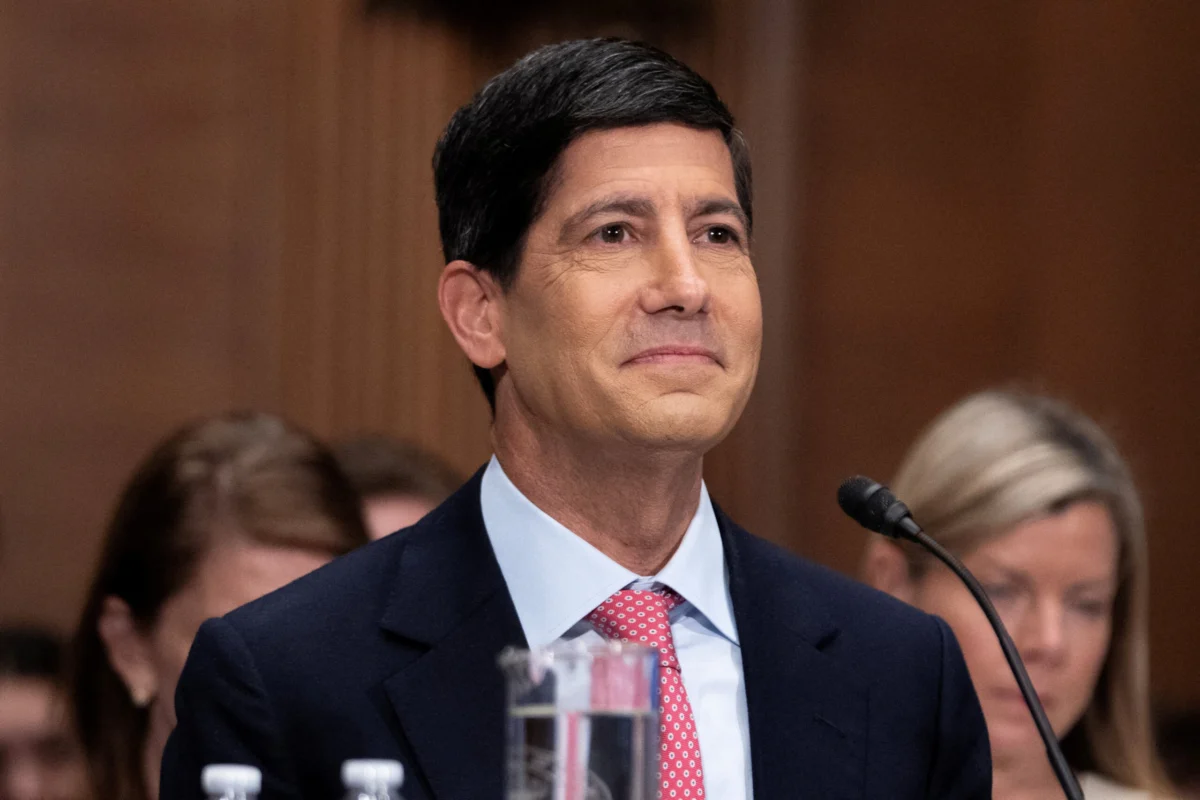
The central bank’s decision to hold rates steady was announced following its second monetary policy meeting under the leadership of new Chairman Kevin Warsh. This move reflects a delicate balancing act for the Fed, which is tasked with both fostering economic growth and ensuring price stability for American consumers and businesses. The committee’s statement underscored the ongoing challenge of elevated inflation, emphasizing its divergence from the Fed’s 2 percent target.
“Inflation remains elevated relative to the Committee’s 2 percent goal, in part reflecting supply shocks that have driven price increases in certain sectors, including energy,” the Federal Reserve stated in its post-meeting release. The committee reiterated its commitment to achieving price stability, a core mandate of the institution.
The market’s anticipation of this decision was closely tracked by financial analysts. CME FedWatch, a widely cited tool for gauging market expectations regarding monetary policy, had predicted a significant probability of the Fed holding rates steady. Specifically, the data indicated a 66.3 percent likelihood that the benchmark federal funds rate would remain unchanged. Conversely, there was a 33.7 percent chance that the Fed might opt for a rate increase, pushing the target range to 375-400 basis points.
The era of new Fed Chair Kevin Warsh has introduced a degree of uncertainty into monetary policy communications. Warsh has, for the time being, eschewed the practice of providing explicit forward guidance, a tool previously employed to offer clarity to financial institutions, investors, and the public about the central bank’s likely future policy path.
Navigating Policy Uncertainty
The absence of detailed forward guidance has placed greater reliance on market interpretation and speculation. Economists from Barclays noted this shift, stating in a research note that "With little guidance on the reaction function under the new chairman, markets are filling the void with speculation that Warsh may be eyeing a surprise hike to reinforce anti-inflation credibility." This sentiment highlights the challenges faced by market participants in anticipating the Fed’s next moves.
Other financial institutions have offered differing outlooks. Citadel, for instance, had forecast a rate hike prior to the Fed’s announcement, while analysts at S&P Global predicted that the central bank would maintain its current policy stance. This divergence in expert opinion underscores the complex economic signals and the varying interpretations of the Federal Reserve’s strategic direction.
At its previous meeting, the Federal Reserve’s Board of Governors was reportedly divided on the prospect of raising interest rates within the current year. This internal division was evident as the central bank ultimately decided to maintain rates during its first meeting presided over by Chairman Warsh. Warsh himself has previously articulated a firm stance on inflation, stating there was "no tolerance" for deviations from the Fed’s inflation objectives as it strives to achieve its 2 percent target.
Shifting Market Dynamics and Inflationary Headwinds
Despite the Fed’s focus on inflation, recent economic data has presented a mixed picture. Financial pressures on the broader market saw some easing in the preceding month, with a notable moderation in consumer inflation. The Consumer Price Index (CPI) report, released in July for the month of June by the U.S. Bureau of Labor Statistics, indicated a 0.4 percent decline in consumer inflation. This marked the first monthly decrease in consumer prices since April 2020, a period early in the COVID-19 pandemic. However, this dip was a correction from the previous month, when the CPI had registered a 0.5 percent increase.
The annual inflation rate, as measured by the CPI, remains elevated at 3.5 percent, according to the report. While this represents a slowdown from the 4.2 percent annual rate recorded in May, consumers continue to experience the impact of rising prices, particularly at the gasoline pump.
The Impact of Energy Prices on Consumers
The upward trajectory of energy prices is a significant concern for households across the nation. The average price for a gallon of regular gasoline has climbed to $4.09 (approximately $1.08 per liter). This figure is up three cents from the previous week and has increased from $3.86 per gallon ($1.02 per liter) just one month prior, according to data compiled by the American Automobile Association (AAA), which diligently tracks daily gasoline prices. For comparative context, daily gasoline prices stood at $2.98 per gallon ($0.78 per liter) in the period immediately following initial reports of geopolitical escalations between the U.S. and Iran.
These economic pressures appear to be contributing to a broader sentiment of consumer unease. Confidence levels among consumers have declined for three consecutive months, according to a report released by The Conference Board. This trend suggests that households are becoming increasingly pessimistic about the near-term economic outlook.
Dana M. Peterson, chief economist at The Conference Board, commented on the findings of the latest consumer confidence report, stating, "Consumers anticipate little improvement in business conditions over the next six months." This sentiment indicates a potential dampening effect on consumer spending, a key driver of economic growth.
Political Crosscurrents and Federal Reserve Independence
The Federal Reserve’s monetary policy decisions are often subject to intense scrutiny and, at times, political pressure. The current decision to hold interest rates steady comes amidst ongoing commentary from the White House regarding the appropriate level of interest rates. President Donald Trump has, for an extended period, advocated for lower interest rates, a stance that has previously placed him at odds with former Federal Reserve Chair Jerome Powell.
However, Chairman Kevin Warsh has, thus far, appeared to avoid direct public criticism from the President. When asked about Warsh’s performance, President Trump offered a seemingly positive assessment to reporters on board Air Force One, stating, "Kevin is fantastic." He also made a remark about the Fed’s board members being "very political," a comment that could be interpreted in various ways, particularly given the Fed’s long-standing commitment to maintaining its independence from political influence.
This dynamic underscores the delicate balance the Federal Reserve must strike between responding to economic imperatives and navigating the political environment. The institution’s ability to operate free from undue political pressure is considered crucial for its credibility and the stability of the financial system.
Examining the Fed’s Stance on Inflation
The Federal Reserve’s commitment to controlling inflation is a central tenet of its mandate. Historically, the central bank has aimed to keep inflation at a stable and predictable level, typically around 2 percent annually. This target is designed to foster an environment conducive to long-term economic planning and investment.
The current elevated inflation figures, exacerbated by supply chain disruptions and geopolitical events, present a significant challenge to achieving this objective. The Fed’s strategy involves a combination of tools, including adjusting interest rates and managing the money supply, to influence borrowing costs and overall economic activity.
The decision to hold rates steady, in this context, suggests that the Federal Reserve believes the current economic conditions warrant a pause in rate adjustments. This allows policymakers to assess the impact of previous rate hikes, monitor incoming economic data, and observe the evolving inflationary landscape.
Broader Economic Implications and Future Outlook
The Federal Reserve’s monetary policy decisions have far-reaching implications for the U.S. economy and global financial markets. Interest rate adjustments influence the cost of borrowing for consumers and businesses, impacting everything from mortgage rates and car loans to corporate investment and hiring decisions.
A sustained period of elevated inflation, coupled with potential consumer reticence due to economic uncertainty, could pose headwinds to economic growth. Conversely, a misstep in monetary policy – either tightening too aggressively or not aggressively enough – could have adverse consequences.
Market participants will be closely watching future economic data releases, including inflation reports, employment figures, and consumer sentiment surveys, for further clues regarding the Federal Reserve’s future policy trajectory. The ongoing geopolitical situation and its impact on energy markets will also remain a critical factor influencing the Fed’s deliberations. The central bank’s ability to navigate these complex challenges will be paramount in its pursuit of both price stability and sustainable economic growth. The coming months will undoubtedly reveal more about Chairman Warsh’s approach to monetary policy and the Federal Reserve’s continued commitment to its core objectives in an increasingly dynamic global environment.